
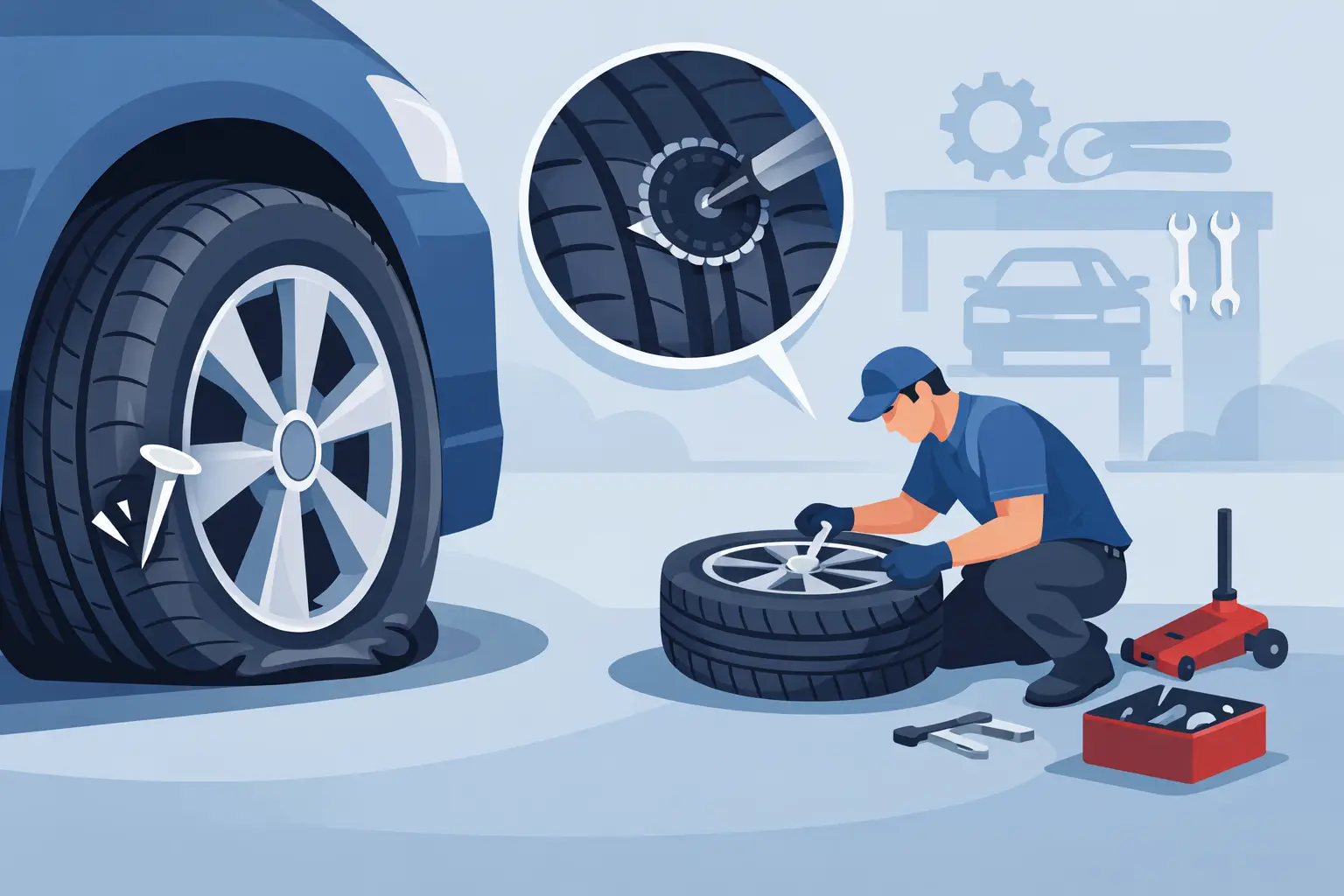
Can a Punctured Tyre Be Repaired?
A flat tire always seems to happen at the worst time – on the school run, before work, or when you are already running late. In that moment, the big question is usually simple: can a punctured tyre be repaired, or do you need a full replacement right away?
The short answer is yes, sometimes. But not every puncture is repairable, and guessing wrong can leave you back at the side of the road with a bigger problem than before. A proper answer depends on where the damage is, how bad it is, and whether the tire has been driven on while flat.
Can a punctured tyre be repaired safely?
A punctured tire can often be repaired if the damage is in the main tread area and the hole is small enough to meet safety standards. This is the part of the tire that contacts the road directly, not the shoulder or sidewall. If a nail or screw has gone straight through the center section, there is a good chance the tire can be fixed properly.
That said, safe repair is not just about plugging a hole and sending you on your way. The tire needs to be inspected inside and out. What looks like a simple puncture from the outside can hide internal damage, especially if the vehicle has been driven with low air pressure.
This is where people often get caught out. A tire may hold air again after a quick temporary fix, but that does not always mean it is road-safe. A proper repair has to restore the integrity of the tire, not just stop the leak for the next few miles.
When a puncture can usually be repaired
In most cases, repair is possible when the puncture is small, clean, and located in the central tread area. A screw, nail, or similar object is often the best-case scenario because the damage tends to be limited and easy to assess.
The tire also needs to be in otherwise decent condition. If the tread depth is still legal and the casing has not been weakened, repairing it can be the most sensible and cost-effective option. For many drivers, that is good news. A repair is usually quicker and cheaper than replacing a tire, especially when the rest of the tire still has plenty of life left in it.
If you have only just noticed the puncture and have not driven far on it, your chances are better too. The less time the tire has spent underinflated, the less likely it is that the internal structure has been damaged.
When a punctured tyre should not be repaired
There are clear situations where repair is not the safe option. If the damage is on the sidewall or close to the shoulder of the tire, it will usually need replacing. Those areas flex more while driving, and repairs there are not considered dependable enough for normal road use.
A larger hole is another problem. If the puncture is too wide, or if the tire has a cut rather than a neat round hole, repair may not hold properly. The same goes for multiple punctures that are too close together.
One of the biggest red flags is driving on a flat tire. Even a short distance can crush the internal sidewall structure. From the outside, the tire may not look terrible. Inside, it may already be compromised. If there are signs of internal wear, shredded lining, or heat damage, replacement is the only responsible choice.
You should also expect replacement if the tread is already near the legal minimum, if the tire is aged and cracking, or if there is previous damage that affects safety. In those cases, spending money on a repair often does not make much sense.
Why the location of the puncture matters
This is the part that matters most. The center tread area is built to handle contact with the road, so a repair there is more likely to be secure when done properly. The shoulder and sidewall are different. They flex constantly, carry heavy load forces, and are under more stress in corners.
That is why a tiny nail in one part of the tire may be repairable, while an almost identical puncture a little farther out is not. To a driver, both may look small. To a tire fitter, the position changes everything.
It is also why DIY judgment can be risky. If you are not sure exactly where the damage sits in relation to the repairable area, it is better to have it checked than assume.
Temporary fixes versus proper tire repairs
A lot of drivers carry sealant, inflator kits, or basic plug kits. These can be useful to get you out of immediate trouble, but they are not the same as a professional repair.
Sealant can sometimes get you moving again, but it may not work on every puncture, and it can make later inspection messier. A quick external plug may stop the leak for now, but if the tire has not been removed and inspected internally, no one really knows what condition it is in.
A proper puncture repair involves checking the tire thoroughly and repairing it in a way that is designed for continued safe use. If your goal is to get back on the road without repeating the same problem next week, proper inspection matters just as much as the repair itself.
What to do when you notice a puncture
If you spot a nail in the tire, hear a steady hiss, or find the tire visibly low, try not to keep driving on it. That is the mistake that turns a repairable puncture into a replacement job.
If you are at home, at work, or stuck roadside, the safest move is to stop and have the tire assessed where the vehicle is. For busy drivers, this is often the biggest advantage of a mobile service. You do not need to risk damaging the tire further by limping to a shop, and you do not need to rearrange your day around a garage appointment.
An experienced mobile fitter can inspect the damage, tell you straight whether repair is possible, and sort it on site if it is. If it is not repairable, you can move straight to a replacement rather than wasting time on guesswork.
Can a punctured tyre be repaired, or is replacement better?
Sometimes repair is the obvious answer. Sometimes replacement is the smarter call even if a repair is technically possible. It depends on the tire’s age, remaining tread, overall condition, and how you use the vehicle.
For example, if the tire is nearly worn out already, paying for a repair may be false economy. If the tire is relatively new and the puncture is clean and central, repair is usually worth it. If you drive long distances at highway speeds or carry heavy loads for work, you may want the extra confidence of replacing a marginal tire rather than stretching its remaining life.
That is why the best advice is practical rather than absolute. A good fitter should tell you what is safe, what makes financial sense, and what they would do if it were their own vehicle.
Getting back on the road without the hassle
Most people dealing with a puncture are not looking for a lesson in tire construction. They want a straight answer, a fair price, and someone who can sort it quickly. That is exactly why mobile tire services have become such a useful option for everyday drivers.
Instead of waiting in a garage lobby or trying to nurse a damaged tire across town, you can have the problem checked where you are. For drivers around Reading, Basingstoke, and Bracknell, that means less disruption, less stress, and a much faster route back to normal.
At Lee’s Mobile Tyres, the approach is simple: check the tire properly, repair it if it is safe, replace it if it is not, and get you moving again without making the day harder than it already is.
If you are staring at a flat tire right now, the safest answer is not to guess – it is to get it inspected before a small puncture turns into a bigger, more expensive problem.