Are Part Worn Tyres Safe to Buy?
A cheap tire can feel like a lifesaver when you have a blowout, a failed inspection, or a car sitting on the driveway that needs to be back on the road today. That is usually when people ask the real question: are part worn tyres safe, or are they a false economy that causes more trouble later?
The honest answer is that it depends on the tire, where it came from, and how carefully it has been checked before fitting. A part worn tire is not automatically unsafe. But it is also not something you should buy blindly just because the price looks good.
If you are trying to keep costs down, there are times when a properly inspected part worn tire makes sense. There are also times when paying for a new one is the better call, especially if you do a lot of highway miles, carry family in the car, or need matching performance from all four corners.
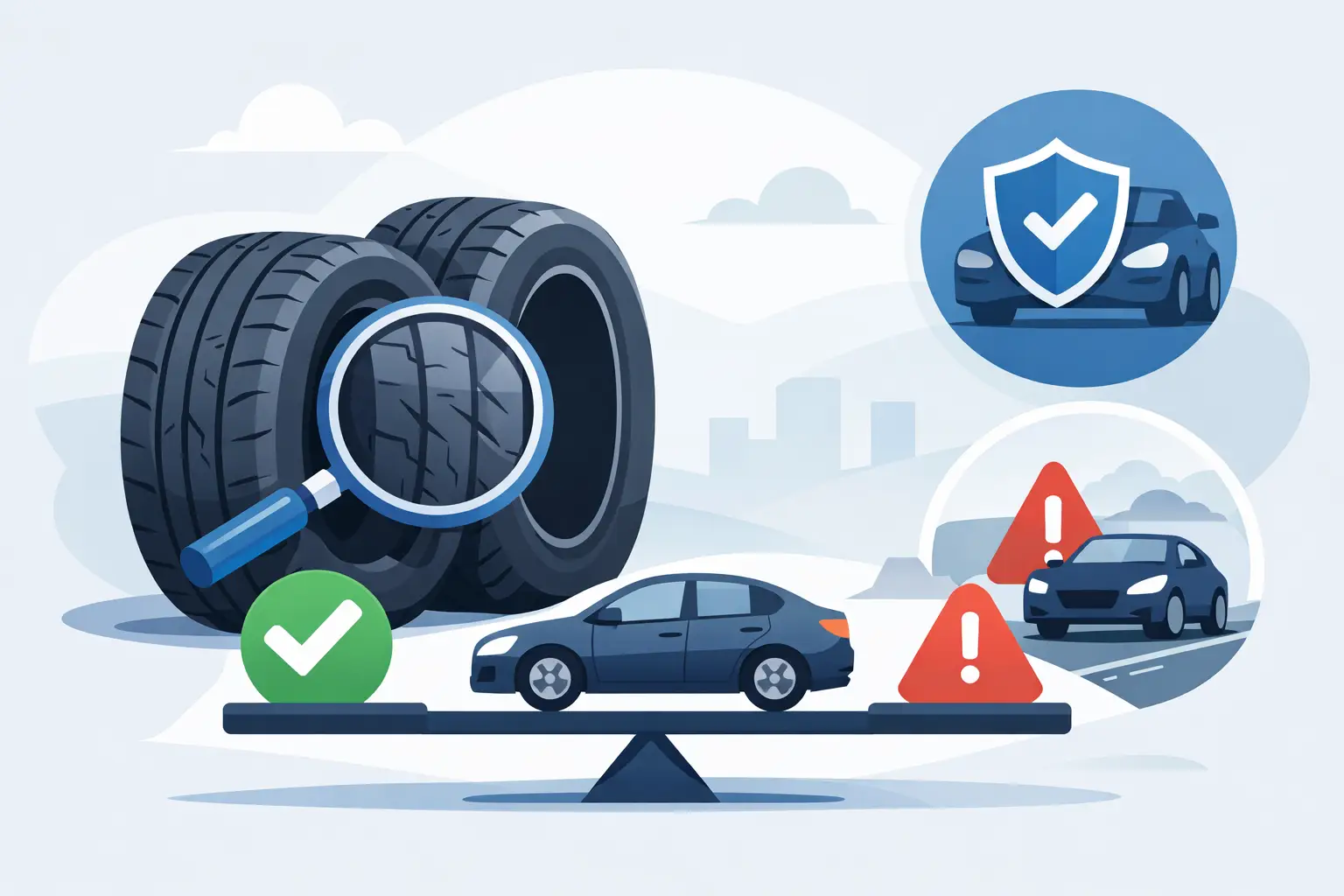
Are part worn tyres safe in real-world use?
They can be, but only if they still have enough life left and have been properly tested. A decent part worn tire should still have solid tread depth, no structural damage, no sidewall bulges, no exposed cords, and no signs of poor previous repairs. If those checks have been done properly, the tire may give safe service for a useful amount of time.
The problem is not the idea of part worn tires itself. The problem is inconsistency. One used tire may have come off a nearly new car and still be in excellent condition. Another may look fine at a glance but have internal damage from an impact, poor inflation, or rough use. That is why inspection matters so much.
For everyday drivers, the real risk is assuming that all used tires are equal. They are not. A low price means very little if the tire wears out quickly, performs badly in wet weather, or needs replacing again in a few months.
When a part worn tire can make sense
If you need a quick, affordable replacement and the tire has been thoroughly checked, a part worn option can be practical. This is especially true if the car is older, the budget is tight, or you need to replace one damaged tire without committing to a full new set on the spot.
It can also help in short-term situations. Maybe you have had an unexpected puncture just before payday. Maybe your vehicle only needs to stay roadworthy for a limited period before being sold or traded in. In those cases, a safe, tested part worn tire can bridge the gap without putting you under unnecessary financial pressure.
That said, the savings need to be real. If a part worn tire costs almost as much as a new budget tire, the new tire is often the better value. You get full tread, full service life ahead of you, and fewer unknowns.
What to check before saying yes
The first thing to look at is tread depth. Legal minimums are one thing, but practical safety is another. A tire can still be legal and already be poor in heavy rain. The closer the tread gets to the minimum, the less effective it becomes at clearing water and maintaining grip.
You also want to inspect the sidewalls carefully. Cracks, cuts, bulges, and scrapes matter. Sidewall damage is not cosmetic. It can point to weakness in the structure of the tire, and that is not something worth gambling with.
Then there is the age of the tire. Even if tread looks decent, rubber degrades over time. An older used tire may not perform as well as a newer one, especially in wet or cold conditions. A good fitter should be able to tell you the manufacturing date and whether the tire is still a sensible option.
Previous repairs matter too. A proper repair in the right area can be acceptable. A poor repair, multiple repairs, or damage too close to the sidewall should raise concerns straight away.
The difference between legal and sensible
This is where many drivers get caught out. A tire can pass a basic legal threshold and still not be a smart buy. If the tread is only just above the minimum, you are paying to fit a tire that may need replacing again far sooner than expected.
The same goes for uneven wear. A used tire might technically be road legal, but if the inside edge is worn heavily or the tread pattern is irregular, it can point to previous alignment or suspension issues. That affects ride quality, road noise, and how the tire wears from that point on.
So the better question is not only, is it legal? It is, is it worth fitting to your car for the way you actually drive?
Are part worn tyres safe for highway driving and family cars?
This is where caution matters more. If you do a lot of fast miles, carry passengers regularly, or drive long distances in all weather, tire quality becomes even more important. A part worn tire may still be safe enough if it is in genuinely strong condition, but the margin for compromise gets smaller.
For family cars, commuters, and work vehicles, reliability matters just as much as price. You do not want to be back at the roadside a few weeks later because the cheap option was too worn, too old, or simply not up to the job.
If your driving is mostly local, low mileage, and steady, a good part worn tire may be fine. If your car is doing school runs, motorway trips, late-night callouts, or long commutes, new tires often give better peace of mind.
Why professional inspection matters more than price
A lot of people shop by tread depth and price alone, but that only tells part of the story. A tire needs to be checked inside and out. Damage is not always visible when the wheel is still mounted, and some faults only show up during a proper inspection.
That is why buying from a trusted fitter matters. You want someone who will actually reject poor stock instead of fitting anything that looks passable. The right service should explain what they are fitting, show you the condition, and tell you honestly when a part worn tire is not the right option.
That straightforward approach saves money in the long run. It also saves stress. If you are already dealing with a flat or an urgent replacement, the last thing you need is guesswork.
When new tires are the better choice
If your current tires are worn as a set, replacing one with a used tire may not solve the bigger issue. In that case, new tires usually make more sense. The same applies if your car has higher performance requirements, larger wheels, or specific manufacturer recommendations.
New tires are also the better choice when wet grip, lifespan, and consistency matter most to you. They cost more upfront, but they usually give stronger value over time because you are starting with full tread and no previous wear history.
For some drivers, that extra cost is worth it simply for confidence. There is no shame in choosing the option that lets you stop worrying every time the weather turns bad.
The practical answer for most drivers
So, are part worn tyres safe? They can be, if they have been properly checked, have good tread left, and are free from damage or questionable repairs. They are not automatically unsafe, and they are not automatically a bargain either.
The smart move is to treat them as a case-by-case option, not a blanket yes or no. Ask questions. Check the condition. Think about how you use the car. Be honest about whether you need the cheapest fix today or the best value over the next year.
At Lee’s Mobile Tyres, that is how we look at it. If a part worn tire is a safe and sensible option, say so. If it is not, say that too. Most drivers do not need a sales pitch when they are stuck with a tire problem. They need a clear answer, a fair price, and a fix they can trust.
If you are weighing up used versus new, the best choice is usually the one that gets you back on the road without giving you another problem a month from now.