Do I Need Wheel Alignment? Clear Signs
You notice it on a normal drive. The steering wheel sits slightly crooked even though you are going straight, or the car drifts left when you loosen your grip for a second. That is usually when people start asking, do I need wheel alignment, or is this just a rough road? In a lot of cases, your car is telling you something early, before the tire wear gets expensive.
Wheel alignment is one of those jobs drivers often put off because the car still moves, still brakes, and still gets them where they need to go. But poor alignment does not stay small for long. It can wear tires unevenly, make the steering feel off, and turn a perfectly good set of tires into a replacement bill much sooner than expected.
Do I need wheel alignment if the car still drives?
Sometimes yes. A car does not need to be barely controllable to have an alignment problem. In fact, many vehicles with poor alignment feel only slightly different at first. That is why it gets missed.
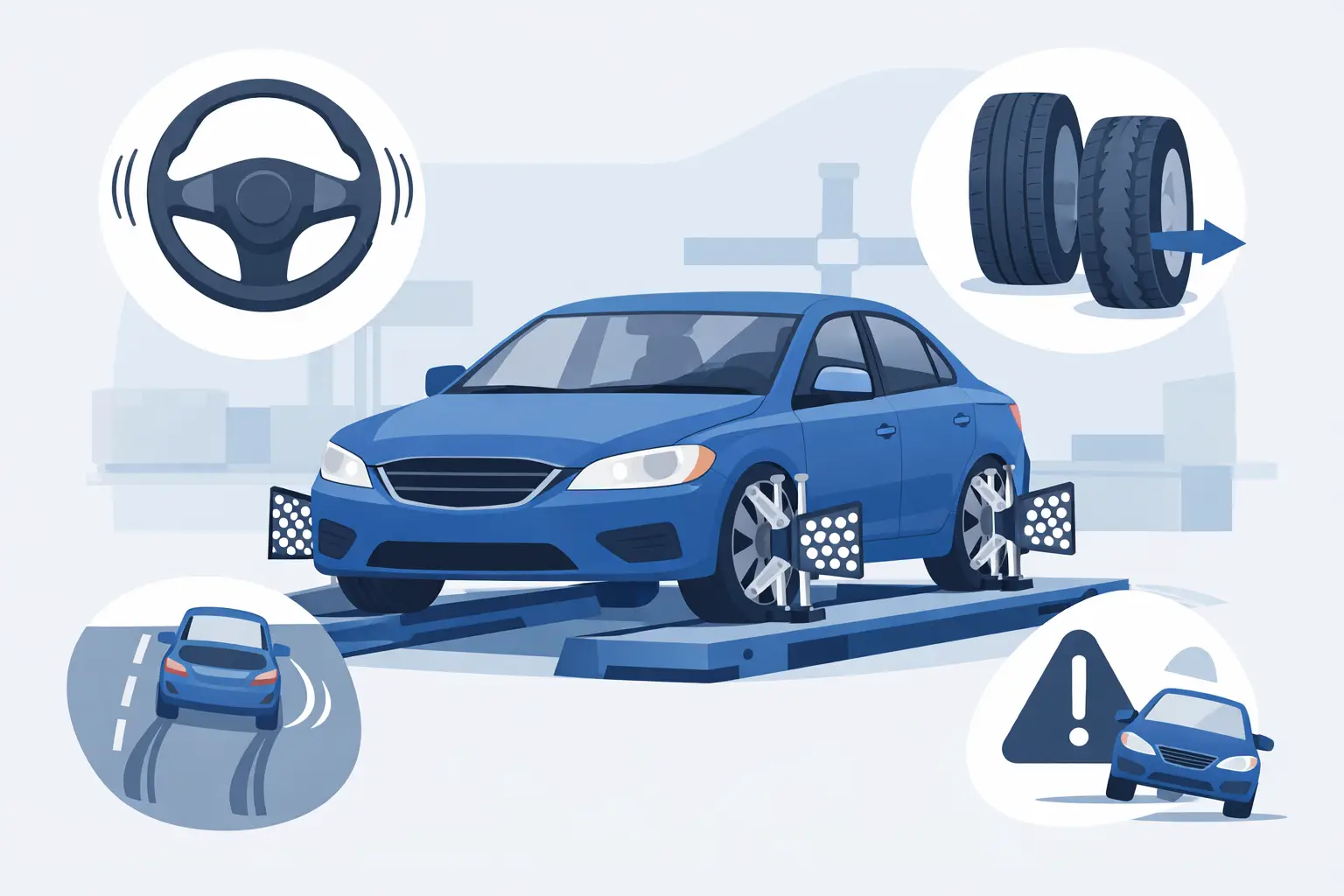
If the car pulls to one side on a flat road, the steering wheel is off-center, or you can see uneven wear across the tread, alignment is worth checking. You might also notice the car feels less settled than usual, especially at highway speeds. Nothing may seem dramatic, but small steering changes can still point to a setup that is out of spec.
The main reason to deal with it early is tire life. Misalignment can scrub rubber off one edge of the tire much faster than normal. Once that wear pattern starts, rotating the tires will not fix the damage. You can correct the alignment, but the worn tire stays worn.
What wheel alignment actually means
Wheel alignment is not about lining the tires up by eye. It means adjusting the angles of the wheels so they sit correctly in relation to the road and to each other. When those angles are right, the car tracks straight, the steering feels balanced, and the tires wear more evenly.
Most drivers do not need the technical breakdown, but the practical part matters. If those settings are off, your tires can drag slightly instead of rolling cleanly. That creates extra wear and can make the vehicle feel nervous, heavy, or inconsistent through the steering wheel.
Alignment is also different from wheel balancing. Balancing helps with vibration caused by uneven weight distribution in the tire and wheel assembly. Alignment deals with direction and angle. People often mix the two up because both affect how the car feels, but they solve different problems.
The clearest signs you need wheel alignment
The most obvious sign is pulling. If your car consistently drifts to one side on a reasonably level road, that is a strong clue. Roads do have a crown for drainage, so a slight drift is not always proof of a serious issue, but a clear and repeatable pull should not be ignored.
An off-center steering wheel is another common sign. If you are driving straight but the wheel sits turned a little left or right, alignment is high on the list of likely causes. Many drivers get used to this over time and stop noticing it, which is why it helps to pay attention after tire work, a pothole hit, or curb contact.
Uneven tire wear is often the biggest giveaway. If one edge of the tread is wearing much faster than the other, the alignment may be off. Feathering across the tread can also point in that direction. This is the kind of problem that costs money quietly because it builds up over weeks and months.
You may also feel the car is less stable than it used to be. Maybe it needs constant little corrections on the highway, or it does not seem to settle naturally in a straight line. That does not always mean alignment alone, because worn suspension parts can create similar symptoms, but it definitely means the vehicle should be checked.
What causes alignment to go out?
You do not need a major accident for this to happen. A hard pothole impact is enough. So is clipping a curb while parking, hitting road debris, or driving for a while on rough roads. Everyday use gradually takes a toll, especially if the roads you drive are not smooth.
New tires can also bring the issue into focus. Sometimes the old tires wore so gradually that the driver adapted without realizing it. Once fresh tires are fitted, the steering feel changes and the pull becomes more obvious. That is why alignment checks often make sense when replacing tires.
There is also the possibility of worn suspension or steering components. If something is loose or damaged, the alignment can shift or fail to hold properly. In that case, adjusting the angles alone is only part of the answer. The underlying mechanical issue has to be dealt with first.
Do I need wheel alignment after new tires?
Not every tire replacement automatically means you must get an alignment the same day, but it is often a smart move. New tires are a bigger investment than many people expect, and alignment helps protect that investment.
If your previous tires showed uneven wear, then yes, an alignment check should be part of the plan. Otherwise, you risk fitting new tires and starting the same wear pattern all over again. Even if the old wear was not severe, this is a good time to catch small issues before they become expensive ones.
For busy drivers, this matters because tire problems rarely arrive at a convenient time. A little prevention is easier than dealing with premature tire replacement, poor handling, or another service visit you did not plan for.
When it might not be alignment
It depends. A pull to one side is not always caused by alignment. Tire pressure can do it. So can mismatched tires, uneven tire wear, a sticking brake caliper, or worn suspension parts. Even road shape can make a car feel like it is drifting.
That is why guessing is not ideal. If the symptoms are mild, check the tire pressures first and look for obvious wear differences from side to side. If the issue stays there, it is time for a proper inspection. The key is not to assume everything is fine just because the car is still usable.
In practice, alignment is often part of the answer, but not always the whole answer. A good check should separate a simple alignment correction from a deeper steering or suspension problem.
Is it safe to keep driving?
If the car has a slight pull and everything else feels normal, you can usually still drive it short term. But safe enough and smart to ignore are two different things. The longer you leave it, the more chance you have of ruining the tires or making the car harder to control in wet conditions.
If the steering feels loose, the pull is strong, the wheel is badly off-center, or the tires show severe uneven wear, do not leave it. Those are signs the problem may be more than minor alignment drift. At that point, getting it checked quickly is the sensible move.
For most drivers, the real cost is not the alignment service itself. It is the avoidable tire wear that comes from waiting too long.
How often should alignment be checked?
There is no single number that fits every driver. If you do a lot of miles, use rough roads, or regularly deal with potholes, you may need checks more often than someone who mostly drives smooth local routes.
A practical rule is to pay attention after any hard impact, after suspension work, and whenever new tires are installed. It also makes sense if the steering suddenly feels different. You do not need to wait for obvious tire damage before acting.
Drivers who want to stay ahead of problems often have alignment checked periodically as part of regular tire care. That is especially helpful if the vehicle is used daily for commuting, school runs, or work calls where downtime becomes a headache fast.
The bottom line on do I need wheel alignment
If your car pulls, the steering wheel is off-center, or the tires are wearing unevenly, there is a good chance the answer is yes. You do not need to be a car expert to spot the warning signs. You just need to notice when the vehicle no longer feels quite right.
At Lee’s Mobile Tyres, we see plenty of cases where drivers waited because the issue seemed minor, only to find the tires had worn out far earlier than they should have. If something feels off, trust that instinct and get it checked. A small correction now is a lot easier than replacing tires before you expected to.