
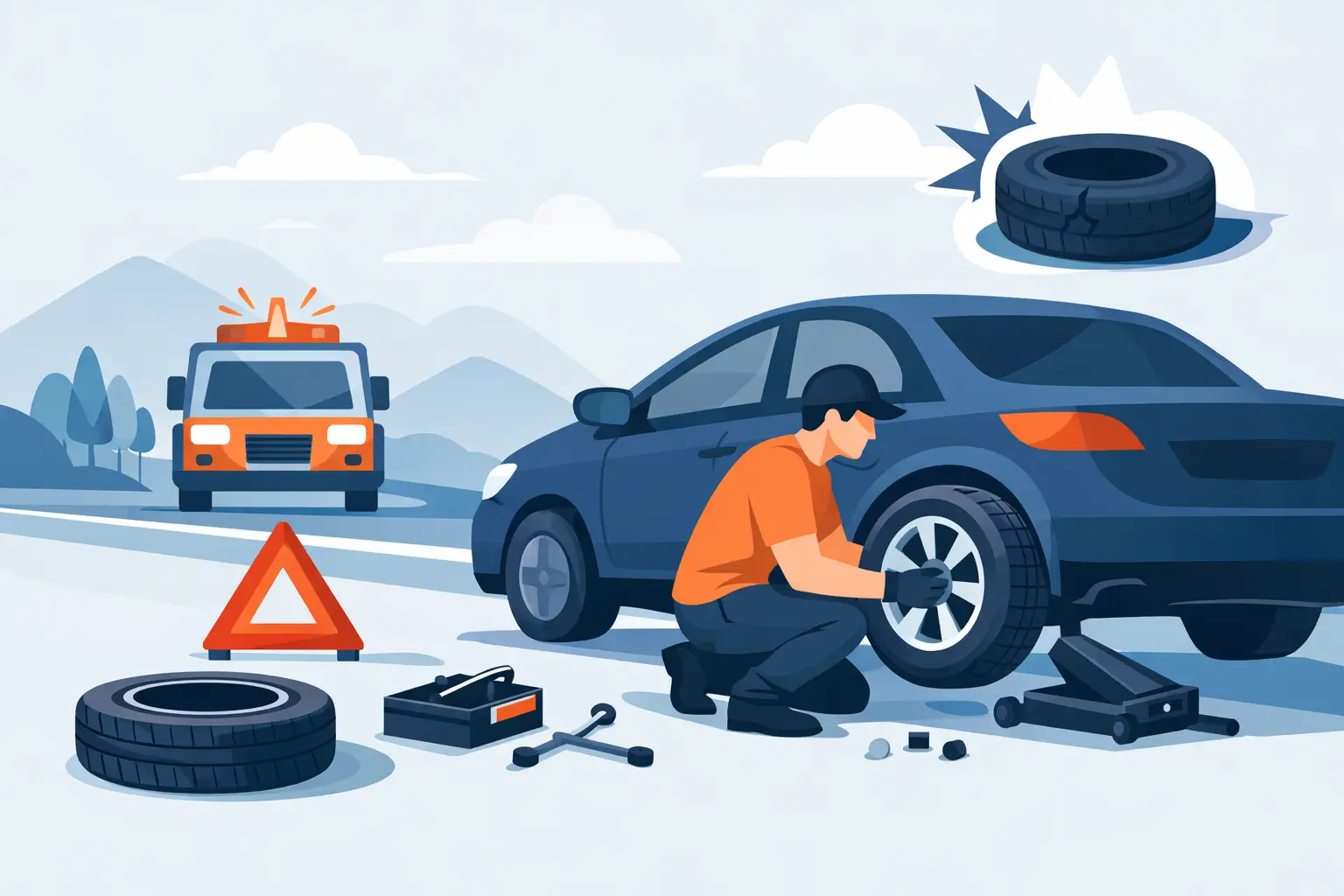
Emergency Tyre Replacement Guide
A flat tire never shows up at a good time. It happens when you’re late for work, picking up the kids, parked outside the house before school drop-off, or stuck on the roadside wondering if the tire can be repaired or if it needs changing right away. That is exactly where an emergency tyre replacement guide helps – not with garage talk, but with clear steps that keep you safe and get you moving again.
What counts as a tire emergency?
Not every slow leak is a full emergency, but plenty of tire problems need immediate attention. If the tire is completely flat, has sidewall damage, shows a visible tear or bulge, or blew out while driving, it should be treated as urgent. The same goes for damage caused by potholes, curbs, nails, screws, or debris in the road.
Sometimes the tire still holds a little air, which makes people think they can nurse it along for another few miles. That is often where a bad situation gets worse. Driving on a damaged tire can ruin the sidewall, damage the wheel, affect handling, and turn a repairable issue into a full replacement.
If you’re unsure whether the tire is safe, the safer answer is simple – stop using it until it has been checked.
Emergency tyre replacement guide: what to do first
The first job is safety, not the tire itself. If you notice a blowout, heavy vibration, pulling to one side, or the warning light for low tire pressure, slow down gradually. Avoid slamming on the brakes or making sudden steering movements. Bring the vehicle to a safe place as soon as you can.
If you’re on the roadside, turn on your hazard lights and move well clear of traffic if possible. A parking lot, hard shoulder, side street, or wide lay-by is better than sitting close to fast-moving vehicles. If the ground is uneven, soft, or sloped, that matters too. Even if you have a spare, changing a tire in an unsafe location is not worth the risk.
Once you’re stopped, check the condition of the tire from a safe distance. If the sidewall is shredded, the tire is off the bead, or the wheel itself looks bent, this is no longer a quick patch-up job. It needs proper replacement.
When a spare tire helps – and when it doesn’t
A spare can save the day, but it depends on what type of spare you have and whether it is actually usable. Many vehicles now come with a space-saver spare, which is only meant for short distances and lower speeds. Others come with a repair kit instead of a spare, and those kits do not work for every kind of damage.
If the puncture is small and in the tread area, a temporary sealant kit might help for a short trip. If the damage is in the sidewall, the tire split open, or the wheel took an impact, sealant will not solve it. In those cases, trying to force a temporary fix usually wastes time.
A spare also has to be properly inflated and in decent condition. Plenty of drivers find out too late that the spare has low pressure, cracked rubber, or missing tools. That is one reason mobile tire fitting has become the practical option for a lot of people. It removes the guesswork and gets the right tire fitted where the car already is.
Can the tire be repaired or does it need replacing?
This is one of the most common questions, and the honest answer is: it depends on the damage. A simple puncture in the central tread area can often be repaired if the tire has not been driven flat for too long. That is the best-case scenario because it is usually quicker and cheaper than fitting a new tire.
Replacement is normally the right call when the puncture is in the shoulder or sidewall, when the tire has a cut, bulge, exposed cords, or severe wear, or when the tire has been run flat and the internal structure is likely compromised. A tire can look manageable from the outside and still be unsafe inside.
That is why roadside judgment calls can be tricky. A proper inspection matters. Saving money upfront is understandable, but not if it means gambling with a tire that could fail again.
Why emergency tire replacement is often the easiest option
When people picture tire replacement, they often imagine losing half a day at a garage. That is the old headache. In an emergency, most drivers just want the vehicle sorted with as little disruption as possible.
That is where on-site fitting makes a real difference. If the car is on your driveway, outside your office, or stranded roadside, the work can be done there instead of arranging recovery, finding a garage slot, or waiting around with a damaged car. For busy families, commuters, and tradespeople, that convenience is not a luxury. It is what gets the day back on track.
A mobile service also tends to be the better choice when conditions are awkward. Bad weather, poor lighting, missing tools, or a vehicle parked in a difficult spot can make DIY tire changes more stressful than they are worth. A trained fitter with the right equipment can deal with it faster and more safely.
Emergency tyre replacement guide for roadside situations
If you are stuck away from home, keep things simple. Stay with the vehicle only if it is safe to do so. If you are on a busy road or the car is in a dangerous position, your own safety comes first.
Have your location ready before you call for help. A road name, nearby business, mile marker, or map pin helps speed things up. If you know your tire size, that helps too, but do not worry if you don’t. Most fitters can work it out from the tire or vehicle details.
It also helps to explain what happened. Saying “flat tire” is a start, but “hit a pothole,” “sidewall split,” or “nail in rear passenger tire” gives a clearer picture. That can make the response quicker because the right replacement options can be prepared in advance.
If you have somewhere to be urgently, say that as well. A good service will tell you honestly what is possible and how fast they can get to you.
Choosing the right replacement tire in an emergency
In a perfect world, you’d compare brands, read reviews, and think about long-term mileage. In a real emergency, the goal is a safe, suitable tire fitted quickly at a fair price.
That does not mean any tire will do. The size, load rating, and speed rating need to be right for the vehicle. There is often a choice between a brand-new tire and, in some cases, a fully tested part-worn tire if budget is the main concern. That choice can be useful when money is tight, but the key word is tested. In an emergency, cheap and unsafe is no bargain.
There is also the question of matching. Ideally, tires on the same axle should be compatible in size and condition. Sometimes one damaged tire can be replaced on its own. Other times, if the opposite tire is badly worn, replacing both may be the smarter move. It costs more upfront, but it can improve grip, balance, and overall handling.
What to keep in your car after reading this
You do not need to turn your trunk into a workshop, but a few basics can make any tire emergency easier. Keep your wheel lock key where you can actually find it. Make sure your locking lug nut code is recorded somewhere safe. Have a flashlight, a phone charger, and something visible like a reflective vest if you travel often at night.
It is also worth checking whether your car has a spare, a repair kit, or neither. A lot of drivers assume they know until the moment they need it.
And check your tires before they become urgent. Low tread, cracking, repeated pressure loss, and damage from curb strikes usually give some warning. Not always, but often enough that a quick look once in a while can save a roadside problem later.
The best way to make a tire emergency less stressful
The biggest mistake people make is waiting too long, hoping the problem will somehow stay manageable. A damaged tire rarely improves with another errand, another highway exit, or another “it should be fine” decision.
The better approach is straightforward: stop safely, get the tire checked, and replace it if needed without dragging the problem out. That is exactly why services like Lee’s Mobile Tyres work well for everyday drivers. You do not have to rearrange the day around a garage visit when the help can come to your home, workplace, or roadside location.
When a tire fails, speed matters, but so does getting the job done properly. A calm response, a safe location, and the right fitter will usually turn a stressful situation into a short delay instead of a ruined day.
If you remember one thing from this emergency tyre replacement guide, make it this: the fastest fix is not always changing the tire yourself – it is getting the right help to the right place before a bad tire causes a bigger problem.