
Why Does My Tyre Lose Air So Fast?
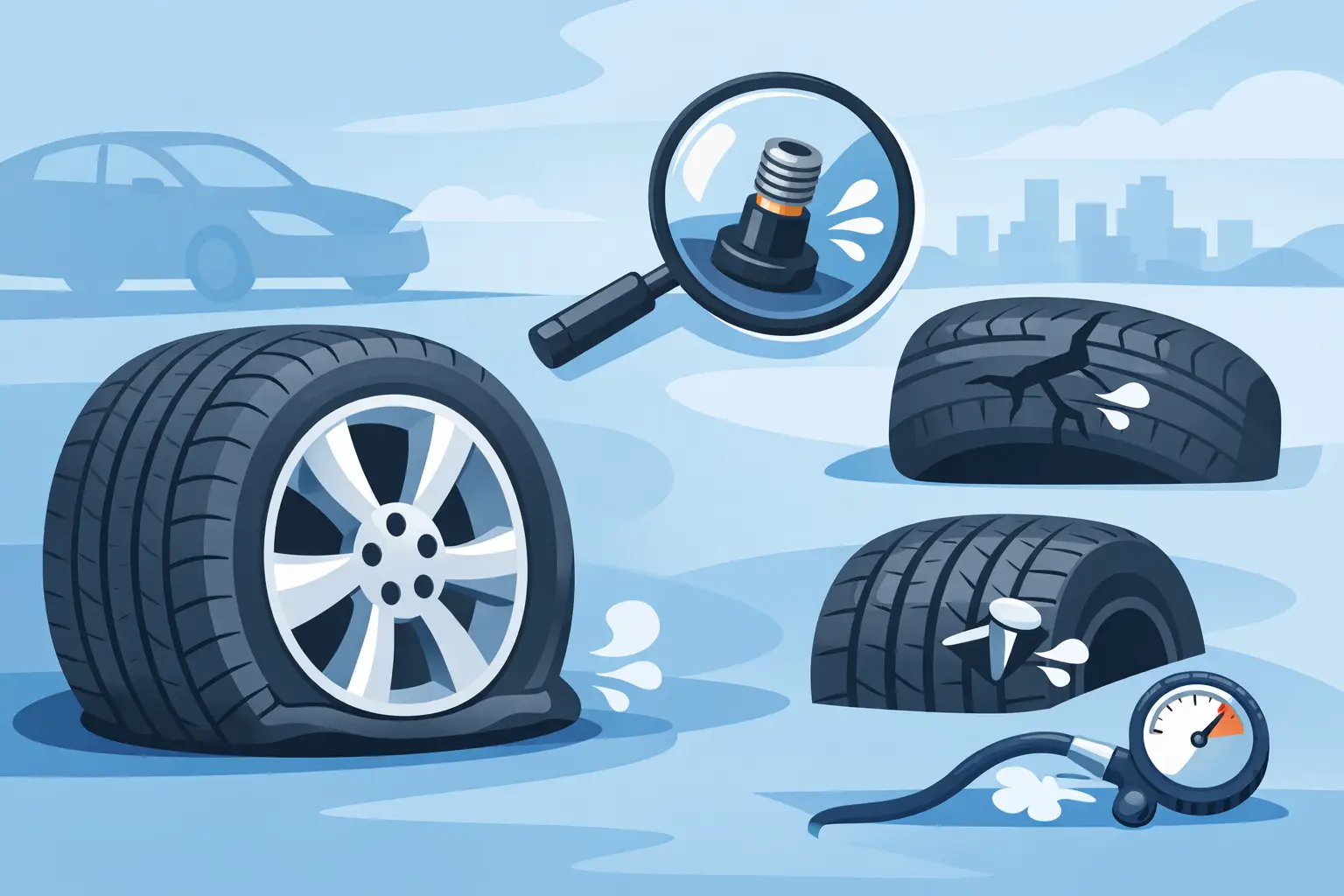
You top up the pressure, drive a day or two, and the warning light comes back on. If you’re asking, why does my tyre lose air, the short answer is that air is escaping somewhere it should not. The tricky part is that the cause is not always obvious. Sometimes it is a nail. Sometimes it is the valve. Sometimes the tire itself is fine, but the wheel is not sealing properly.
For most drivers, the real issue is not the science of air pressure. It is the disruption. A slow leak can make the school run stressful, throw off your commute, or leave you standing on the roadside wondering if the car is safe to move. That is why it helps to know what usually causes air loss, what you can spot yourself, and when it is time to stop guessing and get it fixed properly.
Why does my tyre lose air even without a puncture?
A puncture is common, but it is not the only reason a tire keeps going soft. Air can leak from several places, and some of them are easy to miss unless the wheel is removed and checked closely.
One of the most common causes is a small object in the tread. It might be a screw, nail, shard of metal, or sharp road debris. These do not always cause a sudden flat. In many cases, they create a slow leak, which means the tire loses pressure over hours or days rather than all at once.
Another frequent cause is a faulty valve. The valve stem is small, but it does a big job. If it is cracked, worn, loose, or damaged around the core, air can seep out little by little. This is especially common on older tires or wheels that have taken a knock.
Then there is the bead seal, which is the area where the tire meets the rim. If corrosion, dirt, or wheel damage stops that seal from sitting properly, air can escape around the edge. This is more likely on older wheels or cars that have hit potholes or curbs.
Temperature can play a part too. Cold weather lowers tire pressure naturally, so a tire that was borderline to begin with may suddenly look like it has a leak. But if you are adding air repeatedly, that is usually more than just the weather. A healthy tire should not need constant topping up.
The most common reasons a tire loses air
A nail or screw in the tread
This is the one most people think of first, and for good reason. Road debris is everywhere. A screw picked up in a parking lot or on a work site can sit neatly in the tread and let air out slowly. Sometimes you can hear it. Often you cannot.
The main thing to know is that not every puncture can be repaired. It depends on where the damage is, how large the hole is, and whether the tire has been driven underinflated for too long. A puncture in the center tread area is often repairable. Damage near the sidewall usually is not.
Valve stem problems
A leaking valve can be frustrating because the tire may look completely normal. There is no obvious hole, no visible damage, and yet the pressure keeps dropping. Valve issues can come from age, impact damage, poor fitting, or a missing valve cap that allowed dirt and moisture to get in.
This is usually a straightforward fix, but it still needs proper checking. Replacing a valve is simple when done with the right tools. Ignoring it just means more lost time and more pressure warnings.
Wheel rim damage or corrosion
If the wheel rim is bent or corroded, the tire may not seal tightly against it. Alloy wheels are especially prone to this over time. Even a small amount of corrosion can create tiny air gaps you will never spot by eye.
This is one of those cases where people keep inflating the tire, thinking the rubber must be the problem, when the actual issue is the wheel. Depending on the damage, the solution might be cleaning and resealing the rim, repairing the wheel, or replacing it.
Sidewall damage
Sidewall damage is more serious than a standard tread puncture. It can happen after hitting a pothole, clipping a curb, or driving on low pressure. Sometimes you will see a bulge, split, or scuff. Sometimes the damage is less obvious but still unsafe.
If air is escaping from the sidewall, the tire usually needs replacing rather than repairing. That is because the sidewall flexes constantly while driving, and repairs there are not considered safe.
Bead leaks
A bead leak happens where the tire sits against the wheel. Dirt, corrosion, poor installation, or wheel damage can all cause a loss of seal. These leaks can be stubborn because they may only show up under certain conditions.
This is also why DIY inflation kits do not always solve the problem. You can put more air in, but if the seal is compromised, it will just leak back out.
How to tell if your tire is losing air too quickly
Some pressure loss over time is normal. Tires do not hold the exact same pressure forever. But if you are topping up weekly, or even more often, that is not normal wear. That is a fault that needs attention.
A warning light on the dash is often the first sign. You may also notice the car pulling slightly to one side, a softer feel over bumps, heavier steering, or reduced fuel economy. In more obvious cases, the tire simply looks lower than the others.
The speed of the air loss matters. If a tire goes flat in minutes, do not drive on it unless there is no safer option to move out of danger. If it loses pressure over a few days, you may have time to arrange a repair, but it still should not be left too long. Driving on an underinflated tire damages the structure from the inside, and that can turn a repairable issue into a full replacement.
What you can check yourself before calling for help
You do not need to be a mechanic to do a few basic checks. Start by looking closely at the tread for any nails, screws, or embedded debris. Check the sidewall for cuts, bulges, or visible cracks. Then inspect the valve for damage or signs of wear.
If you have access to soapy water, you can spray or dab it around the tread, valve, and rim edge and watch for bubbles. That can help reveal where air is escaping. It is a useful quick test, but it does not replace a proper inspection, especially if the leak is small or intermittent.
What you should not do is keep driving and hoping it settles down. It will not. Air loss always has a reason, and repeated low pressure puts your safety, your wheel, and the rest of the tire at risk.
Why does my tyre lose air after being filled?
If the pressure drops soon after inflation, the leak is active enough that adding air is only buying time. That often points to a puncture, a bad valve, or a sealing problem around the rim. In some cases, the tire was also run low for long enough that internal damage has already been done.
That is the trade-off many drivers face. You can keep topping it up to get through the day, but every extra trip on a leaking tire increases the chance of a bigger failure. A quick repair is usually cheaper and easier than waiting until the tire is beyond saving.
When repair is possible and when replacement is safer
A proper repair is often possible when the puncture is small, located in the repairable tread area, and the tire has not been driven flat. That is the best-case scenario.
Replacement is the safer option when the sidewall is damaged, the hole is too large, the tread is already worn out, or the tire has been driven underinflated long enough to weaken it internally. This is where an honest inspection matters. The cheapest option upfront is not always the safest or the most economical a week later.
For everyday drivers, the goal is simple: get the car mobile again without cutting corners. That is why a hands-on inspection matters more than guesswork from the driveway.
Getting the problem sorted without losing your day
A leaking tire always seems to happen when you have somewhere to be. That is the real frustration. You are not looking for a lecture. You want a clear answer, a fair price, and someone who can get it dealt with where the car already is.
That is exactly why mobile tire services make sense for busy drivers, families, commuters, and anyone stuck with a car that is not safe to take to a shop. At home, at work, or at the roadside, the problem can be checked properly and fixed or replaced without adding another errand to your day. Lee’s Mobile Tyres handles that kind of call every day, which is often the fastest route from stress to sorted.
If your tire keeps losing air, trust what the car is telling you. A slow leak rarely fixes itself, but it is usually much easier to deal with before it becomes a flat at the worst possible moment.