What Causes Uneven Tyre Wear?
You usually notice uneven tire wear at the worst time – when the car starts pulling on the road, the steering feels off, or you spot bald patches while loading the kids in or heading to work. If you’re wondering what causes uneven tyre wear, the short answer is this: something is making one part of the tire work harder than the rest, and it rarely fixes itself.
Uneven wear is not just a tire issue. It can point to low or high air pressure, bad alignment, worn suspension parts, unbalanced wheels, or driving habits that put extra strain on the tires. Catch it early and you might only need a simple correction. Leave it too long and you can end up replacing tires sooner than expected, with handling and braking getting worse in the meantime.
What causes uneven tyre wear on everyday vehicles?
For most drivers, the cause is not one dramatic failure. It’s usually a smaller issue that has built up over time. A tire only wears evenly when it stays properly inflated, points in the right direction, rolls smoothly, and maintains steady contact with the road. Once one of those things changes, the tread starts wearing in a pattern.
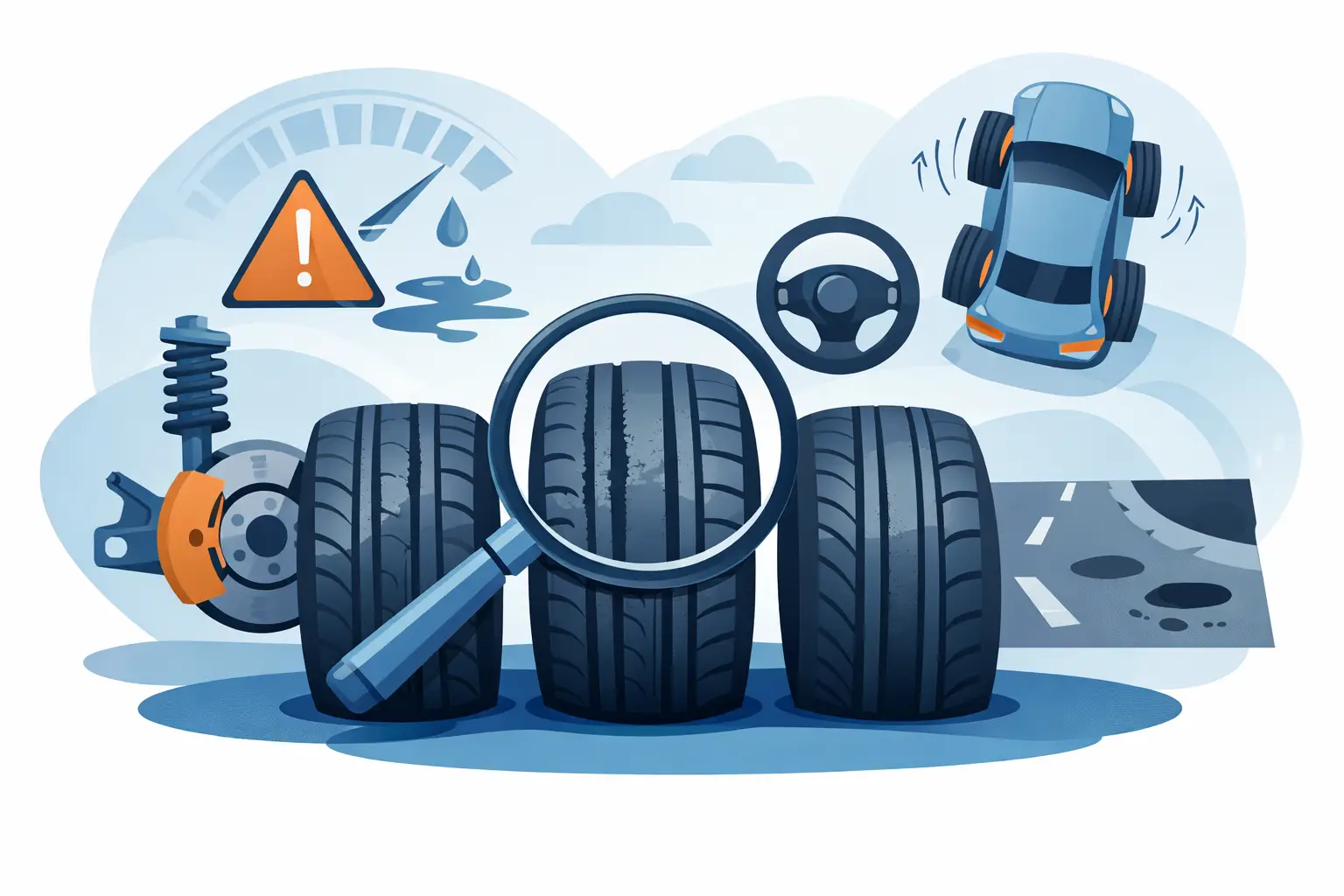
That pattern matters. Wear on both outer edges often suggests underinflation. Wear down the center can mean overinflation. More wear on one edge than the other often points to alignment trouble. Cupping or scalloped dips across the tread can suggest suspension or balance problems. These patterns are useful because they help narrow down what needs attention instead of guessing.
Tire pressure is one of the biggest causes
Incorrect tire pressure is one of the most common answers to what causes uneven tyre wear, especially for busy drivers who do not check it often. Tires naturally lose pressure over time, and changes in temperature can make that worse. If a tire is underinflated, the outer edges carry more of the load, so they wear faster than the middle.
If a tire is overinflated, the center of the tread takes most of the contact with the road. That can make the middle wear down while the outer tread still looks decent. Some drivers assume more pressure is better because it feels firmer, but too much air reduces the tire’s contact patch and can affect grip.
Pressure should be checked against the vehicle manufacturer’s recommendation, not what is printed as the maximum on the tire sidewall. That is where people sometimes go wrong. The sidewall number is not your target for normal driving.
Wheel alignment problems wear tires quickly
Alignment is another major cause. When the wheels are not set to the proper angles, the tire does not roll cleanly down the road. Instead, it scrubs across the surface slightly as you drive, and that friction wears one side faster.
You might notice the steering wheel is off-center, the car drifts left or right, or the tires show heavy wear on the inner or outer edge. Potholes, curbs, speed bumps taken too hard, and general road wear can all knock alignment out. It does not take a major impact.
This is one of those issues that often gets ignored because the car still feels drivable. But alignment problems can chew through a good tire far faster than most people expect. If you fit new tires without correcting the alignment, the same wear pattern usually comes back.
Front and rear alignment both matter
Some drivers assume only the front wheels affect tire wear because they do the steering. In reality, rear alignment matters too. On many vehicles, a rear wheel angle problem can create strange wear patterns and affect how the whole vehicle tracks. If the back end is out, the front may compensate, and the result can be wear across more than one tire.
Worn suspension and steering parts can be the hidden issue
If the tire is bouncing instead of staying planted, it will not wear evenly. Worn shocks, struts, bushings, ball joints, or other suspension parts can all change how the tire meets the road. Rather than smooth, consistent contact, you get repeated impact and movement, which can create cupping or patchy wear.
This is where uneven wear becomes more than just a maintenance problem. It can be a safety issue. A suspension fault can affect braking distance, stability in wet conditions, and control at speed.
The tricky part is that not every suspension problem is obvious straight away. You may hear a knock, feel extra bouncing after bumps, or notice the car feels less settled in corners, but sometimes the tire wear is the first clear sign.
Unbalanced wheels create vibration and patchy tread wear
Wheel balancing is often mentioned less than pressure and alignment, but it matters. A wheel and tire assembly should spin evenly. If one area is heavier than another, the wheel can vibrate as it turns. That vibration may not always be severe enough to feel at low speed, but over time it can create irregular tread wear.
A balanced wheel helps the tire roll smoothly and reduces stress on suspension parts too. If you notice vibration through the steering wheel or seat, especially at certain speeds, balancing should be checked. Sometimes a weight has fallen off. Sometimes a tire has worn unevenly enough that the balance has changed.
Rotation matters more than many drivers think
Front and rear tires often wear at different rates. On front-wheel-drive cars, the front tires usually wear faster because they handle steering, much of the braking, and the engine’s drive force. If tires are not rotated at sensible intervals, one pair may wear down much quicker than the other.
That does not always create a dramatic odd pattern, but it can still lead to uneven overall wear across the set. Rotation helps spread the workload and can extend tire life. It is not a cure for alignment or suspension faults, but it is part of keeping wear even.
Driving habits and load can also play a part
Not every case comes down to a mechanical fault. How the vehicle is driven matters as well. Hard cornering, aggressive braking, quick acceleration, and repeated curb contact all increase tire stress. If you regularly drive with a heavy load, carry tools for work, or have a packed family car most days, that extra weight changes how the tires wear too.
There is a bit of an it depends factor here. A car used mostly for short town trips may wear tires differently from one doing long highway miles. Rough local roads, potholes, and stop-start traffic can all speed up wear. So while the cause may still be pressure or alignment, your driving conditions often make the problem show up faster.
How to spot uneven wear early
You do not need to be a mechanic to catch the warning signs. A quick look at your tires every couple of weeks can save money and trouble later. Check whether one edge looks smoother than the other, whether the center is more worn, or whether there are dips and high spots across the tread.
Also pay attention to how the car feels. Pulling to one side, vibration, increased road noise, or a steering wheel that no longer sits straight can all point to the same problem. If one tire keeps losing pressure, that needs attention too, because repeated underinflation will wear it out long before its time.
What causes uneven tyre wear after new tires are fitted?
If new tires start wearing unevenly not long after fitting, the tire itself is often blamed first, but that is not always fair. More often, the new tire is revealing an issue that was already there. Alignment that was slightly off, a weak suspension part, poor balancing, or a missed pressure problem can all show up quickly on fresh tread.
That is why replacing tires without checking the reason for the old wear can be a false economy. New rubber may improve grip and comfort at first, but if the root cause stays put, the wear returns and the money is wasted.
When to get it checked
If the tread wear is mild and caught early, the fix may be straightforward. Pressure adjustment, balancing, rotation, or an alignment correction can stop the problem from getting worse. If the wear is severe, or if cords are showing, the tire will usually need replacing.
The key is not to wait until it becomes urgent. Unevenly worn tires can be noisier, less stable, and more likely to struggle in wet weather. They can also hide other faults that need sorting. For drivers who do not have time to sit in a garage waiting room, having someone come out and inspect the issue at home or work can make getting it handled much easier.
At Lee’s Mobile Tyres, this is the sort of problem we see all the time. A driver notices one tire wearing faster, the car starts pulling, or there is a vibration they have been meaning to get checked. In many cases, acting quickly means a simpler fix and less disruption.
If your tires are wearing unevenly, trust what they are telling you. They are usually the first sign that something on the vehicle needs attention, and the sooner you deal with it, the easier and cheaper it tends to be.