Roadside Puncture Response When You Need Help
A flat tire rarely happens at a convenient time. It happens before school drop-off, on the way to work, outside a customer’s house, or late at night when every nearby garage is closed. A calm roadside puncture response helps you protect yourself, avoid further damage to the wheel, and get moving again without turning one sharp screw or nail into a much bigger problem.
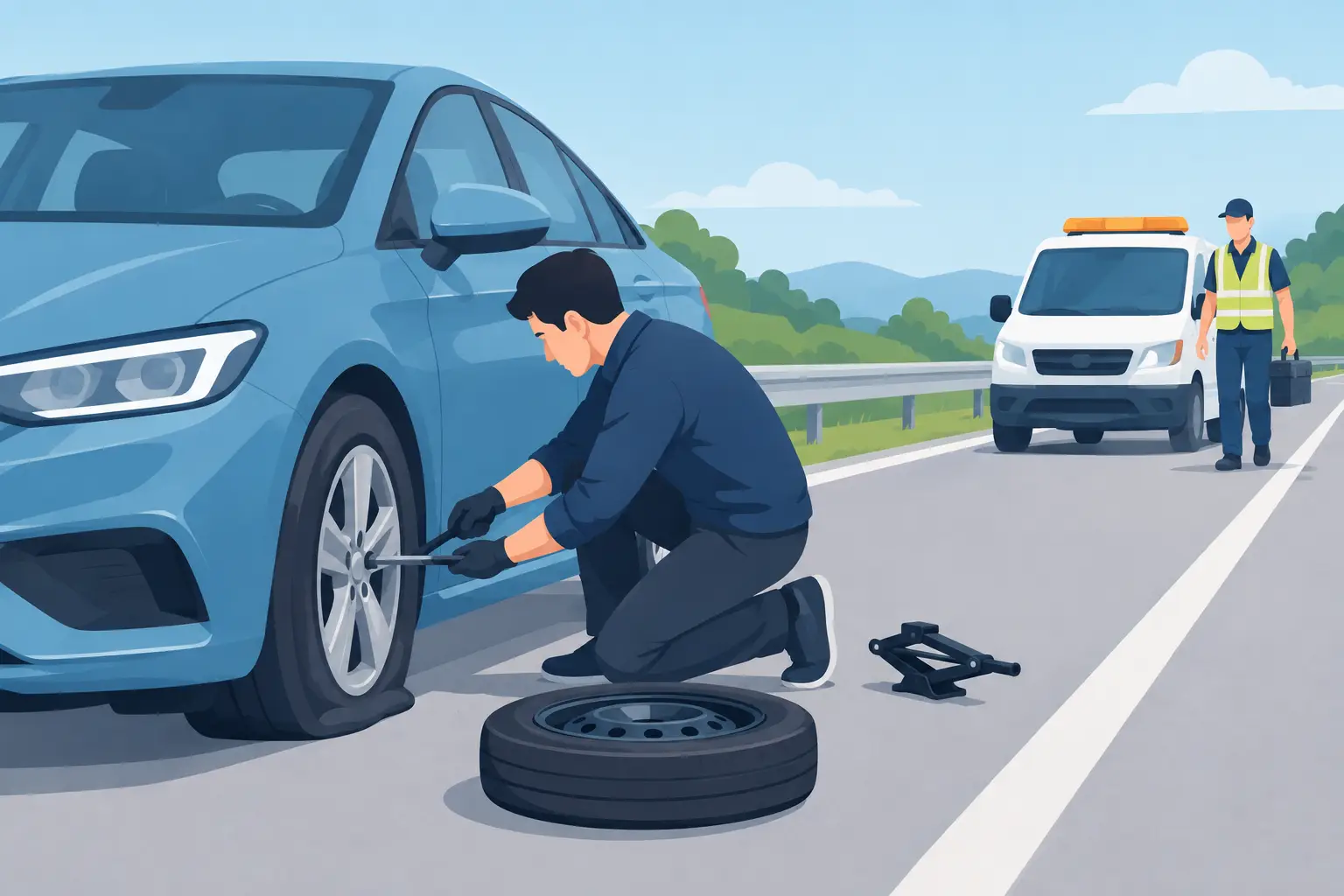
The first priority is not repairing the tire. It is getting your vehicle and everyone inside it out of danger. Once you are safe, a mobile tire technician can assess whether the puncture can be repaired, whether the tire needs replacing, and the quickest practical way to get you back on the road.
Get Safe Before You Check the Tire
If you feel the steering pull, hear a repeated thumping sound, or see a tire-pressure warning light, ease off the accelerator and avoid sudden braking. Hold the wheel firmly, signal early, and move to the safest available place. A parking lot, lay-by, driveway, or wide shoulder well away from traffic is far better than stopping on a narrow road or blind bend.
Turn on your hazard lights. At night, keep your lights on if it is safe to do so. If you have passengers, especially children, keep them away from moving traffic and behind a barrier where possible. Do not stand beside the traffic-facing side of the vehicle while inspecting the tire.
Driving even a short distance on a completely flat tire can destroy its internal structure and damage the wheel rim. If the tire is visibly flat, stop as soon as it is safe. Trying to limp home may turn a repairable puncture into a replacement job.
What a Roadside Puncture Response Should Include
A proper roadside puncture response is more than arriving with a jack and a spare tire. The technician needs to inspect the tire carefully, identify the source of the air loss, check the wheel, and decide whether a safe repair is possible.
A nail or screw in the central tread area may be repairable if the tire has not been driven flat and there is no internal damage. A cut in the sidewall, damage near the shoulder of the tire, a split, or a tire that has been run flat for too long will usually require replacement. This is why simply pumping the tire back up is not always a solution. It may get you a few miles, but it does not make the tire safe.
A mobile service can often repair the puncture on site, fit a replacement tire, balance the wheel if required, and check the pressure in the other tires. That means you do not have to arrange a tow truck, wait around at a garage, or take time off work for an appointment.
Do Not Pull Out the Nail or Screw
Seeing a screw embedded in the tread can tempt people to pull it out straight away. Leave it where it is. The object may be slowing the air loss, and removing it can cause the tire to deflate rapidly.
Take a quick photo if you can do so safely, then make a note of the tire size from the sidewall. It will look similar to 205/55R16. This information can help a mobile tire provider arrive prepared with suitable replacement options if the tire cannot be repaired.
Also check whether your vehicle has a usable spare. Many newer cars only have a tire inflation kit, a temporary spare, or no spare at all. A temporary spare is designed for limited use and reduced speeds, so it is useful for getting out of trouble but not a long-term answer.
When You Can Change the Tire Yourself
Changing a wheel yourself can make sense when you are on private property, have a safe and level surface, know your equipment is complete, and feel comfortable doing the job. It is less suitable on a busy road, in poor weather, in the dark, or when wheel bolts are seized tight.
If you do fit a spare, check its pressure before relying on it. Temporary spares often need a much higher pressure than standard tires. Follow the speed restriction shown on the spare tire or in the vehicle handbook, and arrange a permanent repair or replacement as soon as possible.
Do not crawl under a vehicle supported only by a jack. Avoid placing hands or feet beneath the car, and never attempt a roadside wheel change where passing traffic is too close. Saving an hour is not worth taking that risk.
Why Mobile Tire Help Saves Time
For most drivers, the hard part of a puncture is not the tire itself. It is the disruption. You may be stuck outside your office, unable to take children to school, delayed at a job, or stranded at home with no practical way to reach a tire shop.
Mobile tire help brings the workshop to the vehicle. Instead of arranging recovery and then waiting for a garage slot, the work can be done where the car is parked. That is particularly useful for commuters, parents, tradespeople, and anyone whose vehicle is central to their day.
Lee’s Mobile Tyres provides practical mobile tire support across Reading, Basingstoke, Bracknell, and nearby areas. Depending on the damage and tire availability, the aim is straightforward: repair the puncture safely or fit the right replacement without making you spend the day sitting in a waiting room.
Repair or Replacement: What Decides It?
The decision should be based on safety, not just price. A good repair can be excellent value when the puncture is in the repairable area and the tire is otherwise in good condition. There is no reason to replace a sound tire simply because it picked up a small screw in the tread.
Replacement is the safer choice when the sidewall is damaged, the puncture is too close to the edge, the tread is worn close to the legal limit, or the tire has been driven while flat. A technician may also recommend replacing the tire if there are multiple repairs already present or signs of age-related cracking.
If budget is a concern, ask about the available options. A new tire can offer the longest service life, while a fully inspected part-worn tire may be a sensible short-term or lower-cost choice for some vehicles. The right answer depends on your driving, the condition of the matching tire on the other side, and how long you plan to keep the vehicle.
Avoid the Next Puncture Where You Can
Not every puncture can be prevented, but regular checks make surprise flats less likely. Check tire pressures at least once a month and before a long trip. Underinflated tires run hotter, wear faster, and are more vulnerable to damage from potholes and road debris.
Look over the tread when you wash the car or fill up with fuel. Small nails and screws are easier to spot before they cause a full loss of pressure. If your car starts pulling to one side, the steering wheel is no longer centered, or the tread is wearing unevenly, have the alignment checked. Poor alignment will not directly cause every puncture, but it can shorten tire life and leave you replacing tires sooner than necessary.
A Simple Plan When You Are Stranded
Keep your response simple. Get to a safe place, switch on hazards, avoid driving on a flat tire, and do not remove anything lodged in the tread. Then arrange help from someone equipped to inspect, repair, or replace the tire where you are.
A puncture is frustrating, but it does not have to ruin the day. The safest choice is usually the one that gets you off the roadside quickly and puts a properly checked tire back on the vehicle, ready for the miles ahead.