
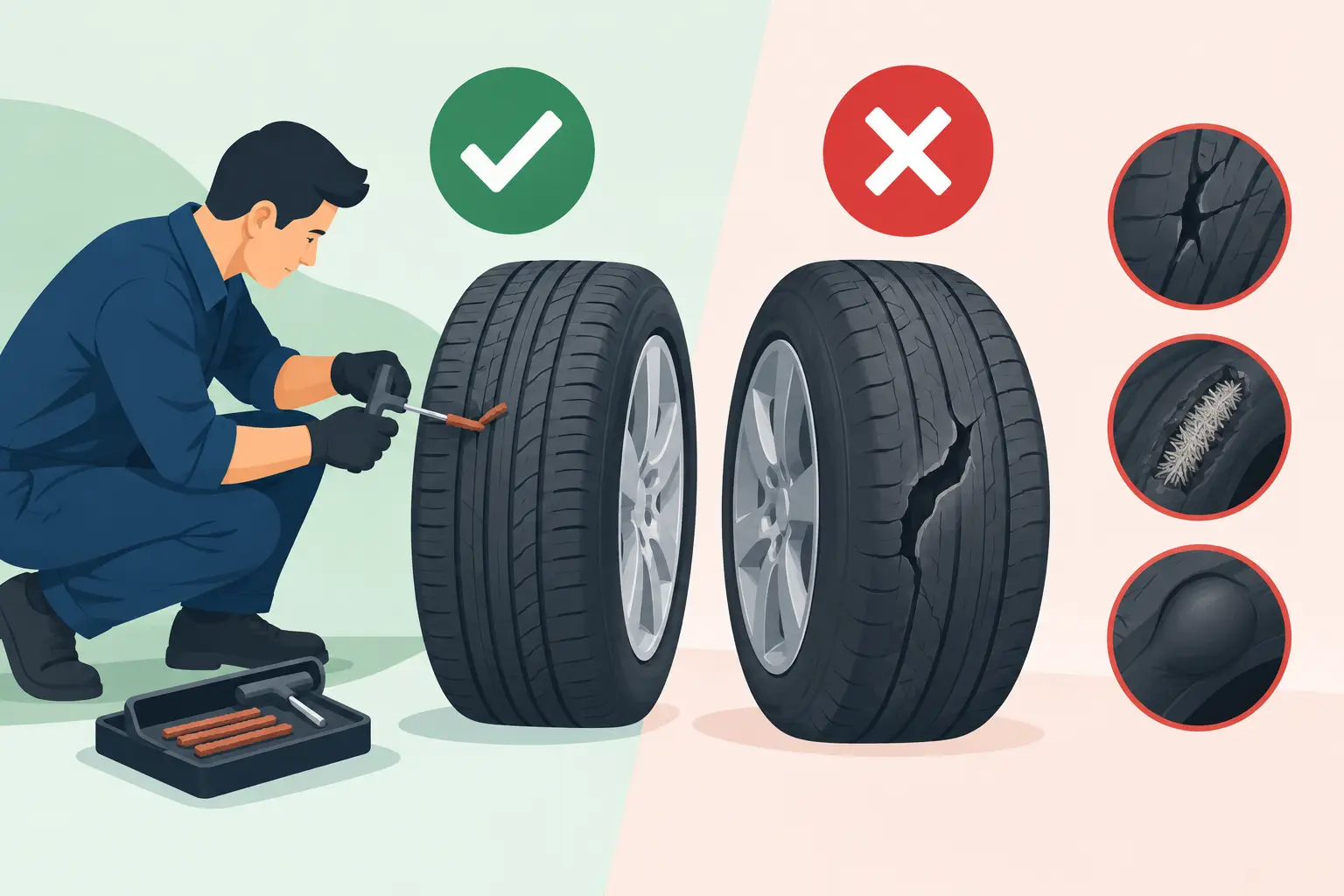
When Tyre Repair Is Safe and When It Is Not
A flat tire on the drive before work is frustrating. A warning light halfway through the school run or a puncture at the roadside can stop the whole day. The good news is that tyre repair is often quicker and more affordable than replacing a tire – but only when the damage is in the right place and the tire has not been driven while flat.
Knowing the difference matters. A proper repair can get you safely back on the road. The wrong repair, or a repair carried out after the tire has been damaged internally, can leave you with another flat or a more serious safety risk later.
Can a Puncture Be Repaired?
Many punctures can be repaired when a nail, screw, or similar object has gone through the central tread area. This is the thick, flat section of the tire that meets the road. If the hole is small, the tire has enough legal and safe tread remaining, and it has not been run underinflated, a repair may be the sensible option.
A technician needs to inspect more than the visible hole. The wheel is removed and the tire is checked from the inside for rubbing, cracking, heat damage, or marks caused by driving with low pressure. That internal check is what separates a safe repair from a quick temporary fix.
A puncture does not always mean you need to buy a new tire. However, the decision should be based on the tire’s overall condition, not just the fact that it is still holding some air.
Where the Damage Is Makes the Difference
The center tread is generally the repairable area. Damage near the shoulder or in the sidewall is usually not repairable. The sidewall flexes constantly as you drive and carries a great deal of the vehicle’s load. Even a small puncture there can weaken the tire structure.
If you can see a screw close to the outer edge of the tread, do not assume it can be patched. Leave it in place if the tire is still inflated and arrange an inspection. Pulling it out can turn a slow leak into an instant flat.
Cuts, splits, bulges, and damage caused by hitting a curb or pothole are different from a simple puncture. These problems often point to structural damage, so replacement is normally the safer route.
When Tyre Repair Is Not Safe
There are situations where repair is not worth the risk. A responsible mobile tire technician should tell you clearly when a replacement is needed, even if repairing the tire would be cheaper in the moment.
A tire may need replacing if the puncture is in the sidewall or shoulder, the hole is too large, or there is more than one close-together puncture. Tires with very low remaining tread, exposed cords, deep cracks, or a visible bulge should also be replaced.
The biggest concern is driving on a flat or nearly flat tire. When pressure drops, the sidewall can get crushed between the wheel and the road. It may look fine from the outside but be badly weakened inside. Continuing to drive can destroy a tire that might otherwise have been repairable.
If a tire pressure warning light comes on, slow down safely and stop as soon as practical. Do not try to limp home on a flat tire unless there is no safe place to stop. A short drive can be enough to change a straightforward puncture repair into a full tire replacement.
Why a Proper Internal Repair Matters
A tire sealant can sometimes help in an emergency, but it is not a lasting answer. It can make a mess inside the wheel, interfere with balancing, and may prevent a clean professional repair afterward. A roadside plug inserted from the outside may slow a leak, but it does not allow the inside of the tire to be inspected.
A proper repair involves finding the source of the leak, removing the tire from the wheel, checking its internal condition, and sealing the injury correctly from within. The tire is then refitted, inflated to the right pressure, and checked for leaks before you drive away.
This takes more care than simply putting air back in the tire. It also gives you an honest answer about whether the tire is safe to keep using. For busy drivers, that means fewer repeat problems and less chance of being stranded again a few days later.
Mobile Tyre Repair Saves a Garage Trip
Getting a puncture does not always happen when you have time to sit in a waiting room. It can happen outside your home, in a work parking lot, on a job site, or when you are already running late. A mobile service brings the equipment and the inspection to you.
For drivers around Reading, Basingstoke, Bracknell, and nearby areas, that can mean having the tire assessed where the vehicle is parked rather than arranging a tow or fitting a garage visit into an already busy day. If the tire can be repaired safely, you can be back on the road without losing hours. If it cannot, you can deal with the replacement at the same appointment.
Lee’s Mobile Tyres can assess punctures on site and explain the practical options before work begins. There is no benefit in guessing from a photo or assuming every flat needs a new tire. The condition of the tread, location of the damage, and the tire’s internal state all matter.
What to Do When You Find a Flat Tire
First, park somewhere safe and avoid driving farther than necessary. Turn on your hazard lights if you are at the roadside. If a nail or screw is still in the tire, leave it where it is. It may be slowing the air loss.
Check whether the tire is completely flat, visibly damaged, or has a bulge in the sidewall. Do not put your hands near traffic or attempt a repair in an unsafe location. If you have a spare, remember that many modern vehicles either have a temporary spare with speed restrictions or no spare at all.
Take note of your vehicle registration, tire size if you can see it, and your location. This helps a mobile technician arrive prepared. Clear information about whether the tire is losing air slowly, is fully flat, or has suffered impact damage can also speed up the decision once help arrives.
Repair, Replacement, or Part-Worn Tire?
The best answer depends on the tire in front of you. A sound tire with a small central tread puncture may only need a repair. A tire with sidewall damage or internal damage needs replacing. If cost is a concern, a fully inspected part-worn tire can sometimes be a practical option, provided it is the correct size, has safe tread depth, and is properly tested before fitting.
Matching matters too. On many vehicles, especially those with all-wheel drive, large differences in tread depth across an axle can affect handling and drivetrain wear. A technician can advise whether one tire is suitable or whether a pair makes more sense. That is not a sales pitch – it is about keeping the vehicle stable and predictable on the road.
Check your tire pressures regularly, especially before longer trips, and look over the tread for embedded objects or uneven wear. Catching a slow puncture early gives you the best chance of a safe repair. If the pressure warning light appears, treat it as an early warning, not something to put off until tomorrow.