New Tyres vs Part Worn: Which Makes Sense?
A tire problem rarely shows up when you have spare time. It happens before school drop-off, on the way to work, or when you’re already running late. That’s usually when the question of new tyres vs part worn comes up – do you pay more now for a brand-new tire, or go for the cheaper option that gets you moving again fast?
The honest answer is that both can make sense. It depends on your budget, the condition of your current tires, how long you plan to keep the vehicle, and how quickly you need the job done. What matters most is making a choice that is safe, legal, and sensible for the way you actually use your car.
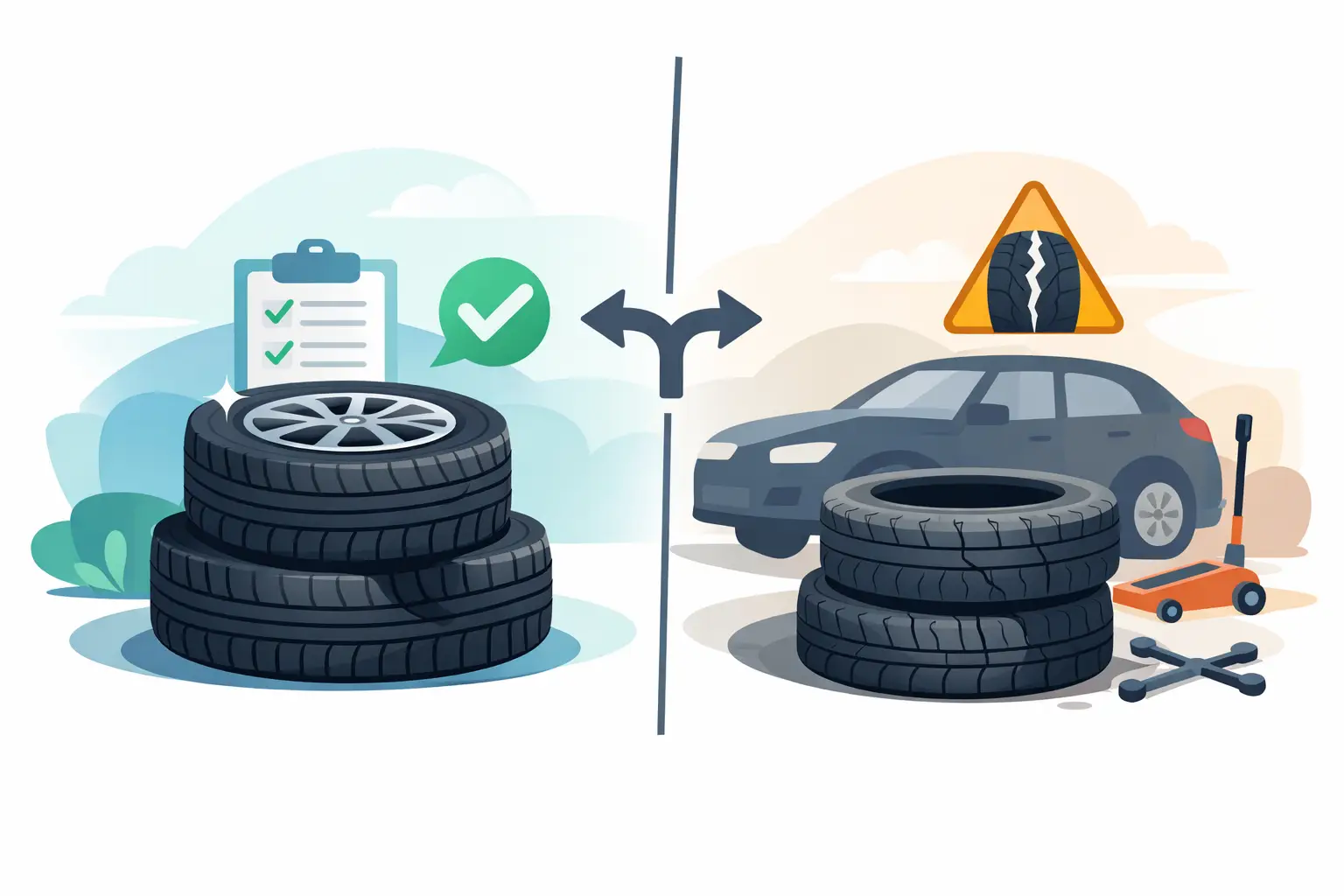
New tyres vs part worn: the real difference
A new tire is exactly what it sounds like. It has not been fitted to another vehicle, it has full tread depth, and it should give you the longest service life. If you drive a lot, carry family in the car, or want the best wet-weather performance available for your budget, new tires are usually the straightforward choice.
A part-worn tire is a used tire that has already been on another vehicle but still has legal and usable tread remaining. A good part-worn tire should be properly inspected, tested, and sold only if it is roadworthy. That makes a big difference, because not every used tire on the market is worth fitting.
This is where people often get mixed up. Part worn does not automatically mean unsafe, and new does not automatically mean you must buy the most expensive option. The real issue is condition, quality, and whether the tire suits the job.
When new tires are the better option
If you want the longest lifespan from the money you spend, new tires usually win. You are starting with full tread, a fresh casing, and no unknown wear history. That means more miles before replacement and fewer question marks.
New tires also make more sense if you regularly drive at highway speeds, do long commutes, or often travel in heavy rain. Tread depth plays a big part in grip, especially on wet roads. A new tire gives you more margin when braking and cornering, and that can matter a lot when road conditions are poor.
They are also the safer bet if your vehicle already has one or more newer tires fitted. Matching condition across the axle is important, and fitting a fresh pair often gives a more balanced result than mixing in a partly used tire with noticeably less tread.
If you’re planning to keep the car for a while, new tires can work out better over time. The upfront cost is higher, but the cost per mile may be lower because they last longer. That matters for commuters, tradespeople, and anyone who relies on their vehicle every day.
When part-worn tires can be a sensible choice
There are situations where part-worn tires are a practical option. If money is tight and you need a safe replacement quickly, a tested part-worn tire can help you stay legal and mobile without the bigger hit to your wallet.
They can also make sense if the car is older and you do not want to put premium money into it. The same goes for short-term ownership. If the vehicle is near the end of its life, due to be sold soon, or used only for low-mileage local driving, a good part-worn tire may be the more sensible spend.
Sometimes it is about replacing one damaged tire without overspending, especially if the other tires already have moderate wear. In that case, a part-worn tire with similar tread depth can actually be a better match than fitting one brand-new tire beside an older one.
That said, the key word here is good. A part-worn tire should never be chosen just because it is cheap. It needs to be inspected properly, free from damage that makes it unsafe, and suitable for the vehicle.
The biggest issue with part-worn tires
The main risk is not that part-worn tires exist. The main risk is buying one from the wrong place.
A used tire can look fine at a glance and still have hidden problems. Previous puncture repairs, sidewall damage, uneven wear, internal structural issues, or age-related cracking are not always obvious to the average driver standing on the side of the road. That is why proper checks matter.
A trustworthy supplier should assess whether the tire is fit to be used, not just whether it can be sold. If a part-worn tire has poor tread shape, signs of damage, or anything questionable about its structure, it should not go on your car. Cheap becomes expensive very quickly if it fails early or leaves you needing another replacement soon after.
Cost now versus value later
This is where the new tyres vs part worn choice gets more personal.
If you only look at the bill on the day, part-worn tires usually look like the winner. They cost less upfront and can solve an immediate problem fast. For many drivers, especially during an unexpected breakdown or puncture situation, that matters.
But lower upfront cost is not always better value. A used tire with half its life already gone may need replacing much sooner. If you end up buying again in a few months, the savings can disappear.
New tires cost more at first, but they bring longer life, stronger performance, and more predictability. For drivers who use their car daily, that predictability is worth paying for. You are less likely to face another tire problem sooner than expected.
So the right question is not just what is cheaper today. It is what makes the most sense for your vehicle, your mileage, and your budget over the next several months.
Safety matters most on the road
For most drivers, tires are easy to ignore until something goes wrong. But they are the only part of the vehicle in contact with the road. That is why this decision should never be based on price alone.
A new tire gives you the best starting point for tread depth and overall performance. In wet conditions, that extra tread can improve water clearance and reduce stopping distances. For families, frequent highway drivers, and anyone covering serious mileage, that extra margin is hard to ignore.
A part-worn tire can still be safe if it has been correctly tested and has strong remaining tread. But there is less room for error because some of its usable life has already gone. If you choose part-worn, inspection and quality control are everything.
Which option suits your situation?
If your tire failed unexpectedly and you need a practical, affordable fix, part-worn may be the right answer. If you want long-term value, stronger all-around performance, and fewer worries, new is usually the better route.
If your car is used mainly for local trips and low annual mileage, a quality part-worn tire may do the job well. If you spend hours each week on faster roads, new tires are often the smarter investment.
It also depends on what is already fitted to the vehicle. Tire matching, tread balance across the axle, and overall condition all matter. That is why a quick expert assessment is often more useful than guessing based on price alone.
For drivers who want convenience as much as value, mobile fitting can make the whole thing easier. Instead of arranging time off, waiting at a shop, or trying to drive on a damaged tire, you can get advice based on the condition of the car where it is parked. That is often the fastest way to decide whether a new or part-worn replacement is the better fit.
New tyres vs part worn: choose based on the job
There is no one-size-fits-all answer to new tyres vs part worn. New tires are the stronger long-term choice for lifespan, grip, and peace of mind. Part-worn tires can be a fair and practical option when budget is tight or when the car itself does not justify a higher spend.
The important thing is not to chase the lowest price and hope for the best. Choose what is safe, legal, and appropriate for how you use the car. A reliable local service will tell you plainly what makes sense, fit the right tire properly, and get you back on the road without wasting your day.
When your car is stuck and your schedule is already full, the best tire choice is the one that keeps you moving safely and doesn’t create another problem next week.