
Wheel Balancing Explained Simply for Safer Driving
A steering wheel that starts shaking at 55 mph can make an ordinary commute feel like something is seriously wrong. Often, the fix is straightforward. Wheel balancing explained simply means making sure each wheel spins evenly, without one small area pulling harder than the rest.
A tire and wheel may look perfectly round, but tiny differences in weight can create a noticeable vibration once the vehicle reaches speed. A wheel balance corrects that issue with small, carefully placed weights. It is a quick job when caught early, and it can make your car feel smoother, safer, and more comfortable to drive.
What wheel balancing actually does
Think of a washing machine with one heavy towel stuck on one side of the drum. As it spins faster, it begins to shake. An unbalanced wheel works in much the same way. A small heavy spot on the tire and wheel assembly creates a force that gets stronger as road speed increases.
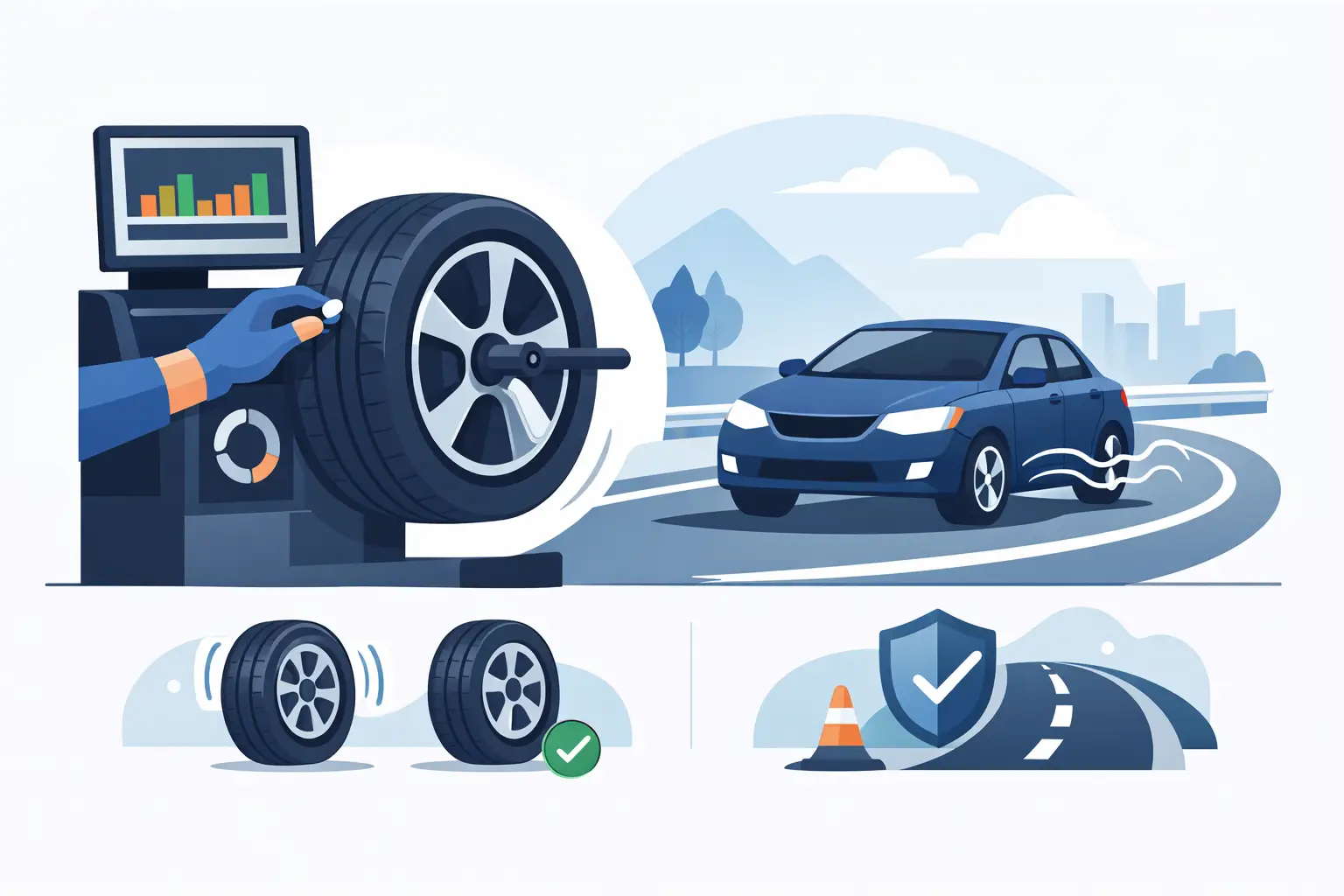
During wheel balancing, a technician uses a balancing machine to identify where the weight is uneven. Small wheel weights are then fitted to offset that heavy spot. Once balanced, the wheel can rotate smoothly rather than sending vibration through the steering, suspension, and cabin.
The weights are small, but the difference can be substantial. You may notice the steering wheel settles down, the seat no longer buzzes at speed, and the vehicle feels more planted on the road.
Why wheels go out of balance
Wheel balance is not a one-time, lifetime setting. Normal driving can change it. A weight can fall off after hitting a pothole or curb, especially on roads with rough surfaces. Replacing a tire, repairing a puncture, or fitting a different wheel can also affect the balance.
Tires naturally wear over time too. As the tread changes, the weight distribution can change with it. Mud, packed snow, or debris inside a wheel can occasionally cause a temporary imbalance, although this is less common in everyday local driving.
Even a brand-new tire should be balanced when it is fitted. The tire and wheel are separate parts, each with slight variations in weight. Fitting them together creates an assembly that needs checking before it goes back on the vehicle.
The main signs you need wheel balancing
The most familiar sign is vibration at a particular speed range. Many drivers first notice it between around 50 and 70 mph, though the exact speed varies by vehicle and how far out of balance the wheel is.
If the vibration is mainly felt through the steering wheel, the issue may be at the front. If you feel it more through the seat, floor, or whole vehicle, a rear wheel may be involved. That is a useful clue, but it is not a diagnosis on its own. Tire damage, bent wheels, worn suspension components, and alignment issues can produce similar symptoms.
Look out for these common warning signs:
- A steering wheel that shakes or trembles at speed
- Vibration through the seat or floor of the car
- Tires wearing unevenly or more quickly than expected
- A humming, droning, or unsettled feeling that increases with speed
- A wheel weight visibly missing from the rim
Do not assume every vibration is harmless. If the shaking is severe, begins suddenly, or comes with a pulling sensation, banging noise, loss of tire pressure, or a damaged-looking tire, stop driving when it is safe to do so. A loose wheel, tire defect, or suspension problem needs checking promptly.
Wheel balancing vs. wheel alignment
These services are often mentioned together, but they solve different problems.
Wheel balancing deals with how the tire and wheel spin. It corrects uneven weight around the wheel assembly and is mainly associated with vibration.
Wheel alignment deals with the direction the wheels point and how they sit against the road. If alignment is out, the vehicle may pull left or right, the steering wheel may sit off-center, or the inside and outside edges of the tires may wear too quickly.
A pothole can affect either one, or both. That is why a proper inspection matters. Balancing a wheel will not fix a car that pulls because its alignment is off. Equally, an alignment adjustment will not usually stop a steering wheel vibration caused by an unbalanced tire.
Is it safe to keep driving with unbalanced wheels?
A mild vibration may not leave you stranded immediately, but it is not something to ignore for months. The constant shaking can make driving tiring, reduce comfort, and contribute to uneven tire wear. In some cases, it can also put extra stress on suspension and steering parts.
The bigger concern is that vibration can hide a more serious fault. A wheel that suddenly shakes after a pothole strike may be out of balance, but it could also have a bent rim, a tire bulge, or internal tire damage. Those problems need more than a balancing weight.
If your vehicle is vibrating, it is sensible to get it checked before a longer trip or regular highway driving. A quick inspection can separate a simple balance issue from a problem that needs tire replacement or alignment support.
How a mobile wheel balancing service helps
Finding time for a garage appointment is not always easy. You may be at work, looking after children, managing a busy schedule, or dealing with a car that does not feel safe to drive any farther than necessary.
That is where a mobile service makes practical sense. Instead of sitting in a waiting room or rearranging your day, a properly equipped technician can come to your home, workplace, or roadside location. The wheels can be checked, tires inspected, and balancing carried out where your vehicle is parked, provided the location is safe and suitable for the work.
Lee’s Mobile Tyres helps drivers around Reading, Basingstoke, Bracknell, and nearby areas get straightforward tire support without the usual garage hassle. If a balance issue turns out to be a puncture, worn tire, or damaged sidewall instead, it can be identified before you spend money on the wrong repair.
When should you have your wheels balanced?
There is no single mileage rule that fits every driver. A vehicle used mostly for short local trips may show no symptoms for a long time, while a commuter who spends hours on faster roads may notice a minor imbalance quickly.
As a practical rule, have balancing checked whenever new tires are installed, after a puncture repair that involved removing the tire, or when a wheel has taken a hard hit. It is also worth checking if you lose a wheel weight or begin feeling vibration at speed.
Some drivers choose to have their wheels balanced during regular tire rotations or seasonal tire changes. That can be worthwhile, particularly if the vehicle covers high mileage. However, there is no need to pay for balancing repeatedly when the car drives smoothly, the tires are wearing evenly, and there has been no impact or tire work.
What wheel balancing cannot fix
Wheel balancing is effective, but it is not a cure-all. A balancing machine cannot repair a tire with a bulge, deep sidewall cut, exposed cords, or irregular wear caused by a worn suspension part. It also cannot straighten a badly bent wheel or correct poor wheel alignment.
That is why the tire inspection comes first. A good technician checks the tire condition, tread wear, wheel rim, valve area, and visible suspension concerns before treating the vibration as a simple balance job. The right fix depends on what caused the problem, not just what symptom you can feel.
A smooth ride is easy to take for granted until your steering wheel starts shaking. If your car feels unsettled at speed, getting the wheels checked early can save a tire, protect your comfort, and give you confidence for the next drive.