
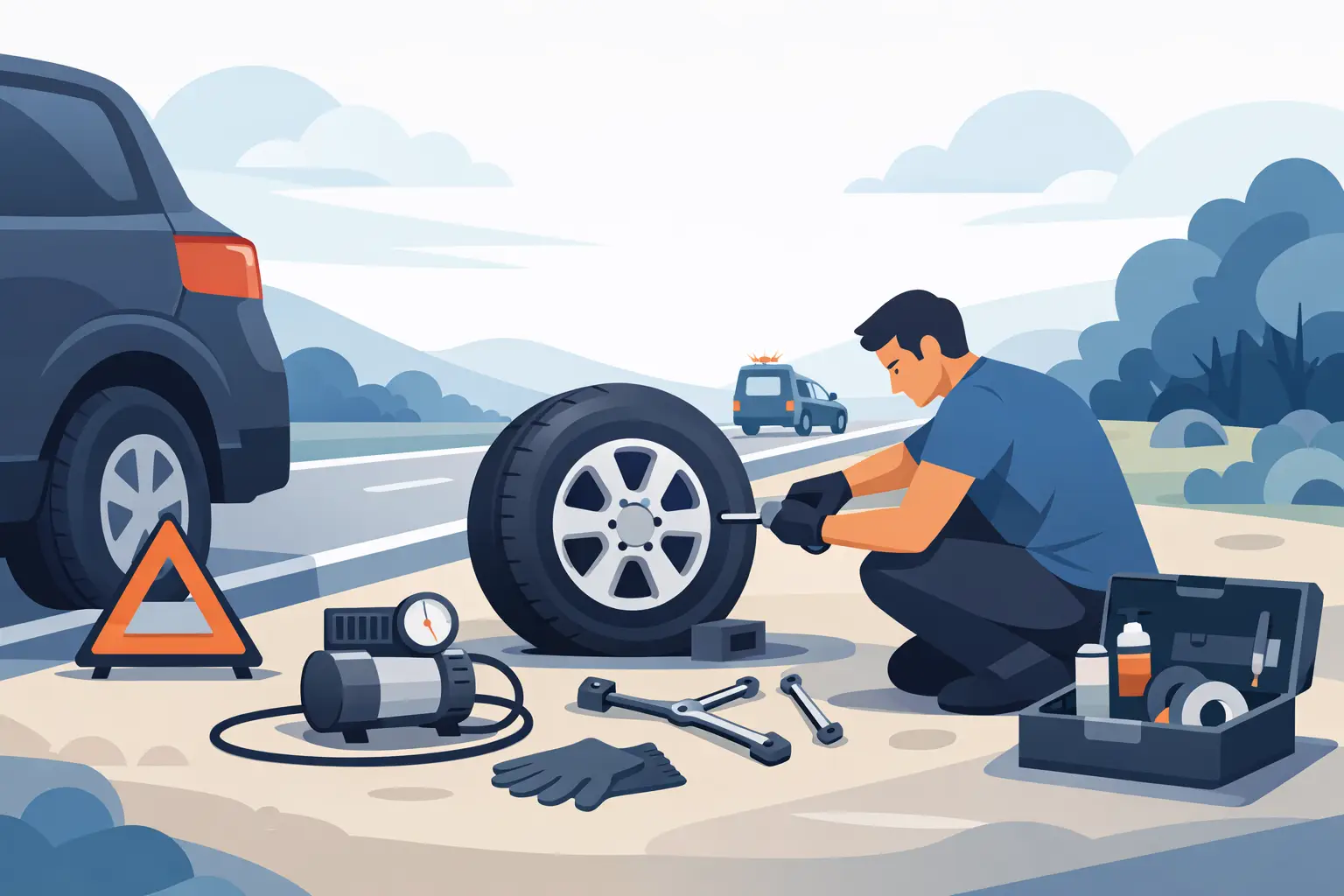
Best Emergency Tyre Repair Options When Stranded
A flat tire rarely happens when you have time to spare. It happens outside work, on the school run, before an early shift, or when the car is parked on your driveway and will not move. The best emergency tyre repair options are the ones that get you safely mobile without turning one puncture into a full day of disruption.
The right answer depends on what has damaged the tire, where the damage sits, whether you have a usable spare, and how far you need to travel. A temporary fix may be enough to get off a dangerous roadside. In other cases, the safest and quickest route is a professional mobile repair or replacement at your location.
First, make the situation safe
If the tire goes flat while driving, do not brake sharply or keep pushing on at normal speed. Ease off the accelerator, hold the steering wheel firmly, and pull over somewhere safe as soon as you can. Put on your hazard lights, keep well away from moving traffic, and avoid standing on the traffic-facing side of the vehicle.
Do not drive on a fully flat tire unless moving a very short distance is the only way to get out of immediate danger. Even a slow trip can destroy the tire’s internal structure and damage the wheel. What may have been a simple repair can quickly become a replacement, plus the cost of a bent or cracked rim.
Once you are parked safely, take a quick look. A nail or screw in the central tread is often repairable. A split sidewall, a large tear, visible cords, or a tire that has been driven flat usually means replacement is the sensible option.
Best emergency tyre repair options, explained
Fit your spare tire
A full-size spare is often the most straightforward emergency option. If it is correctly inflated, in good condition, and matches the vehicle’s wheel setup, it can keep you on the road while you arrange a proper inspection of the damaged tire.
A space-saver spare can also get you moving, but it has limits. These temporary spares usually have a lower speed limit and should only be used for a short distance. Check the label on the tire or your vehicle handbook, drive carefully, and arrange a repair or replacement as soon as possible. It is not a tire to leave on for weeks.
Changing a wheel yourself makes sense only if you are in a safe location, have the right tools, and feel confident doing it. On a narrow road, a busy shoulder, in heavy rain, or after dark, it is often better not to take the risk. A mobile tire professional can handle the wheel change without asking you to work beside traffic.
Use a tire sealant kit – only as a temporary measure
Many newer vehicles do not carry a spare. Instead, they have an inflator and sealant kit. The sealant is pushed into the tire through the valve, then the compressor reinflates it. This can be useful for a small puncture in the tread area and may get you home or to a safe place.
There are important trade-offs. Sealant will not fix sidewall damage, a damaged valve, a bent wheel, or a large hole. It can also make a later repair more difficult, and the technician needs to know it has been used before removing the tire. If the kit cannot hold pressure, do not keep adding air and hoping for the best. The tire needs professional attention.
Plug kits are not a proper roadside repair
DIY tire plug kits are easy to find, and they may appear to solve a small puncture quickly. But they are not the best choice for most drivers in an emergency. Fitting a plug from the outside does not allow the inside of the tire to be inspected for hidden damage, and it is not suitable for every puncture.
A proper puncture repair involves removing the tire, checking the inside, preparing the damaged area, and fitting an approved repair where the tire can safely accept one. That inspection matters. If you have driven while the tire was low on air, the inner sidewall may already be damaged even if the hole itself looks minor.
Call for a mobile puncture repair
For a repairable puncture, mobile service is usually the least disruptive option. Rather than arranging recovery, finding a garage appointment, and waiting around, the technician comes to your home, workplace, or roadside location with the equipment needed to assess the tire properly.
This is particularly useful if the car is stuck on a driveway, you have no spare, or your day cannot pause for a garage visit. A professional can confirm whether the puncture is safely repairable, repair it if it is, check the tire pressure, and get you moving again. If it is not repairable, you get a clear answer before wasting time on a temporary fix.
Replace the tire where you are
Replacement is the right call when the sidewall is cut, the puncture is too close to the edge of the tread, the tire has been run flat, or the remaining tread is already low. It may also be necessary if the tire has a bulge, exposed cords, or repeated damage in the same area.
A mobile replacement means you do not need to tow the car to a shop. The tire can be fitted and balanced at your location, whether you are at home before work, parked at the office, or stranded nearby. For drivers watching costs, a fully tested part-worn tire can sometimes be a practical option, provided it is the correct size, in sound condition, and has safe tread remaining. New tires are often the better long-term choice, especially when matching an axle pair matters.
Can your tire actually be repaired?
Most repair decisions come down to location and damage. A small, clean puncture in the main central tread area may be repairable if the tire has not been driven flat. Damage to the shoulder or sidewall is generally not repairable because those parts flex heavily as you drive.
The cause matters too. A screw through the tread is very different from a pothole impact that has pinched the tire and bent the wheel. A slow leak may come from corrosion around the wheel rim, a faulty valve, or a previous repair rather than a puncture at all. A good emergency service checks the whole issue, not just the most obvious symptom.
Be cautious if the tire pressure warning light came on but the tire still looks normal. Check the pressure if you can, but do not assume it is safe to continue. Modern tires can lose a significant amount of air before they visibly sag, and a slow leak can become a complete flat on a fast road.
What to tell a mobile tire technician
A few clear details can speed up the callout. Explain where the vehicle is, whether it is safe to access, and whether the tire is fully flat or losing air slowly. If you can see a nail, screw, cut, or bulge, mention that too.
It also helps to provide your tire size, which is printed on the sidewall in a format such as 225/45 R17. If you cannot find it, the vehicle registration, make, model, and year will help identify suitable options. Let the technician know if your vehicle has locking wheel nuts and where the locking key is kept. Without that key, the wheel may not be removable.
At Lee’s Mobile Tyres, the aim is simple: assess the problem where you are and provide the safest practical fix without making you lose a day to a garage visit.
Avoid the fixes that create bigger problems
Do not keep reinflating a tire that loses pressure quickly and then drive as normal. Do not rely on a sealant kit for a sidewall cut. And do not fit one mismatched tire without checking whether your vehicle’s drivetrain or manufacturer guidance requires tires to be closely matched across an axle, or on all four wheels.
If your tire has failed because of a pothole, inspect the wheel as well. Vibration through the steering wheel, a pull to one side, or repeated pressure loss can point to a wheel or alignment issue. Replacing the tire alone may not solve it.
The best emergency option is not always the cheapest item in the moment. It is the option that gets you safely moving, protects the rest of your vehicle, and does not leave you facing the same problem again tomorrow. When in doubt, stop in a safe place and get the tire checked where you are.