Do Mobile Fitters Carry Tyres? What to Expect
A flat tire outside your house is frustrating enough. Finding out you need a replacement, then wondering whether the person coming out will actually have one with them, adds another problem. So, do mobile fitters carry tyres? Usually, yes – but the exact answer depends on your vehicle, tire size, and whether you need a common replacement or something more specialist.
A properly equipped mobile tire service carries a working selection of popular tire sizes, repair equipment, balancing tools, and the gear needed to get you moving again at home, work, or the roadside. The best way to avoid delays is to give the fitter your tire size and vehicle details when you call.
Do mobile fitters carry tyres for every vehicle?
No mobile fitter can carry every tire made for every car, van, SUV, and wheel size. There are too many combinations of widths, profiles, rim diameters, load ratings, speed ratings, and tire types. A van used for work, for example, may need a higher load-rated tire than a family hatchback with a similar-looking wheel.
What a mobile fitter should carry is a sensible range of the sizes drivers need most often in the local area. That commonly includes everyday passenger-car tires, popular SUV sizes, and selected commercial-vehicle tires. Many also keep fully tested part-worn tires available for drivers who need a safe, more affordable option quickly.
For less common sizes, premium brands, run-flat tires, high-performance fitments, or unusual van tires, the fitter may need to collect the correct tire from a supplier before coming out. That does not mean you have to visit a garage. It simply means the job is booked once the right tire is confirmed and secured.
What a mobile tire fitter normally brings
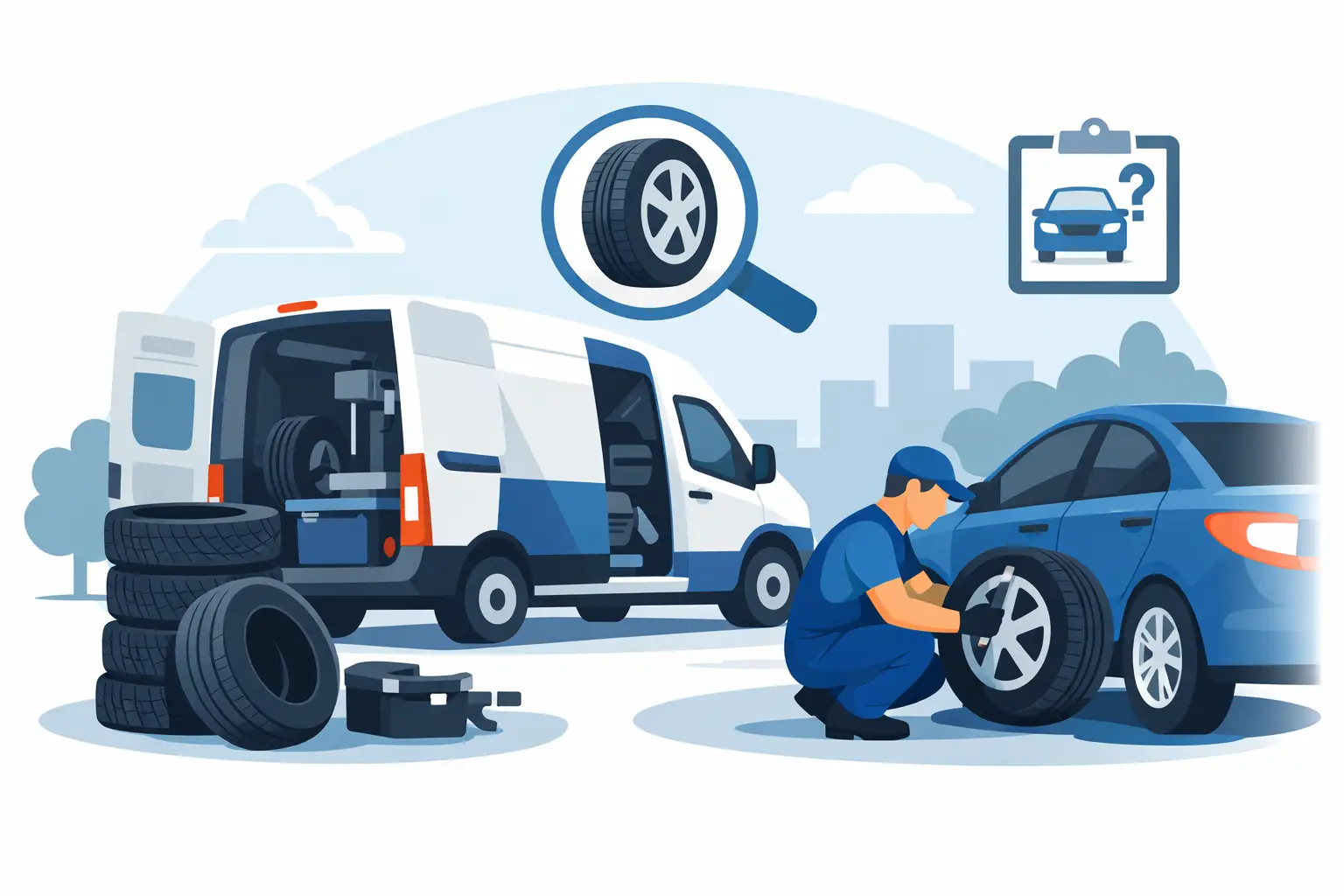
A mobile fitting van is more than a car with a spare tire in the back. It is a compact workshop set up to handle the practical work on site. Along with replacement tires, the vehicle should have tire-changing machinery, an air compressor, wheel-balancing equipment, valves, weights, tools, and puncture-repair materials.
That lets the fitter remove the damaged wheel, inspect the tire, fit the replacement, balance it where needed, and check the pressures before you drive away. For a straightforward puncture that can be safely repaired, there may be no need to replace the tire at all.
The stock on board matters, but so does the ability to respond properly when stock is not immediately available. A good local service will be clear from the start: they will tell you whether they have a suitable tire in the van, whether they can source it that day, and what the price will be before work begins.
Why your tire size matters before the callout
The numbers on the sidewall are the quickest way to help a fitter find the right match. A tire marked 205/55 R16, for instance, has a 205 mm width, a 55 profile, and fits a 16-inch wheel. There will also be a load and speed rating, such as 91V, which must be suitable for your vehicle.
If you can, take a clear photo of the tire sidewall and send it when you get in touch. It reduces guesswork and gives the fitter the best chance of arriving with the right replacement. Your vehicle registration, make, model, and year can also help, although the sidewall marking is usually the most reliable check because wheels may have been changed from the original factory size.
Do not choose a tire only because it is the cheapest option or because the size looks close enough. The wrong fitment can affect handling, braking, insurance requirements, and tire wear. A mobile fitter should check that the proposed tire is appropriate, not just available.
Information that helps get the job done faster
When you call, explain where the vehicle is, whether it is safe to access, and whether the tire is flat, damaged, or simply worn out. Let the fitter know if you have a locking wheel nut and where the key is kept. Without that key, the wheel may not be removable.
It also helps to say whether your car has run-flat tires, a tire-pressure monitoring system, or unusually large alloy wheels. These jobs can require extra care or specific equipment. A clear description at the start prevents a wasted visit and gets the right solution to you sooner.
Can a mobile fitter repair a puncture instead?
Sometimes, and that can save you money. A puncture in the central tread area may be repairable if the tire has not been driven flat and the internal damage is limited. The fitter needs to remove and inspect the tire before confirming this. A nail in the tread is not an automatic repair, and a tire that looks fine from the outside may have suffered damage inside.
Damage to the sidewall, a split, a bulge, exposed cords, or serious wear means replacement is normally the safe option. The same applies when a tire has been driven with very low pressure for a distance. It may hold air after being inflated, but that does not make it safe to continue using.
A trustworthy fitter will not push a repair where a replacement is needed, and should not sell a replacement when a safe repair will do. That practical advice matters most when you are stuck on a driveway, in a work parking lot, or at the roadside and just want an honest answer.
New, part-worn, and emergency replacement options
A new tire is often the right choice if you plan to keep the vehicle, cover regular mileage, or need a matching pair on the same axle. It gives you known tread depth and a full service life. If a tire is being fitted alongside an existing tire, the fitter can advise whether the difference in tread depth is acceptable for your vehicle.
A quality, fully tested part-worn tire can be useful when budget is tight, the car is being sold soon, or you need a quick, temporary-value solution. It still needs to be legal, structurally sound, and thoroughly checked. Part-worn does not mean worn out. Ask about the tread depth, condition, and inspection carried out before it is fitted.
In an emergency, availability may shape the choice. The priority is getting a safe, correctly rated tire on the vehicle without making you wait days for a garage appointment. Lee’s Mobile Tyres can talk through the options based on your location, vehicle, and budget, then come to you with a clear plan.
What happens if the fitter does not have your tire?
First, they should confirm the exact fitment and check nearby supplier availability. Common tires can often be sourced quickly, sometimes on the same day. If the vehicle is parked safely, you may be able to arrange a convenient home or workplace appointment rather than losing time sitting in a waiting room.
If you are stranded, the situation is more urgent. The fitter may have a suitable tire in stock, offer a tested part-worn option, or arrange the fastest available replacement. The right answer depends on what is safe for your car and what is available locally. It is better to wait a little longer for the correct load and speed rating than accept a tire that should not be on the vehicle.
Mobile fitting is about convenience, not cutting corners. A fast response is valuable, but safe fitment, proper inflation, and balanced wheels are what make the repair worthwhile once you are back on the road.
A quick check before you book
Before agreeing to the callout, ask whether the fitter has your size available, whether the quoted price includes fitting, balancing, valve work, and disposal of the old tire, and how soon they can attend. You should also confirm the location is accessible and safe for work to be carried out.
If you are unsure of the tire size, do not worry. Take a photo of the sidewall or give the vehicle details and explain the problem. A responsive local fitter will help you identify what is needed rather than expecting you to know the technical details.
A flat tire does not need to turn into a day spent arranging transport and waiting at a garage. Keep your vehicle details handy, check the sidewall when you can, and make the call while the problem is still manageable.