Pothole Tyre Repairs: What to Check First
A pothole hit can feel minor in the moment, then turn into a flat tire, steering vibration, or a warning light a few miles later. Pothole tyre repairs are not always as simple as plugging a hole. The impact can damage the tire, wheel, or suspension, so the safest next step depends on what you can see and how the vehicle drives.
If you are in Reading, Basingstoke, Bracknell, or nearby and your car has taken a hard hit, do not assume it will be fine because the tire still looks inflated. A quick check now can prevent a roadside problem later.
What a pothole can do to a tire
Potholes are especially hard on tires because the sidewall takes the force of the impact. When a wheel drops into a deep hole, the tire can be pinched between the edge of the pothole and the wheel rim. That may cause an immediate puncture, but it can also weaken the tire internally without releasing air straight away.
The most obvious sign is a flat or rapidly deflating tire. You may also notice a bulge in the sidewall, a cut, a split, or scuffing around the edge of the rim. A sidewall bulge means the internal cords have been damaged. It is not cosmetic, and it is not a safe repair. That tire needs replacing.
A pothole can also bend or crack the wheel. Alloy wheels can crack around the rim, while steel wheels may bend enough to stop the tire sealing properly. Either problem can cause a slow leak. In some cases, the tire is sound but air is escaping where it meets a damaged wheel.
Pothole tyre repairs: when repair is possible
A repair may be possible when the damage is a small puncture in the center section of the tread, the tire has not been driven flat, and there is no sidewall or structural damage. A proper puncture repair involves removing the tire from the wheel, inspecting it inside and out, then repairing it from the inside. It is not the same as putting in a temporary roadside plug.
The location of the damage matters as much as its size. Holes near the shoulder of the tire, close to the sidewall, are generally not repairable because that part flexes heavily as you drive. Cuts, tears, exposed cords, and impact bubbles also mean replacement is the right call.
There is another important trade-off: even a repairable puncture may not be worth repairing if the tread is already low or the tire is old and cracked. Fitting a replacement can be better value than paying to repair a tire that will soon need changing anyway. A technician should explain the condition clearly so you can make a practical decision.
Do not keep driving on a damaged tire
Driving with low pressure can turn a straightforward puncture into a replacement job. The tire overheats and its internal structure can break down, even if it looks normal once reinflated. If the steering feels heavy, the vehicle pulls to one side, or you hear repeated thumping, pull over somewhere safe as soon as you can.
Do not drive on a tire with a sidewall bulge or visible split. Likewise, avoid driving if the wheel is visibly bent, cracked, or losing air quickly. The risk is not just another flat tire. A damaged tire can fail suddenly at speed.
If you have a spare and know it is safe to fit, it can get you out of immediate trouble. Remember that many modern vehicles have a temporary spare with speed and distance limits. If you do not have a usable spare, mobile tire help avoids the need to risk driving on damage or arrange a tow just to reach a tire shop.
Signs the wheel or alignment may also need attention
Not every pothole issue is visible. Your tire may hold air perfectly, but the impact may have affected the wheel balance or alignment. Watch for vibration through the steering wheel, especially at highway speeds, a vehicle that drifts left or right on a level road, or a steering wheel that is no longer centered when driving straight.
A bent wheel often creates a shake that gets worse as speed increases. Alignment problems can make a car pull and cause uneven tread wear over time. You might see one inner or outer edge of the tire wearing faster than the rest. Leaving it unchecked can shorten the life of a good tire and make the car less predictable in wet conditions.
A tire replacement solves the immediate problem, but it does not automatically correct a bent wheel or a knock to the suspension. This is why a post-impact inspection is worthwhile after a particularly sharp pothole strike. Sometimes the answer is simply a replacement tire and a balance. Other times, the vehicle needs wheel repair or alignment support before it will drive properly again.
What to do after hitting a pothole
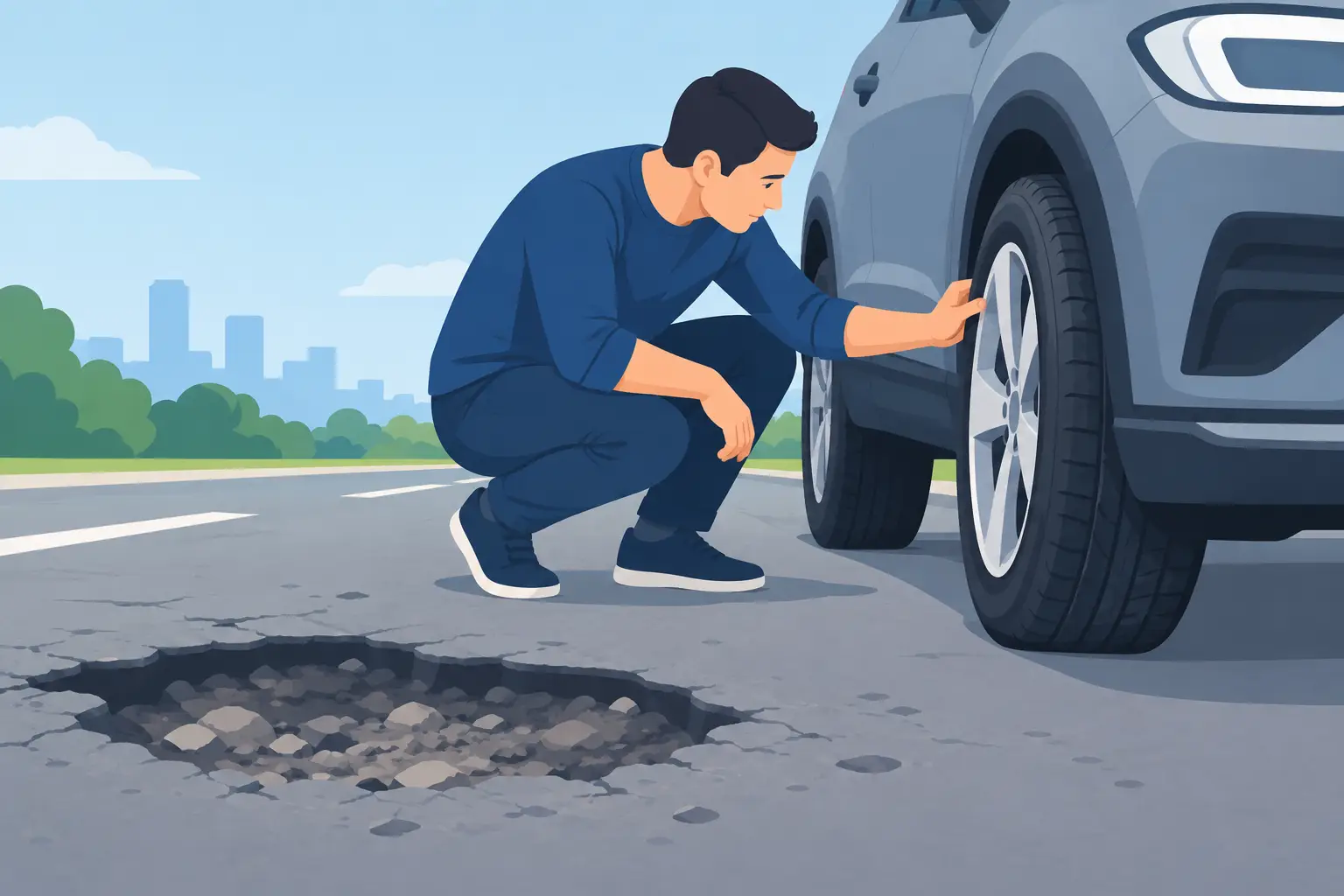
First, reduce speed gradually and avoid hard braking if it is safe to do so. Find a safe place to stop, turn on your hazard lights if needed, and look around each tire. Check for low pressure, cuts, bulges, or anything stuck in the tread. Do not put your hands near a hot wheel or attempt a repair beside fast-moving traffic.
Next, pay attention to how the vehicle behaved after the impact. Make a note of any warning light, vibration, pull, or new noise. That information helps a technician identify whether the issue is likely to be the tire, wheel, or something beyond it.
If the tire has gone flat, avoid repeatedly inflating it and continuing your journey. A slow leak may let you reach a safer location, but it still needs checking before regular driving. If air is escaping quickly or there is visible sidewall damage, stay parked and arrange assistance.
Mobile help makes an awkward problem simpler
A pothole does not care whether you are outside work, on the school run, or parked at home with a full day ahead. The practical benefit of a mobile tire service is that the inspection and fitting can be done where the car is, rather than asking you to drive on a questionable tire or lose hours at a garage.
Lee’s Mobile Tyres can assess the damage at your location and advise whether a safe repair is possible or whether replacement is needed. Where appropriate, a fully tested part-worn tire may offer a more affordable solution, while a new tire can be fitted when that is the better choice for your vehicle and mileage. The right option depends on tire size, tread condition, axle matching, and what the damage has done.
For vehicles with all-wheel drive, matching tires can matter even more. Significant differences in tread depth or tire type between wheels may affect how the drivetrain operates. That does not always mean replacing every tire, but it is a reason to get straightforward advice before choosing the cheapest immediate fix.
A quick check is cheaper than being stranded
You cannot avoid every pothole, especially after heavy rain or on poorly lit roads. But you can avoid turning one impact into a bigger problem. Check the tire pressure after a hard hit, look closely at the sidewalls, and take any new vibration or pulling seriously.
If something does not feel right, get it looked at before the next commute. A prompt inspection can mean the difference between a repairable puncture and a damaged tire that leaves you stuck when you least expect it.