Emergency Tyre Fitting Process Explained
A flat tire rarely happens at a convenient time. It happens before the school run, halfway through a workday, or when you are ready to head home after a long shift. This emergency tyre fitting process explained guide shows you what a mobile technician does from the moment you call, so you know what to expect and can get moving again with less stress.
First, make the vehicle and roadside safe
If you notice a sudden loss of pressure, a loud thump, pulling through the steering wheel, or a tire that visibly looks flat, reduce speed gradually. Avoid sharp braking or hard turns. Pull over somewhere safe and as far away from moving traffic as possible, then switch on your hazard lights.
Do not keep driving on a flat tire to reach a gas station or parking lot if it can be avoided. Even a short distance can destroy the tire sidewall, damage the wheel, and turn a repairable puncture into a full replacement. If you are on a fast road, narrow shoulder, blind bend, or any place where getting out of the vehicle feels unsafe, stay inside with your seat belt fastened and call for help.
At home or work, the situation is usually simpler, but the same rule applies: do not attempt to drive the vehicle until the tire has been checked. A tire can look only slightly low and still be unsafe to use.
What to have ready when you call
A good emergency fitting starts with clear information. The technician will normally ask where you are, your vehicle make and model, and which tire is affected. If you can safely check, the tire size is printed on the sidewall in a format such as 205/55R16. A photo can also help confirm the size and identify whether the wheel has any visible damage.
It is useful to mention whether you have a spare tire, locking wheel nuts, run-flat tires, low-profile tires, or a puncture caused by a screw or nail. You do not need to diagnose the problem perfectly. Just explain what happened and what you can see. The goal is to make sure the mobile van arrives with the right equipment and the right replacement options.
For urgent callouts around Reading, Basingstoke, Bracknell, and nearby areas, Lee’s Mobile Tyres can arrange fitting at your home, workplace, or a safe roadside location. Availability and arrival time depend on the location, traffic, tire size, and stock, so a straightforward conversation at the start avoids surprises.
Emergency tyre fitting process explained, step by step
1. The technician checks the damage
Once on site, the first job is inspection, not immediately fitting a new tire. The technician checks the tire tread, sidewalls, valve, wheel rim, and the area around the puncture. A nail in the central tread area may be repairable. A split sidewall, a tire driven while flat, or damage close to the shoulder generally means replacement is the safe option.
This is one reason mobile help is more than simply changing a wheel. The visible object in the tread is not always the whole story. Internal damage can happen when a flat tire has been driven on, and a professional inspection helps prevent you from leaving with a tire that fails again a few miles later.
2. You are given the practical options
If a repair is safe and suitable, it may be the fastest and most affordable answer. If the tire needs replacing, you should be told what is available for your size and vehicle. That can include a new tire or, where appropriate, a fully tested part-worn tire.
The right choice depends on your budget, how long you plan to keep the vehicle, the condition of the tire on the other side of the axle, and what is in stock at the time. A part-worn tire can be a sensible short-term or lower-cost option when it has been properly inspected. A new tire may make more sense for regular motorway driving, high annual mileage, or when you want the most consistent tread depth and performance.
Price should be clear before work begins. If a specific tire is unavailable, a reliable fitter will explain the alternatives rather than fitting something unsuitable just to finish the job.
3. The vehicle is lifted correctly
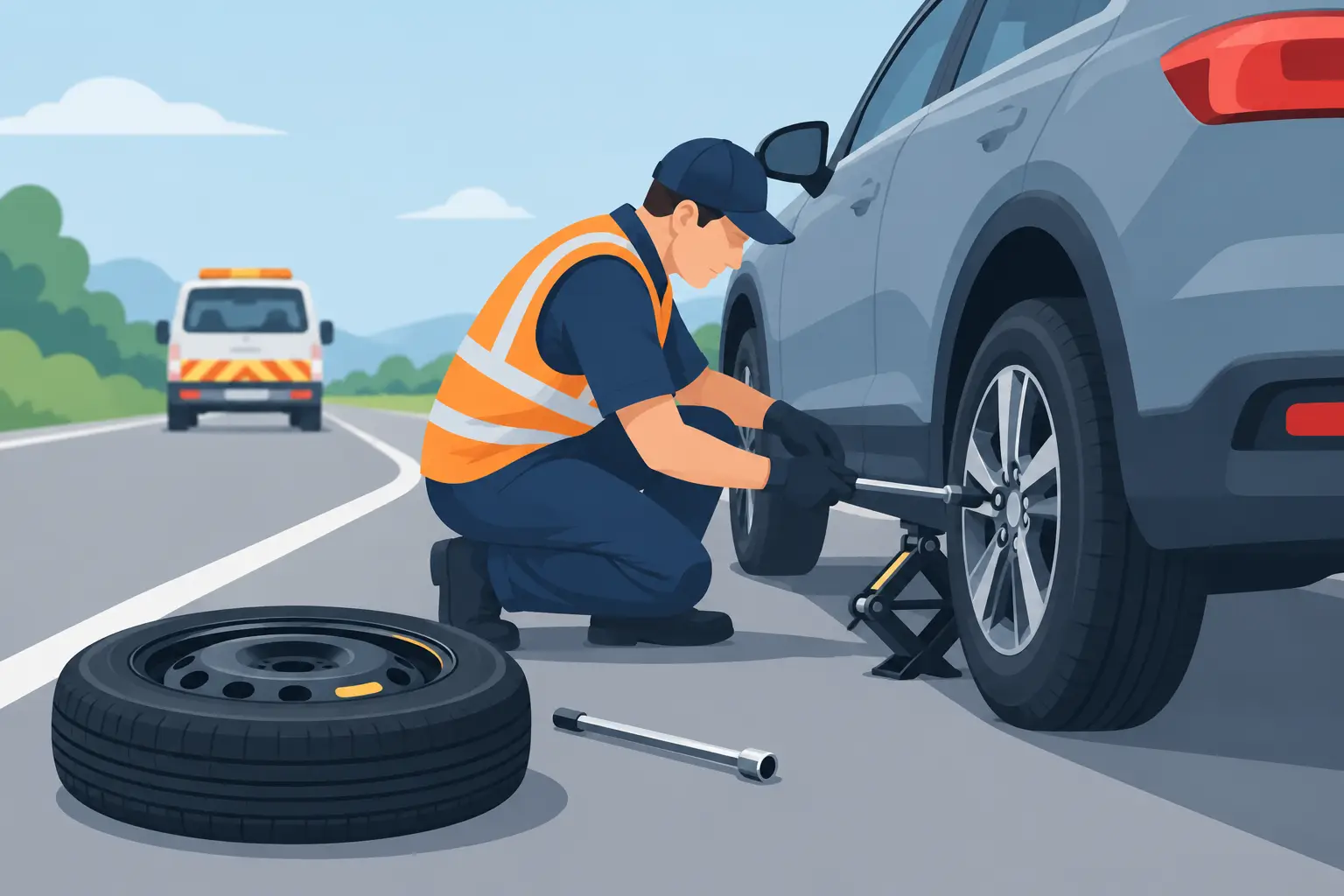
The vehicle is positioned on firm, level ground where possible. The technician applies the parking brake, uses suitable lifting equipment at the manufacturer-approved jacking point, and removes the wheel carefully.
Locking wheel nuts are a common delay when the key is missing, so it is worth checking your glove box, trunk, or tire repair kit if you know you have them. The locking key is usually a small, shaped socket that matches one unique wheel bolt pattern. Without it, the wheel may not be removable during a standard emergency visit.
4. The tire is repaired or replaced
For a suitable puncture repair, the tire is removed from the rim, inspected internally, repaired using the proper method, then reseated and inflated to the correct pressure. External plug-only repairs may seem quick, but they do not provide the same opportunity to inspect the inside of the casing.
For a replacement, the old tire is removed using a tire machine so the wheel and tire bead are protected. The replacement is fitted, lubricated correctly at the bead, and inflated to seat safely on the rim. The technician will also inspect the valve and replace it when necessary.
If your vehicle uses a tire pressure monitoring system, extra care is needed around the sensor inside the wheel. These sensors can be damaged by poor handling, which is another reason an equipped mobile service is preferable to trying to force a tire off with basic tools.
5. The wheel is balanced and refitted
A newly fitted tire should be balanced before the wheel goes back on the vehicle. Balancing corrects small weight differences around the wheel and tire assembly. Without it, you may feel vibration through the steering wheel or seat, especially at higher speeds.
The wheel is then refitted and wheel nuts are tightened to the correct specification. The technician lowers the vehicle, performs final torque checks, and confirms the tire pressure. Where needed, they can also advise whether the other tires show signs of uneven wear, low tread, cracking, or incorrect pressure.
What happens to the old tire?
A worn or damaged tire should not be left on the roadside or placed in regular household trash. It needs to be handled through the proper disposal route. Ask your fitter whether removal is included as part of the service, particularly if you are having a replacement fitted at home or work.
Keeping old tires out of sheds, yards, and vehicle trunks also makes practical sense. They take up space, collect water, and can become a problem long after the emergency has passed.
Can you drive straight away after fitting?
Usually, yes. Once the replacement is fitted, inflated, balanced, and secured, you can normally continue your journey. Drive sensibly for the first few miles and pay attention to how the vehicle feels. If you notice vibration, pulling, a warning light, or a pressure loss, stop safely and contact the fitter.
There are a few exceptions. If the damaged tire was caused by a hard pothole impact or curb strike, the wheel may be bent or the alignment may have been affected. A mobile fitter can identify obvious issues, but a separate alignment check may be recommended if the steering wheel is no longer straight, the vehicle pulls to one side, or the tires are wearing unevenly.
A few steps that prevent the next emergency
Check tire pressures at least once a month and before long trips, using the pressure figure listed for your vehicle rather than the maximum pressure printed on the tire. Look for cuts, bulges, exposed cords, and objects embedded in the tread. Do not ignore a slow puncture just because you can keep adding air.
Also check that your locking wheel nut key is in the vehicle and that you know where it is. It is a small detail that can save a lot of time when you need help quickly.
A flat tire is disruptive, but it does not have to take over your day. Get to a safe spot, give clear details when you call, and let an experienced mobile fitter assess the safest repair or replacement for the road ahead.