Part Worn Versus Budget Tyres: Which Is Safer?
A flat tire rarely happens when you have time to spare. You may be outside work, on the school run, or parked at home with a tire that cannot safely be driven on. When the choice comes down to part worn versus budget tyres, the cheapest price on the day is only one part of the decision. The right option depends on the tire’s condition, how long you need it to last, and how much certainty you want from your replacement.
For many drivers, a properly checked part-worn tire can be a sensible way to get moving again without a large bill. For others, a new budget tire offers better long-term value and fewer unknowns. Here is how to make the call without overcomplicating it.
What is a part-worn tire?
A part-worn tire is a used tire that has already been fitted to another vehicle but still has usable tread remaining. Some come from vehicles that have been broken for parts, while others are removed after an owner changes wheel size, replaces a full set, or sells a vehicle.
The key point is that a part-worn tire is not automatically a bad tire. A good one should be thoroughly inspected before fitting. That means checking its tread depth, overall age, sidewalls, bead area, inner liner, and any signs of damage or previous repair. It should also be the correct size, load rating, and speed rating for your vehicle.
The quality can vary more than it does with a new tire. Two used tires with similar-looking tread may have had very different lives. One may have covered easy motorway miles; the other may have been driven underinflated, hit potholes, or suffered damage that is not obvious from the outside. That is why the inspection matters as much as the tread.
What do you get with a new budget tire?
A budget tire is a new tire made by a lower-cost manufacturer. It has not been used, has full original tread, and should meet the required standards for sale in your area. Compared with a premium brand, it may use less advanced compounds, have a simpler tread pattern, or deliver less refined wet-weather grip and road noise performance.
That does not mean every budget tire is poor. For everyday town driving, short commutes, and vehicles that do not cover huge annual mileage, a decent new budget tire can be a practical choice. You know its history because it has none. You also have the best possible starting tread depth, so it should generally give you more miles than a used tire with the same purchase price.
If you are replacing a tire on a family car, commuting daily, or regularly driving at highway speeds in rain, the reassurance of a new tire often makes the extra cost worthwhile.
Part worn versus budget tyres: the main differences
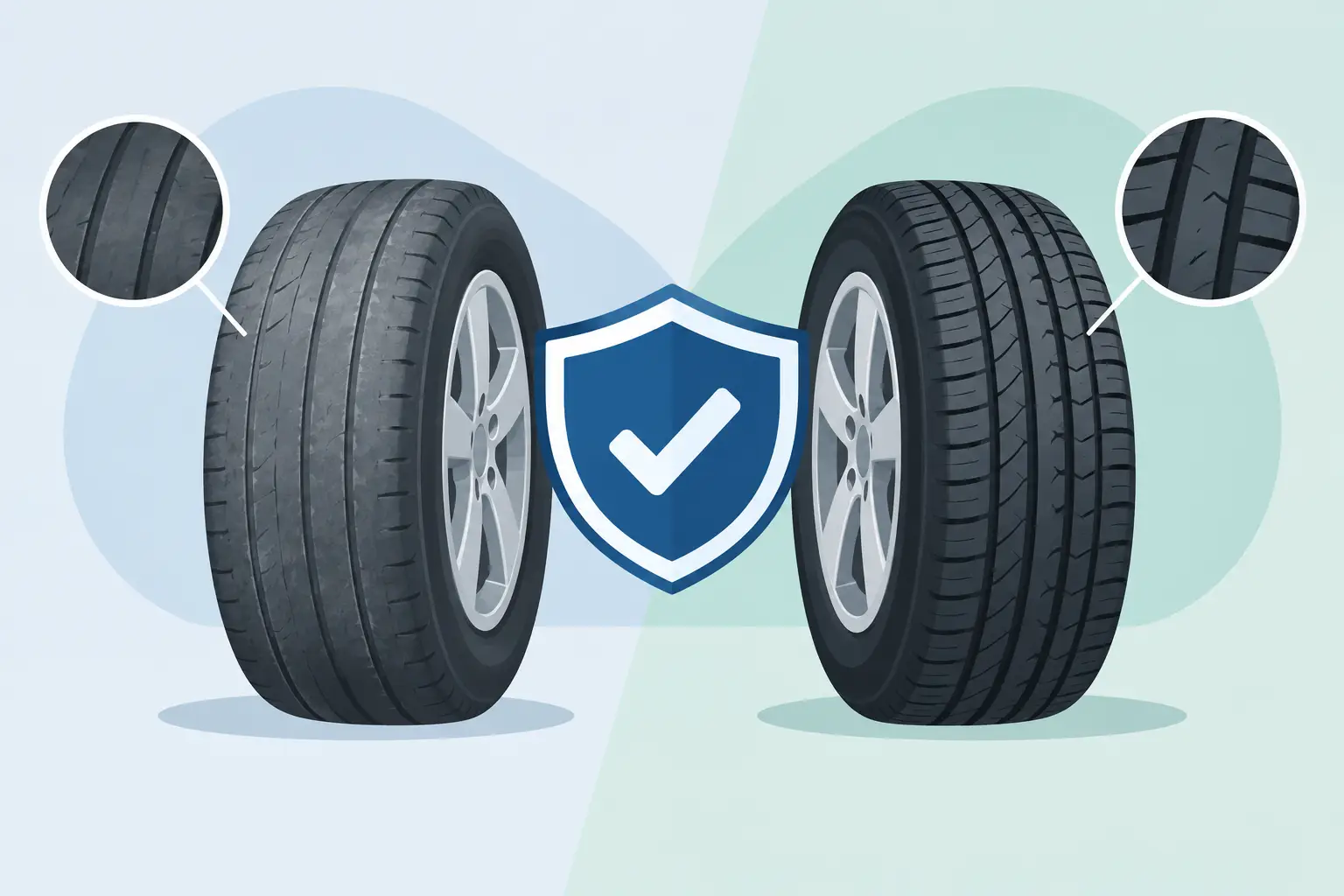
The biggest difference is certainty. A new budget tire has a known age, full tread, and no hidden road history. A part-worn tire may cost less up front and can be a strong option when it has been carefully selected, but it will have less tread and more variables.
Up-front cost
Part-worn tires are often cheaper than new budget tires, sometimes by a useful margin. That can make a real difference when you have an unexpected puncture or need to get a second car back on the road quickly.
A lower purchase price is especially useful if you need one matching tire to keep a vehicle legal and mobile for the short term. It can also make sense for a car you plan to sell soon, provided the tire is in safe, serviceable condition.
Tread life
This is where new budget tires usually pull ahead. A used tire may have plenty of visible tread, but it has already used a portion of its life. The closer it is to the legal minimum, the less value it represents, even if the price looks tempting.
Ask about the measured tread depth rather than relying on a quick glance. Also look for even wear across the tire. Heavy wear on one shoulder can point to alignment, suspension, or inflation problems. Fitting another tire without dealing with the underlying cause may simply lead to the same problem again.
Wet grip and everyday safety
Tread depth helps move water away from the contact patch. As tread gets lower, a tire’s ability to clear standing water reduces, and stopping distances can increase in wet conditions. That matters on busy roads, during heavy rain, and when carrying children, tools, or passengers.
A newer tire also has fresher rubber. Tires can age even when their tread looks acceptable, particularly if they have spent long periods exposed to sunlight or stored poorly. Cracking, hard rubber, bulges, cuts, and damaged sidewalls are all reasons to reject a tire.
Matching your existing tires
If only one tire needs replacing, finding the same brand, model, and size may not always be possible. A suitable part-worn tire can sometimes be the quickest way to match the tread pattern and remaining depth on the other tire on that axle.
However, matching is not just about appearance. Tires on the same axle should be as closely matched as possible in size, construction, and wear. On some all-wheel-drive vehicles, differences in rolling circumference can cause extra strain on the drivetrain. If you are unsure, it is worth checking the vehicle handbook or asking a tire professional before fitting a single replacement.
When a part-worn tire makes sense
A fully inspected part-worn tire can be a sensible choice when you need a quick, affordable replacement and the tire has strong remaining tread with no signs of damage. It can work well for a temporary situation, a low-mileage vehicle, or a single-tire replacement where a close match is needed.
The best part-worn option is not necessarily the cheapest one. Look for a tire from a recognizable manufacturer, with even wear and a clear, healthy condition inside and out. Its date code should be checked too, since an old tire with good tread is not automatically a good buy.
You should walk away if there is a sidewall repair, a bulge, exposed cords, cracking, uneven wear, or uncertainty about whether the tire has been properly examined. Saving money is not worth taking a chance with the only part of your vehicle that touches the road.
When a new budget tire is the better choice
Choose a new budget tire if you want the longest usable life for your money, drive regular miles, or need more confidence in wet weather. It is also usually the better route when replacing both tires on an axle, because you can fit a matching pair with full tread from the start.
A budget tire is not the same as a premium tire, and drivers should be realistic about that. If you drive a performance vehicle, tow heavy loads, cover long highway distances, or regularly face poor weather, a mid-range or premium option may be worth considering. But for many everyday cars, a suitable new budget tire is a straightforward, dependable answer.
Do not overlook fitting, balancing, and tire pressure
Whether you choose used or new, the fitting work matters. A tire should be fitted correctly, inflated to the vehicle manufacturer’s recommended pressure, and balanced properly. Poor balancing can cause steering vibration and uneven wear, while incorrect pressure affects grip, fuel use, and tire life.
If the old tire wore unevenly, ask why. A pothole impact, incorrect alignment, worn suspension parts, or repeated low pressure can all shorten the life of the next tire. Catching that issue early can save more money than choosing the lowest-priced replacement.
For a puncture, repair may be possible if the damage is in the central tread area and the tire has not been driven flat. Damage near the shoulder or sidewall usually cannot be repaired safely. A proper assessment is better than guessing from the outside.
Making the right call when you need help now
If your vehicle is stranded, start with the practical facts: tire size, location, whether the tire is flat or damaged, and how soon you need to drive. A mobile tire service can assess the situation where you are, whether that is at home, at work, or roadside, without adding a garage trip to an already frustrating day.
Lee’s Mobile Tyres can help drivers around Reading, Basingstoke, Bracknell, and nearby areas weigh up a tested part-worn replacement against a new budget tire based on what is actually available and suitable for the vehicle. The aim is not to sell you more than you need. It is to get you safely moving again with a choice that makes sense for your mileage, budget, and plans.
A part-worn tire can be a good short-term answer when it has been properly checked. A new budget tire can be better value when you need more life and more certainty. If you are facing a flat tire today, choose the option you can trust on the next wet road, not just the one with the smallest number on the invoice.