Tyre Valve Leak Repair for Slow Air Loss
You top up a tire, drive for a day or two, then find the same corner looking low again. A tyre valve leak repair may be all that is needed, but a slow loss of air should never be ignored. It affects grip, braking, fuel use, and tire life long before the tire looks completely flat.
The valve is a small part, but it is the only point where air is intentionally allowed in and out of the tire. When it stops sealing properly, the problem can be quick to fix – or it can point to a damaged stem, corroded wheel, or a leak elsewhere that needs a proper inspection.
How to Tell if the Valve Is Actually Leaking
A tire that loses pressure can have a puncture, a poor seal between the tire and wheel, wheel damage, or a leaking valve. Guessing wastes time, especially when you need to get to work, collect the kids, or use the vehicle for your job.
The simplest first check is a small amount of soapy water around the valve stem and the valve core inside it. Bubbles that keep forming usually mean air is escaping there. Check with the valve cap removed, then check again around the base where the stem meets the wheel. Do this only when the tire is cool and parked safely.
A loose valve core often leaks from the center of the valve. A cracked rubber stem usually leaks around its base, particularly when the stem is bent. If there are no bubbles at the valve, do not assume the tire is fine. The tread, sidewall, and wheel rim still need checking.
Do not rely on the valve cap as a seal. Its job is to keep dirt and moisture out of the valve, not to hold tire pressure in. A missing cap should be replaced, but fitting a new cap alone will not cure a faulty valve.
What Causes a Tire Valve to Leak?
Valve leaks are common because valve stems live in a harsh place. They face heat, road spray, brake dust, potholes, and repeated pressure changes. Rubber slowly dries and cracks with age, while metal components can corrode.
A valve core can loosen over time or become contaminated by grit. This is sometimes a straightforward fix, but it needs the correct valve-core tool and care. Over-tightening can damage the core or the stem, creating a bigger leak than the one you started with.
The whole valve stem may also be failing. Rubber stems can split where they enter the wheel, and metal stems can suffer from corrosion around their sealing washer. Vehicles with tire pressure monitoring systems may have a sensor attached to the valve. Those require extra care because the wrong part or rough handling can damage the sensor.
A hard knock against a curb, a deep pothole, or an aging wheel can also cause the problem. In those cases, the valve may look like the obvious culprit while the real leak is at the tire bead, where the tire seals against the rim.
When a Tyre Valve Leak Repair Is a Simple Job
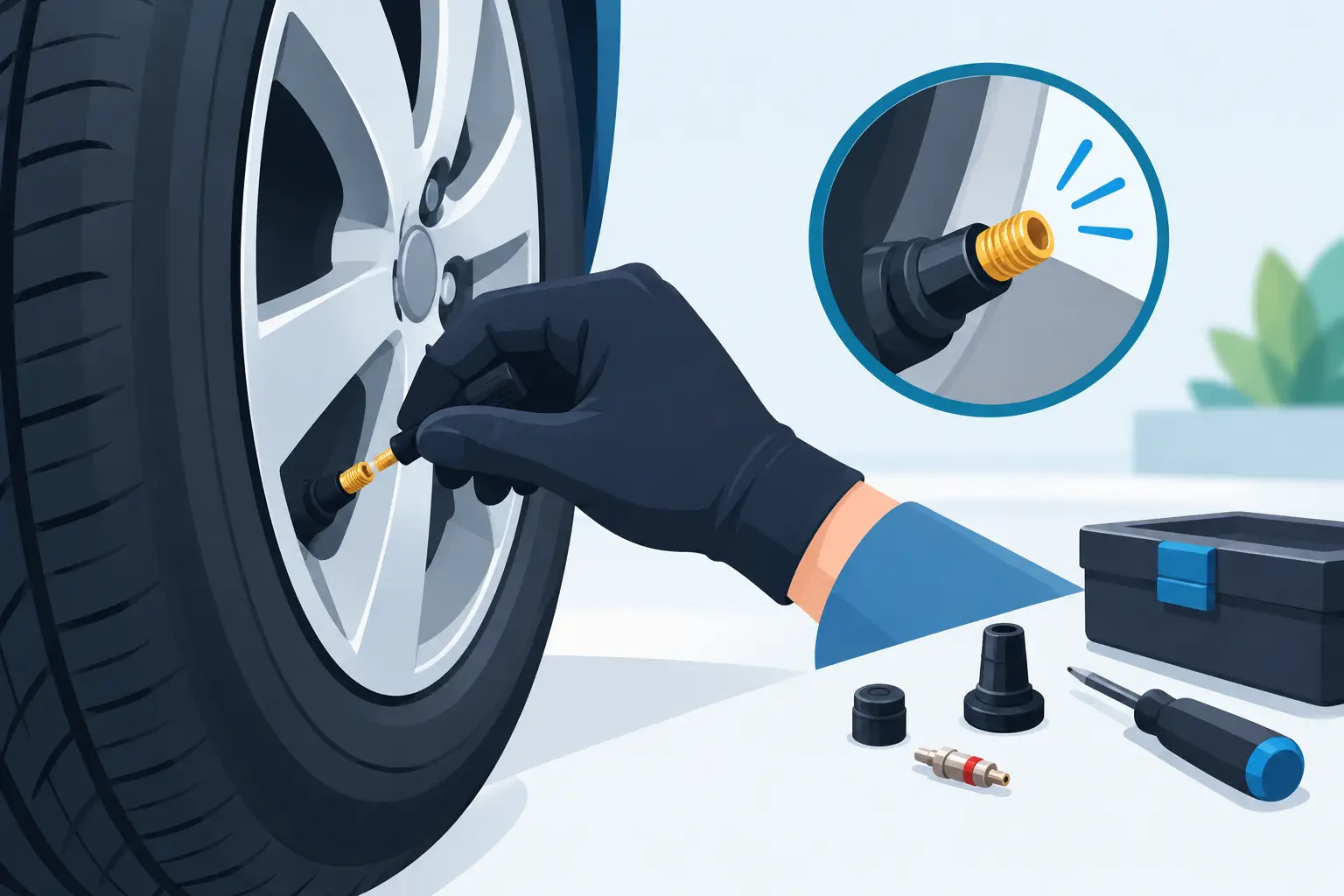
If the valve core is loose and the stem is in good condition, a technician can usually replace or correctly tighten the core, test it, and set the tire pressure. It is a small job, but the tire should be checked afterward to make sure there is not a second leak.
If the rubber valve stem is cracked, bent, or perished, replacing the stem is the sensible repair. This normally means removing the tire from the wheel so the new valve can be fitted and sealed correctly. The tire then needs reinflating and testing before it goes back into service.
With a standard valve, replacement is generally affordable and far better than continually adding air. The trade-off is that a proper stem replacement cannot usually be done with the tire still fully fitted to the wheel. It needs the right equipment, which is why a mobile tire service can save a trip to a garage.
For monitored tires, the technician should identify whether the valve is part of a tire pressure monitoring sensor. Sometimes only a service kit is needed, including a new seal, nut, and valve core. Other times the sensor itself may be corroded or damaged and need replacing. A warning light that stays on after the repair may need a sensor reset or further diagnosis.
Do Not Keep Driving on a Slow Leak
A slow leak feels manageable because the vehicle may drive normally after you add air. The trouble is that pressure can drop without you noticing, particularly after the car has been parked overnight. Low pressure makes the tire flex more, builds heat, and wears the edges of the tread faster.
That can turn a minor valve issue into a ruined tire. It also makes the vehicle less predictable in heavy rain and can affect stopping distances. If a tire is visibly low, do not drive on it just to see whether it holds. Inflate it only to the pressure shown on the vehicle placard, then arrange an inspection as soon as possible.
If the tire is flat, the sidewall is damaged, or you hear air rushing out, pull over somewhere safe. Avoid driving on a flat tire, even for a short distance. The wheel can damage the tire internally, leaving replacement as the only safe option.
A Mobile Repair Makes Sense When Time Is Tight
A valve problem rarely arrives at a convenient time. It often shows up on a driveway before the school run, in a work parking lot, or when you are ready to leave after a long shift. Taking time off to sit at a tire shop is not always practical.
Lee’s Mobile Tyres can inspect the tire where you are across Reading, Basingstoke, Bracknell, and nearby areas. A trained technician can find the source of the air loss, carry out a suitable valve repair where possible, and advise honestly if the tire, wheel, or sensor needs more work. If the tire cannot be saved, replacement options can be discussed on the spot.
That matters because not every pressure loss has the same answer. Replacing a valve stem will not fix a nail in the tread, and plugging a tire will not solve corrosion around the wheel rim. Proper testing avoids paying for a quick fix that leaves you with the same flat tire next week.
How to Prevent Another Valve Leak
There is no way to prevent every valve issue, but a few routine habits help. Check tire pressures at least once a month and before long trips, using the pressure listed for your vehicle rather than the maximum number molded into the tire sidewall. Replace missing valve caps promptly, and avoid metal caps if they are likely to corrode onto metal valve stems.
When tires are replaced, ask for the valve condition to be checked too. On vehicles with tire pressure monitoring systems, it is worth using the correct service parts rather than treating the valve as an afterthought. A small amount of maintenance during tire work can prevent an inconvenient flat later.
Most importantly, act when you notice repeat pressure loss. A quick inspection now is easier, safer, and usually cheaper than finding a flat tire when you are already late.