Mobile Tyre Fitting Versus Breakdown Recovery
A flat tire rarely happens at a good time. It happens before school drop-off, halfway through a work run, or late at night when the last thing you want is to sit on the side of the road wondering who to call. That is where mobile tyre fitting versus breakdown recovery becomes a real-world decision, not just a technical one.
If your problem is the tire itself, the right call can save you time, money, and a lot of stress. Many drivers assume breakdown recovery is the automatic answer any time the car will not move. Sometimes it is. But in plenty of cases, a mobile tire service is the quicker and more practical option because the issue can be fixed where the vehicle is sitting.
Mobile tyre fitting versus breakdown recovery – what is the difference?
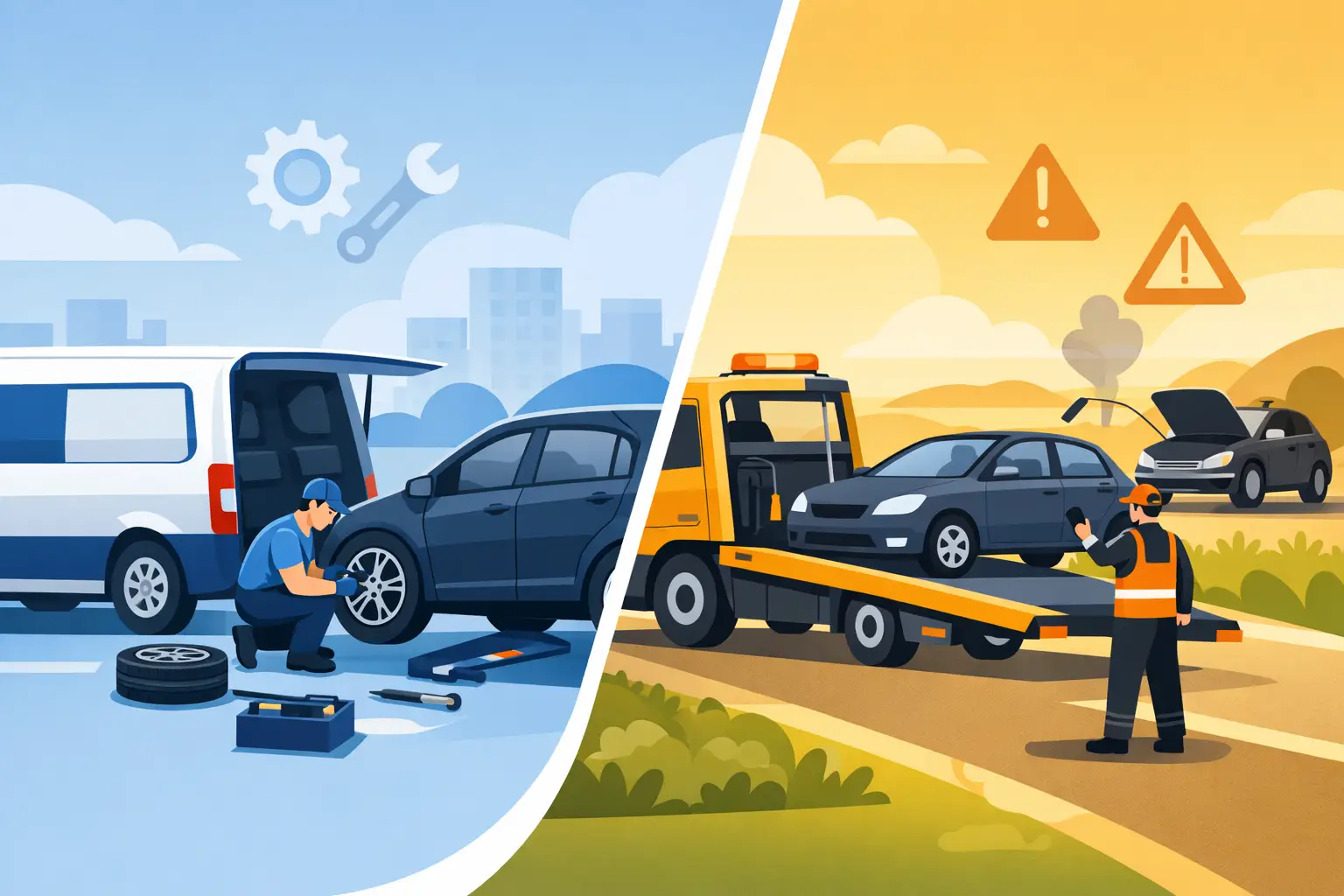
The simplest way to look at it is this. Breakdown recovery is mainly about getting you and your vehicle out of a difficult situation. Mobile tire fitting is about solving the tire problem on the spot.
A breakdown recovery operator will usually come out, assess the vehicle, and if they cannot get you moving safely there and then, they tow the car to a garage, your home, or another location covered by your policy. That is useful when the problem goes beyond the tire, when the vehicle is in a dangerous position, or when there is no safe repair available at roadside.
A mobile tire fitter comes out with the equipment and stock needed to repair or replace the tire where you are. That could be at home, at work, or at roadside if the location is safe. If the issue is a puncture, damaged tire, or worn tire that has finally given up, a mobile service often cuts out the extra step of towing the car somewhere else just to wait again.
That difference matters because most people do not actually want “recovery.” They want their car usable again with as little disruption as possible.
When mobile tire fitting is the better call
If you have a flat tire on your driveway before work, breakdown recovery can feel like overkill. The car is not stranded in traffic. It just needs a tire sorted. A mobile tire fitter can come to you, fit a replacement or carry out a repair if it is safe to do so, and get the job done without you arranging a tow, a ride, or time off to sit in a garage waiting room.
The same goes for workplace callouts. If your car picks up a puncture while you are parked at the office, a mobile service means you can carry on with your day while the problem is handled outside. For busy parents, commuters, and tradespeople, that convenience is not a luxury. It is the difference between a short interruption and a half-day problem.
Roadside flats can also suit mobile tire fitting, provided the vehicle is in a safe place and the only issue is the tire. If the sidewall is damaged, the tread has failed, or a puncture cannot be repaired, fitting a replacement on site can be far faster than waiting for a recovery truck, then traveling with the vehicle, then waiting again for garage availability.
This is where a service-led business like Lee’s Mobile Tyres makes sense. The whole point is to turn a tire problem into a same-day fix whenever possible, not just move the problem to another address.
When breakdown recovery makes more sense
There are times when recovery is absolutely the right answer. If your vehicle is in a live lane, stuck somewhere dangerous, or has damage beyond the tire, safety comes first. A mobile fitter cannot and should not work in a location that puts anyone at risk.
Recovery can also be the better option if you are dealing with multiple issues at once. Maybe you hit a pothole and the tire blew out, but the wheel is bent too. Maybe the suspension is damaged. Maybe the vehicle will not start after stopping. In that situation, replacing the tire alone may not solve the real problem.
Another factor is coverage. If you already pay for breakdown assistance through insurance, a bank account, or a motoring policy, your instinct may be to use it. That is understandable. Just remember that “covered” does not always mean “fastest” or “most direct.” Some policies focus on getting the vehicle transported, not repaired there and then.
Cost is not always as straightforward as people think
A lot of drivers assume breakdown recovery is cheaper because they already have it as part of a plan. But the real comparison in mobile tyre fitting versus breakdown recovery is not just the callout fee. It is the full chain of costs and delays after that first call.
With recovery, you may avoid a separate roadside charge, but the car still has to end up somewhere for tire work. That can mean garage labor, towing delays, storage, transport home, missed work, or rearranged plans. If the garage cannot fit you in until the next day, the true cost grows quickly.
With mobile tire fitting, you are paying for a direct fix. That often means fewer moving parts, less downtime, and less hassle. If the service can repair the tire safely, that can be cheaper than many drivers expect. If a replacement is needed, having options such as new or quality tested part-worn tires can help keep the job affordable.
The cheapest option on paper is not always the cheapest in practice.
Speed matters when your day is already off track
For most drivers, the biggest frustration is not the tire itself. It is the waiting. Waiting for someone to answer. Waiting for an ETA. Waiting for a tow. Waiting at a garage. Waiting for the right tire to be ordered.
A mobile tire service cuts down those handoffs. One call, one visit, one job completed where the vehicle is. That is especially useful if you are at home with kids, parked at work, or stuck outside normal garage hours.
Breakdown recovery still has a strong place, especially for unsafe situations or non-tire faults, but it is not always built around solving a tire issue quickly. It is built around recovering the vehicle. Those are not the same thing.
Mobile tyre fitting versus breakdown recovery for common situations
If the tire is flat on your driveway, mobile tire fitting usually wins on convenience and speed. If the car is parked safely at work, same answer.
If you have a puncture in a parking lot and the tire can be repaired, a mobile fitter is often the most efficient route. If the tire has shredded on the highway shoulder and the vehicle is in a risky position, breakdown recovery may be the safer first step.
If you have a spare and know how to fit it safely, that can buy time. But plenty of newer cars do not carry a proper spare, and many drivers would rather not wrestle with wheel nuts in bad weather or poor lighting. That is exactly why mobile callout services exist.
The better question is not who can come out – it is who can solve it
When drivers compare services, they often focus on who can reach them. That matters, but the more useful question is what happens when they arrive.
If the tire is the actual problem, you want the service that can inspect it properly, tell you whether it is repairable, replace it if needed, and get you moving without another appointment. That is the value of mobile tire fitting.
If the vehicle has broader mechanical damage, or if the location is unsafe for roadside work, then recovery is the sensible call. There is no point forcing the wrong service into the job.
That is why the answer depends on the situation. But for everyday punctures, blowouts, and sudden flats in safe locations, mobile tire fitting is often the more direct fix.
A good rule is simple. If the vehicle mainly needs rescuing, call recovery. If the vehicle mainly needs a tire sorted, call a mobile tire fitter. Making that call early can save you hours of waiting and turn a bad interruption into a manageable one.
The next time a flat tire throws your plans off, think less about who can tow the car and more about who can get it usable again where it sits. That is usually the difference that counts.