Tyre Tread Inspection for Safer Everyday Driving
A tire can look fine from the side of the car and still be unsafe where it meets the road. That is why a quick tyre tread inspection is worth doing before a long drive, after a rough pothole hit, or whenever the road feels wet and unpredictable. You do not need to be a mechanic to spot the early signs of trouble. You just need to know where to look.
Tread is what gives your tires grip. As it wears down, water has fewer channels to escape through, stopping distances can increase, and the risk of skidding rises. A worn tire may still hold air and get you from A to B, but that does not mean it is giving you the control you need in rain, cold weather, or an emergency stop.
What a tyre tread inspection should reveal
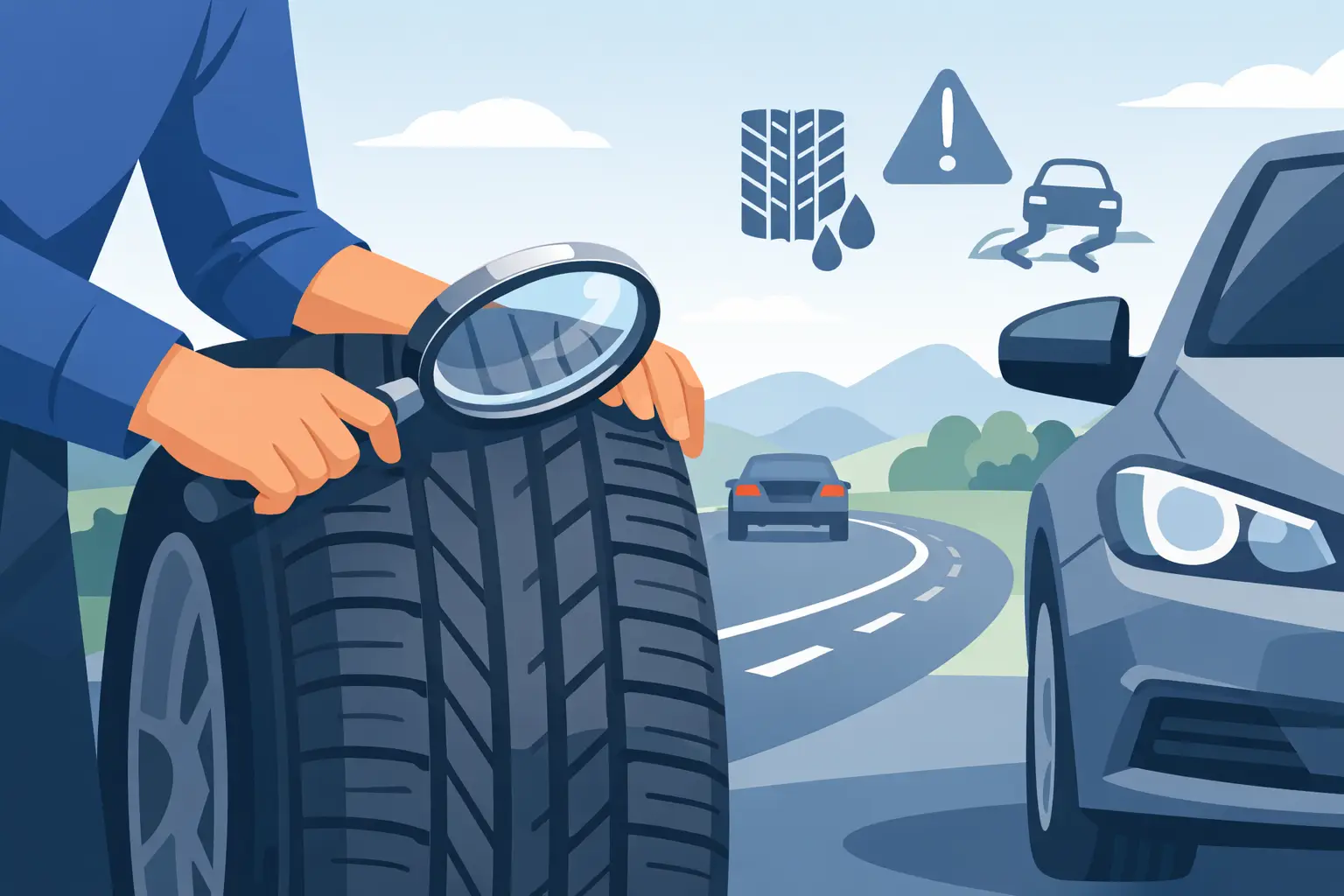
A proper check is about more than whether the tire looks bald. Look at all four tires, including the inside and outside edges where wear can be easy to miss. Turn the steering wheel fully when parked so you can see more of the front tires, and use a flashlight if needed.
Start by looking for the main warning signs: shallow tread, uneven wear, cracks, cuts, bulges, or objects stuck in the rubber. A screw does not always cause an immediate flat, but it can turn into one on the next journey. If you find anything embedded in the tire, avoid pulling it out yourself. Leaving it in place may help the tire retain air until it can be assessed.
Tread should wear evenly across the width of the tire. If one shoulder is much smoother than the rest, or the center has worn faster than both edges, there is usually a reason behind it. That reason may be tire pressure, wheel alignment, suspension wear, or simply a tire that has been used beyond its best.
Check the tread depth, not just the appearance
In the U.S., the legal minimum tread depth for most passenger tires is 2/32 inch. Many drivers use the penny test as a quick guide: place a penny into the main tread groove with Lincoln’s head facing down. If you can see all of the top of his head, the tread is around 2/32 inch or less and the tire should be replaced.
That is a useful minimum check, but it should not be treated as the ideal replacement point. In wet conditions, tires can lose a noticeable amount of grip before they reach the legal limit. Many tire professionals recommend considering replacement around 4/32 inch for better wet-weather performance, especially if you drive regularly on highways, carry family members, or cover miles in heavy rain.
Most modern tires also have built-in tread wear bars. These are small raised bridges across the grooves. When the tread surface is level with these bars, the tire is at its minimum safe limit. Check several grooves, not just one area, because wear is not always even.
Uneven tire wear tells you something useful
A tyre tread inspection can point to an underlying problem before it becomes expensive. Replacing a worn tire without addressing the cause may mean the new one wears out early too.
Wear concentrated in the center of the tread often suggests overinflation. Too much pressure makes the center of the tire carry more of the load, reducing the contact patch with the road. Wear on both outer edges can point to underinflation, which lets the tire flex too much and creates extra heat.
If one edge is wearing faster than the other, wheel alignment may be off. This often happens after hitting a deep pothole, clipping a curb, or driving for a long time on worn suspension parts. You may also notice the vehicle pulling to one side, a crooked steering wheel when driving straight, or a vibration through the wheel. Those are good reasons to get the tires and alignment checked rather than waiting for the next service.
Cupping, which looks like a series of dips or scallops around the tread, can be linked to balance or suspension issues. It may also create a humming or rumbling noise that gets louder as speed increases. Tires should feel fairly smooth when you run a hand gently across the tread. If the surface feels stepped, lumpy, or unusually rough, it needs attention.
When to inspect your tires
There is no need to make this complicated. A quick visual check once a month is a sensible routine, and it takes only a few minutes. Check before a road trip, before bad weather arrives, and after any hard impact from a pothole or curb.
It also pays to inspect a tire whenever you need to add air more often than usual. Slow pressure loss can come from a puncture, a leaking valve, corrosion around the wheel rim, or damage that is not obvious at first glance. Driving for days or weeks with low pressure damages the tire internally, even if the outside still appears usable.
Do not forget the spare if your vehicle has one. A spare with good tread but no air is not much help at the roadside. Check its pressure and condition at the same time as the other tires.
Tread damage that should not wait
Some tire problems are not suitable for a “keep an eye on it” approach. A sidewall bulge, deep cut, exposed cords, or a tire that has gone flat after being driven on needs prompt professional attention. Sidewall damage is particularly serious because that area flexes constantly and cannot usually be safely repaired.
A puncture in the central tread area may be repairable if the tire has not been driven flat and the hole is within an acceptable size. But a puncture close to the shoulder or sidewall is a different matter. The location, depth, and condition of the tire all affect whether repair is safe. Plugging a tire without a full inspection can hide damage inside the casing.
If your tire is losing air quickly, do not rely on repeated top-ups to get through the week. Pull over safely where possible and arrange help. Continuing to drive on a soft or flat tire can damage the wheel as well as the tire, turning a straightforward repair into a more costly replacement.
Tire pressure and tread work together
Correct pressure cannot restore worn tread, but it helps protect the tread you have left. Use the pressure listed on the vehicle’s door-jamb sticker or in the owner’s manual, not the maximum number molded into the tire sidewall. That sidewall figure is the tire’s maximum capability, not usually the correct everyday setting for your vehicle.
Check pressures when the tires are cold, ideally before driving or after the vehicle has been parked for several hours. A pressure gauge is more reliable than judging by eye. Modern tires can be significantly underinflated without looking obviously flat.
If the tire pressure warning light comes on, treat it as a reason to check all four tires soon. Temperature changes can trigger it, but so can a puncture or a leak. Resetting the warning without finding the cause only delays the problem.
When mobile tire help is the practical option
A tire issue rarely arrives at a convenient time. You may notice a bald inner edge outside work, pick up a screw on the school run, or walk out to a flat tire at home. If the vehicle is not safe to drive, getting to a tire shop should not be the next problem to solve.
For drivers around Reading, Basingstoke, Bracknell, and nearby areas, Lee’s Mobile Tyres can inspect the tire where the vehicle is parked and advise whether a repair or replacement is the safer option. Mobile service is particularly useful when a puncture, damaged tread, or flat tire means you cannot safely make a garage appointment.
A good inspection should give you a clear answer, not pressure you into work you do not need. Sometimes the solution is a straightforward puncture repair. Sometimes uneven wear means replacing a tire and checking alignment. And sometimes the safest call is replacing a damaged tire immediately.
Before your next long trip, take two minutes to look at the tread, check for damage, and confirm the pressures. That small habit can save you from discovering a tire problem when you are already late, loaded up, or stuck at the roadside.