When Is a Tyre Beyond Repair?
A slow puncture at home is one thing. A flat tire before work, on the school run, or stuck at the roadside is when the real question shows up fast – when is a tyre beyond repair, and when can it be safely fixed?
The honest answer is that not every puncture means you need a new tire, but not every tire should be repaired either. A proper inspection matters because the wrong call can leave you back where you started, or worse, driving on something unsafe. If you just want the simple version, a tire is usually beyond repair when the damage is in the sidewall, the hole is too large, the structure has been weakened, or it has been driven flat for too long.
When is a tyre beyond repair in real terms?
Most drivers are not looking for workshop jargon. They want to know whether the tire can be made safe again and whether it is worth paying for a repair.
In practical terms, a repair is only suitable when the damage is small, limited to the central tread area, and the internal structure of the tire is still sound. If the injury goes beyond that, replacement is the safer option. That can feel frustrating when the tire still looks decent from the outside, but visible tread is only part of the story.
A tire can look usable and still be unsafe because the cords inside have been damaged. That is why a quick glance is not enough. Proper repair decisions come from checking both the outside and the inside of the tire.
Damage that usually means replacement
Sidewall damage
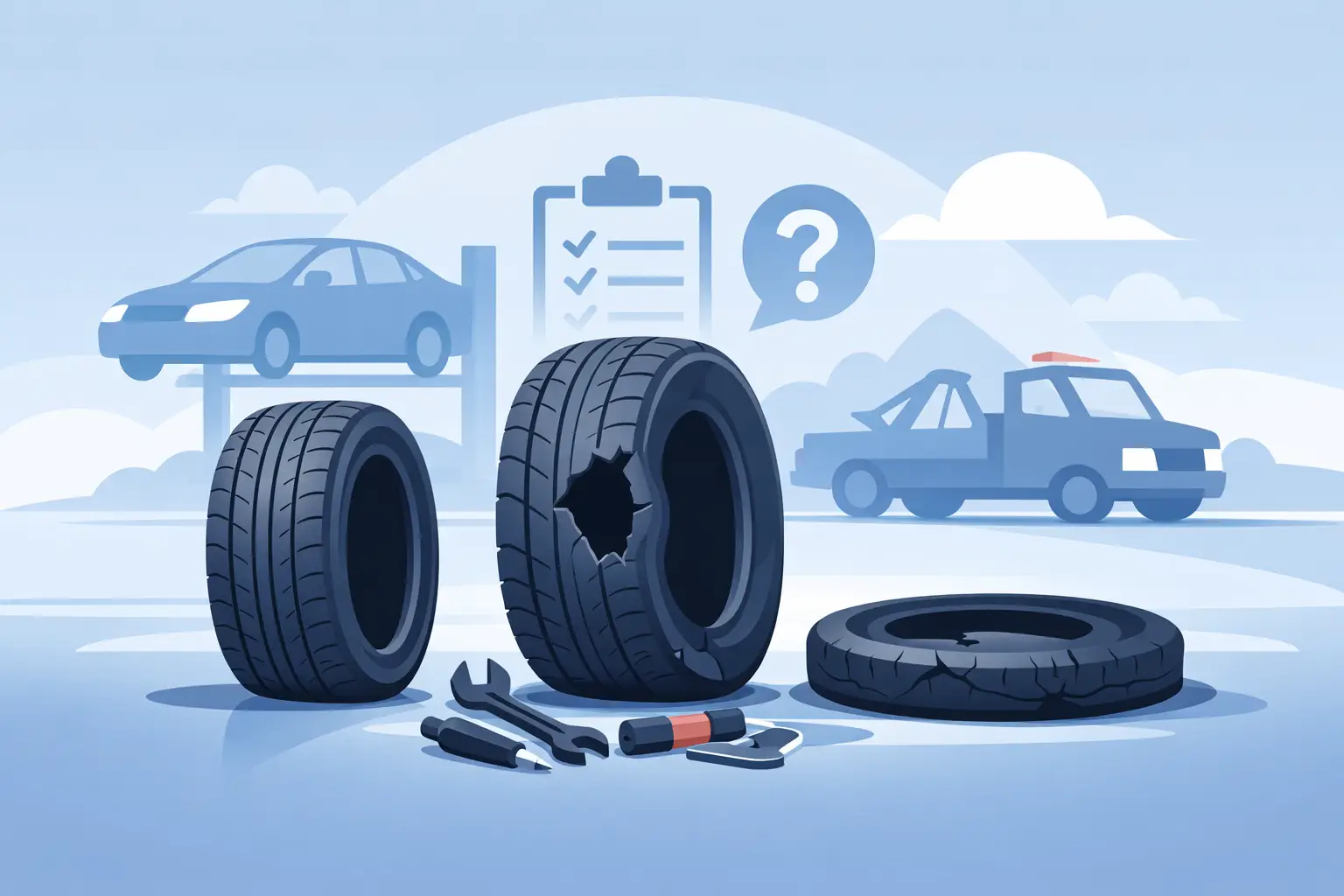
If the puncture, split, bulge, or tear is in the sidewall, that tire is generally beyond repair. The sidewall flexes constantly while driving, which means a repair there will not hold the same way it can in the tread area.
This is one of the clearest no-repair situations. Even if the hole looks small, sidewall damage is not something to gamble with.
Shoulder damage
The shoulder is the area where the tread meets the sidewall. This is another zone where repairs are often not considered safe. It carries a lot of stress and heat, so damage there is different from a simple nail through the middle of the tread.
Some drivers hear air coming from near the edge and hope it is close enough to patch. Usually, if it is too near the shoulder, replacement is the right answer.
Large punctures or cuts
A standard puncture from a nail or screw may be repairable. A larger hole, jagged cut, or damage from hitting debris is a different story. If the opening is too big, the tire may not be able to hold a safe, lasting repair.
The same goes for anything irregular. Clean, small tread punctures are one thing. Torn rubber is another.
Bulges, bubbles, and impact breaks
If you see a lump in the sidewall after hitting a pothole or curb, the internal structure has likely been compromised. That is not a puncture issue. It is structural damage.
Once a tire has a bulge, it is beyond repair and should be replaced. Driving on it risks a blowout, especially at speed.
Exposed cords or separated tread
If the rubber has worn or torn enough to expose the internal cords, the tire is done. The same applies if the tread is separating from the body of the tire. These are clear signs the tire is no longer safe to use.
At that point, repair is not really a repair. It would just be delaying replacement.
When a puncture can often be repaired
A repair is usually possible when the puncture is in the center section of the tread, the hole is small, and the tire has not been driven on while badly underinflated or completely flat. That last part matters more than many drivers realize.
If you pick up a screw and notice it early, there is a good chance the tire can be repaired. If you keep driving while the pressure drops, the sidewalls can become crushed under the car’s weight. That internal damage can make the tire unsafe even if the original puncture itself was minor.
So yes, a simple puncture can often be fixed. The catch is that timing and condition matter just as much as location.
When is a tyre beyond repair after driving flat?
This is where a lot of people get caught out. They see one nail, assume it is a straightforward repair, and do not realize the real damage came from driving on the flat tire.
When a tire is driven with very low pressure, the sidewall flexes far more than it should. That creates heat and can break down the inner structure. From the outside, the tire may still look fairly normal once reinflated, but inside it may already be weakened.
If there are signs of inner sidewall damage, crumbling rubber, or circumferential wear from being run flat, the tire is beyond repair. This is why a proper internal inspection matters. A plug pushed in from the outside might stop the leak, but it does not undo structural damage.
Tread depth still matters
Even if a puncture sits in a repairable area, the tire still needs enough life left in it to justify the job. If the tread is already close to the legal limit, repairing it may not make much sense.
A safe repair on a worn-out tire is still a worn-out tire. In that case, replacement is often the better value because you are not paying to fix something that will need changing soon anyway.
Uneven wear can also change the decision. If the inside edge is badly worn from alignment issues or the tread is feathered and patchy, the tire may not be a good candidate for repair even if the puncture itself looks simple.
Previous repairs can affect the answer
Not every tire with an old repair needs replacing. Plenty of properly repaired tires continue in service without issue. But if there are multiple repairs close together, or an old repair is failing, the tire may no longer be a safe bet.
Too many injuries in one area weaken confidence in the tire overall. There is also a point where continuing to repair becomes false economy. A replacement gives you a cleaner, safer long-term solution.
Why a quick fix is not always a safe fix
Drivers under pressure often want the fastest option, especially when they need to get moving. That is understandable. But there is a difference between getting you mobile and making the tire properly safe.
Temporary sealants and basic plug repairs can help in certain short-term situations, but they are not always the final answer. A tire should be assessed properly to check the extent of damage, the exact puncture position, and whether the internal casing is still sound.
That is why experienced tire technicians do not just look for the hole. They look for the whole picture.
The safest way to decide
If you are unsure whether the tire can be repaired, the best move is to stop driving on it and have it inspected where the vehicle is. That avoids turning a repairable puncture into a full replacement because of extra damage caused by driving.
For everyday drivers, that convenience matters as much as the technical side. If your car is at home, at work, or stuck roadside, having someone come out and assess it properly saves time and avoids guesswork. That is exactly the sort of problem Lee’s Mobile Tyres helps solve for local drivers who need a straight answer quickly.
A simple rule of thumb
If the damage is in the center tread and small, repair may be possible. If it is in the sidewall or shoulder, if there is a bulge, split, exposed cords, major wear, or signs it has been driven flat, the tire is usually beyond repair.
That said, there is always an inspection step. Two punctures can look similar from the outside and lead to very different answers once the tire is checked properly.
A good tire repair is about safety first, not just saving the tire. If replacement is the right call, it is not bad news – it is the fix that gets you back on the road with confidence instead of hoping for the best.