Top Signs of Tyre Damage You Shouldn’t Ignore
You pull away from the curb after work and the steering wheel starts to shake. Or you spot a small bulge on the side of a tire while loading the car. Neither issue should wait until the weekend. Knowing the top signs of tyre damage can help you deal with a problem before it becomes a flat tire, a roadside delay, or an unsafe drive.
Tires take a lot of punishment from potholes, curbs, road debris, low pressure, and everyday mileage. Some damage is obvious, but plenty of it starts quietly. A tire may still hold air and look mostly normal while its internal structure or tread is no longer safe.
Top Signs of Tyre Damage to Check Today
A tire keeps losing pressure
A tire that needs air every few days is not simply “one of those things.” Slow pressure loss often points to a nail or screw in the tread, a leaking valve, a damaged wheel rim, or a poor seal where the tire meets the wheel.
You may not see the cause right away. Small punctures can lose air gradually, especially when the vehicle is parked. Driving on a low tire can also create more damage because the sidewall flexes harder than it should. What could have been a straightforward repair may become a replacement if it is driven flat or nearly flat.
Check tire pressure when the tires are cold, and use the pressure listed on the vehicle’s door-jamb label rather than the maximum pressure printed on the tire. If one tire is consistently lower than the others, get it inspected soon.
There is a bulge, bubble, cut, or split in the sidewall
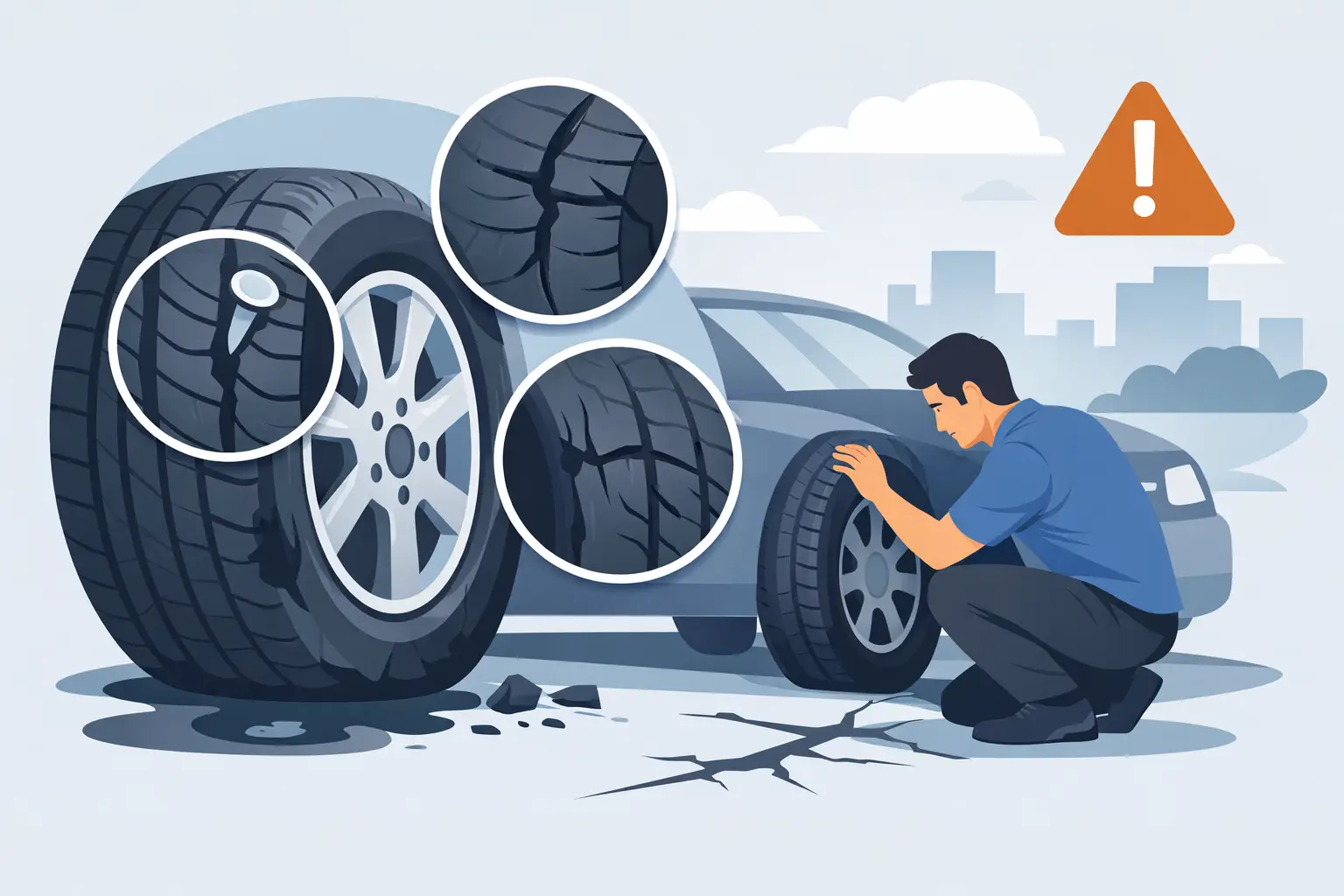
A sidewall bubble is one of the clearest warning signs. It often happens after hitting a pothole or curb, even if the impact did not seem serious at the time. The impact can break internal tire cords, allowing the outer rubber to bulge outward.
Do not treat a bulge as cosmetic. The tire’s structure has been weakened, and the area can fail without much warning. A deep cut, cracking that exposes the internal material, or a split in the sidewall needs the same level of caution. Sidewall damage is generally not repairable, so the safe answer is usually a replacement.
If you notice a bubble or major sidewall cut, avoid driving on it except where absolutely necessary to get out of immediate danger. A mobile tire technician can inspect the tire where the car is parked and fit a suitable replacement without asking you to risk a garage trip.
The tread is worn down or damaged
Tread gives your tires grip in rain, helps them clear water, and supports predictable braking and cornering. When it is worn too low, your stopping distance can increase and the vehicle is more likely to lose grip on wet roads.
Look across the whole tread, not just the outer edge. Watch for bald patches, areas where the rubber looks torn or chipped, and grooves that are becoming very shallow. The built-in tread wear bars are another useful guide. These small raised bars sit across the main grooves. Once the tread is level with them, the tire is worn out and should be replaced.
Uneven wear matters just as much as overall tread depth. If one shoulder is worn smooth while the rest of the tire looks acceptable, there may be an alignment issue, incorrect tire pressure, or a worn suspension component behind it. Replacing the tire without addressing the cause can mean the new one wears out early too.
You feel vibration through the steering wheel or seat
A little road feel is normal, especially on rough surfaces. A new or worsening vibration at speed is not. If the steering wheel shakes, the vehicle pulls to one side, or the seat seems to vibrate, stop assuming it will settle down on its own.
The cause could be tire damage, a wheel balance issue, a bent wheel, uneven tread wear, or a tire that has developed an internal fault. It depends on where and when you feel it. Vibration mainly through the steering wheel often relates to the front wheels, while vibration through the seat can point toward the rear. Either way, it is worth having checked before a longer commute or highway journey.
A tire can also become out of round after being driven while badly underinflated. From the outside it may not look dramatic, but the ride will feel wrong and the tire may no longer be safe to use.
The vehicle pulls, drifts, or handles differently
If you have to keep correcting the steering on a straight, level road, check the tires first. A low tire can make the vehicle pull to one side, while uneven wear can reduce stability and grip. Alignment can also be the issue, particularly after a hard pothole strike or curb contact.
Do not ignore handling changes just because the vehicle still drives. Tires are the only part of the vehicle in contact with the road, so even a small fault can become more noticeable in heavy rain, during hard braking, or when carrying passengers and cargo.
You can see an object in the tread
A screw, nail, piece of metal, or sharp stone in the tread deserves attention, even if the tire is not flat. The object may be partly sealing the puncture. Pulling it out yourself can release the remaining air quickly and leave you unable to move the car.
Leave it in place and arrange an inspection. Whether the tire can be repaired depends on the location and size of the puncture, as well as the condition of the tire. A small puncture in the central tread area may be repairable. Damage close to the sidewall, a large hole, or a tire that has been driven flat usually means replacement is the safer option.
Cracks are appearing in the rubber
Fine surface cracks can develop as tires age, particularly on vehicles that sit for long periods, are exposed to strong sunlight, or are rarely driven. Some light weathering may not need immediate action, but deep cracks, widespread cracking, or cracks around the sidewall should be assessed promptly.
Rubber hardens and loses flexibility over time. That can reduce grip and increase the chance of a failure under load. Check the tire’s manufacturing date as well as its visible condition. A tire with plenty of tread is not automatically a good tire if it is old or deteriorating.
When You Should Stop Driving
A flat tire, exposed cords, a sidewall bulge, a major cut, or tread separating from the tire are reasons to stop and arrange help. Continuing to drive can damage the wheel, affect vehicle control, and turn a manageable problem into a more expensive one.
For a slow leak or minor vibration, you may be able to drive carefully for a short distance, but only after checking the pressure and condition. Avoid high speeds, heavy loads, and long trips until the tire has been inspected. If you are unsure, treat the situation cautiously. It is better to have a tire checked at home, at work, or roadside than to gamble on getting to a shop.
Preventing Small Tire Problems From Becoming Big Ones
A quick monthly check can save a lot of trouble. Look for visible cuts, embedded objects, cracking, and uneven wear. Check pressures regularly, including the spare if your vehicle has one, and inspect tires after a hard pothole impact or curb strike.
Rotation, wheel balancing, and alignment support can also extend tire life, but they are not a substitute for replacing a damaged tire. Good maintenance helps tires wear evenly. It cannot restore damaged internal cords, fix a sidewall bubble, or make unsafe tread grip again.
For drivers around Reading, Basingstoke, Bracknell, and nearby areas, Lee’s Mobile Tyres can bring tire fitting, puncture assessment, balancing, and replacement support directly to your location. That means less time arranging a garage visit and less pressure when a tire problem interrupts your day.
If something looks, feels, or sounds different from normal, trust that instinct. Park safely, take a close look, and get practical advice before the next school run, work trip, or highway drive turns a small tire issue into a stranded one.