Emergency Mobile Tyre Fitting When You’re Stuck
A flat tire never picks a convenient time. It happens outside your house before the school run, in a work parking lot when you need to leave, or on the roadside when you are already late. Emergency mobile tyre fitting gets the problem dealt with where you are, so you do not have to arrange a tow, borrow another car, or wait around for a garage opening.
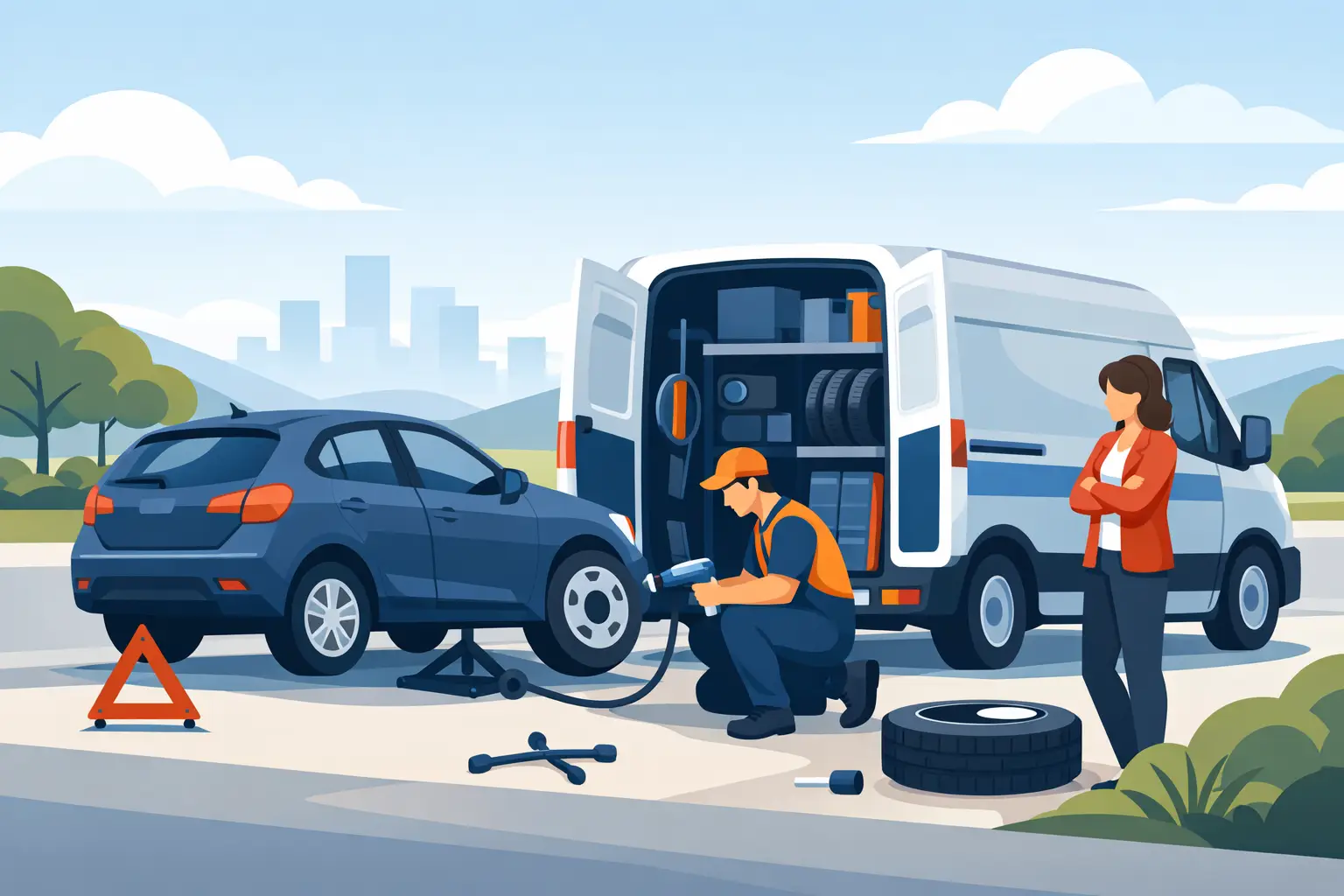
For drivers across Reading, Basingstoke, Bracknell, and nearby areas, the priority is simple: get the vehicle safe and moving again without making a stressful day harder. A mobile tire technician brings the equipment, checks what has gone wrong, and fits or repairs the tire on site where possible.
What Emergency Mobile Tyre Fitting Covers
Emergency mobile tyre fitting is for the moments when driving to a tire shop is not safe, practical, or possible. That may be a complete blowout, a puncture that has left the tire flat, sidewall damage from a pothole, or a tire that has gone down while the car is parked.
The right solution depends on the damage and the condition of the other tires. A simple tread puncture may be repairable if it is in the safe repair area and the tire has not been driven while flat. A split sidewall, exposed cords, severe shoulder damage, or a badly worn tire will normally need replacement instead.
That is why a proper inspection matters. It is tempting to put air in the tire and hope it holds, but a tire that is losing pressure can fail again when you are driving at speed. A mobile service gives you a clear answer before you take that risk.
Repair or replacement?
A puncture repair can be the most affordable option when the tire is otherwise in good condition. It saves the tire, gets you back on the road, and avoids replacing something that still has plenty of usable tread.
Replacement is the safer choice when a repair is not suitable. Depending on your vehicle and budget, that can mean a new tire or a fully tested part-worn tire. Part-worn tires can be a practical option for drivers who need a safe replacement quickly and want to keep the cost down. They are not right for every situation, particularly if you need a matching pair or have specific manufacturer requirements, but they can be useful when fitted and checked properly.
Why Calling a Mobile Tire Service Makes Sense
When a tire goes flat, the garage trip is often the difficult part. You may not have a spare wheel, the spare may be unsuitable, or you may not be comfortable changing it on the roadside. Even if you can fit the spare, it is usually only a temporary measure and still leaves you needing a tire appointment later.
Mobile fitting cuts out those extra steps. The technician comes to your driveway, workplace, or safe roadside location with the tools needed to remove the wheel, fit the tire, balance it where required, and check the result before leaving.
For busy parents, that can mean the car is ready before the next pickup. For commuters, it can mean sorting the tire at work rather than losing an evening at a garage. For tradespeople, it can mean less downtime and fewer missed jobs. When your vehicle is part of how you earn a living or run your household, speed is more than a convenience.
There is also a safety benefit. Driving on a flat tire, even for a short distance, can damage the tire beyond repair and may harm the wheel. If the vehicle does not feel safe to drive, stop somewhere safe, switch on your hazard lights, and arrange help rather than trying to push on.
What to Do When You Have a Flat Tire
First, do not panic or keep driving to see if the tire improves. If you notice a heavy pull through the steering, thumping, a warning light, or a sudden loss of pressure, slow down gradually. Avoid sharp braking or sudden steering movements. Pull over in a safe place away from moving traffic if you can.
Once parked, check the tire only if it is safe to do so. You may spot a nail, screw, cut, or obvious sidewall damage, but do not remove an object stuck in the tread. It may be slowing the air loss, and pulling it out can make the tire go flat immediately.
When calling for emergency help, have your location, vehicle registration, tire size if you know it, and a quick description of the problem ready. A photo of the damaged tire can also help identify whether a repair is likely or whether a replacement should be brought out. Clear information helps get the right tire and equipment to you first time.
If you are on a busy road, stay well away from traffic. Stand behind a barrier where available, keep passengers safe, and do not attempt a wheel change if the location is dangerous. A roadside tire issue is frustrating, but no appointment is worth taking a risk beside fast-moving vehicles.
Getting the Right Tire, Not Just Any Tire
An emergency does not mean you should settle for a poor fit. The replacement needs to match the vehicle’s required size, load rating, and speed rating. Those details are shown on the tire sidewall and are important for handling, braking, and insurance compliance.
In some cases, one replacement tire is enough. If the opposite tire on the same axle is heavily worn, though, fitting a pair may be the better decision. Tires with very different tread depths can affect grip, especially in wet conditions. Four-wheel-drive and all-wheel-drive vehicles can be more sensitive to mismatched tires, so it is worth mentioning the vehicle type when you call.
Wheel balancing should also not be overlooked after a tire is fitted. An unbalanced wheel can cause vibration through the steering wheel and uneven wear. If the old tire has worn more on one edge than the other, that may point to an alignment issue. A mobile technician can identify the signs and advise whether alignment support is needed after the emergency is sorted.
A Fast Response Still Needs Honest Advice
The best emergency service is not the one that simply arrives quickly. It is the one that tells you what is safe, explains the options plainly, and does the job properly. Sometimes the answer is a straightforward puncture repair. Sometimes it is a replacement. Occasionally, the tire damage reveals a bigger issue, such as repeated pressure loss, poor alignment, or tires that are already close to the legal limit.
At Lee’s Mobile Tyres, the focus is on getting local drivers back on the road with as little disruption as possible. That means practical options, clear communication, and on-site help when a garage visit is the last thing you need.
Avoiding the Next Tire Emergency
Not every puncture can be prevented, especially with road debris and potholes around, but regular checks make surprises less likely. Check tire pressures at least once a month and before a long journey. Look for cuts, bulges, nails, and uneven tread wear. Do not forget the spare tire if your vehicle has one.
A slow puncture is often easier and cheaper to handle before it becomes a complete flat. If you are topping up the same tire repeatedly, get it checked. Waiting until it fails at night, in the rain, or before an important journey rarely makes the situation easier.
When the unexpected does happen, stop safely, share your location clearly, and let a mobile tire professional come to you. One call can turn a stranded vehicle into a problem already being fixed.