An After Hours Tyre Rescue Story From the Road
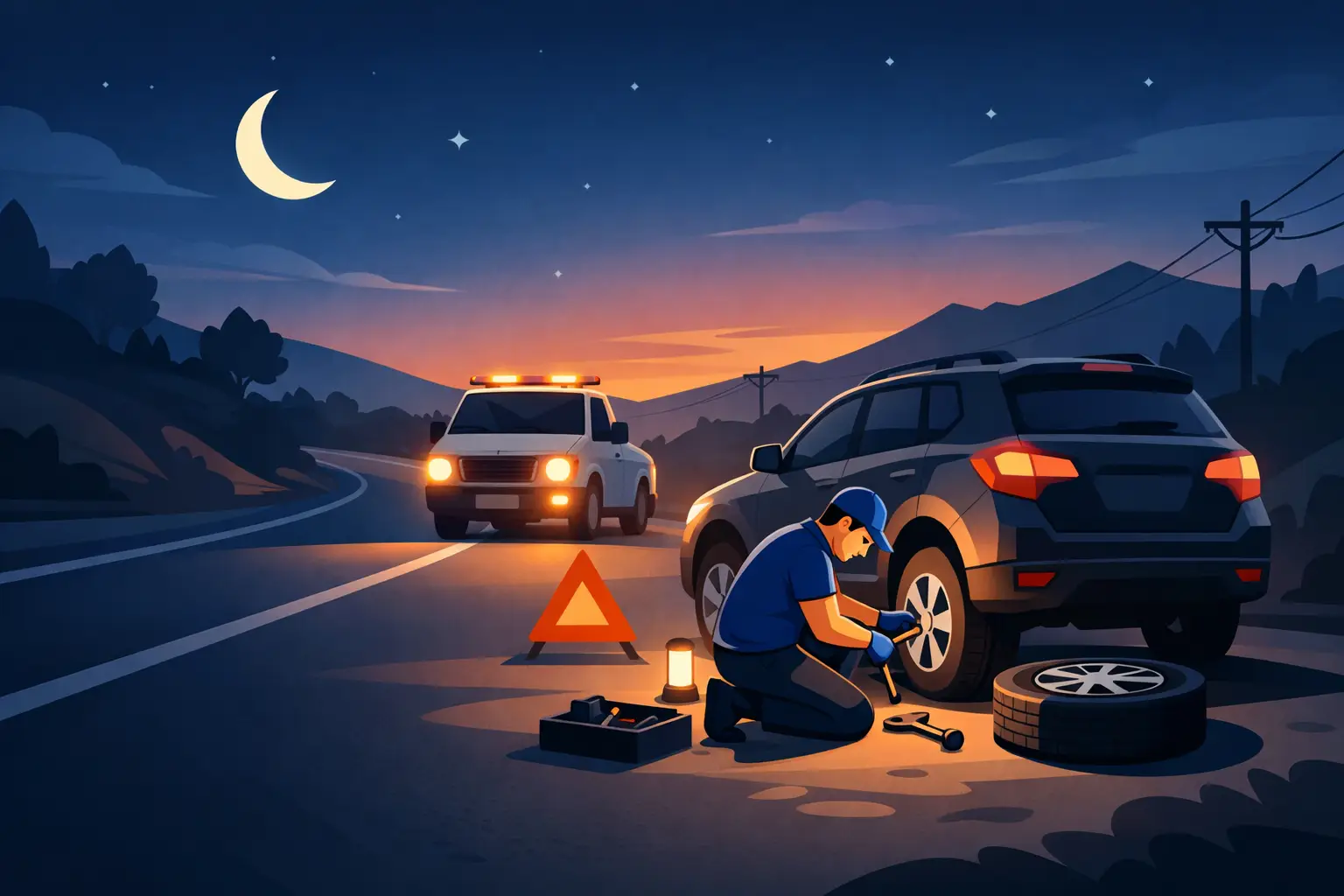
At 9:40 p.m., the parking lot was almost empty. A driver finishing a late shift in Reading came back to find one tire completely flat, with a screw buried close to the sidewall. The spare had not been checked in years, the nearest tire shop was closed, and a school run was waiting in the morning. That is the kind of after hours tyre rescue story nobody plans for, but it is exactly when a mobile tire service can make a stressful night manageable.
A Flat Tire Does Not Wait for Business Hours
The driver had noticed nothing unusual on the trip to work. There was no vibration, no warning light, and no obvious loss of control. The puncture had likely been slow at first, then worsened while the car was parked. By the time the shift ended, there was no safe way to drive it home.
The first temptation in this situation is to add air and hope for the best. That can be risky. A tire that is fully flat may have been driven on while underinflated, damaging the inside of the casing even if the outside does not look too bad. A screw or nail near the center of the tread may be repairable, but damage near the shoulder or sidewall usually means replacement is the safer option.
The driver did the right thing by stopping there rather than trying to limp home. A short drive on a damaged tire can turn a simple puncture into a ruined wheel, a more expensive replacement, or a roadside breakdown.
The Call That Changes the Night
After explaining the vehicle type, tire size, location, and what had happened, the driver received a clear answer: help was available, and the work could be done in the parking lot. There was no need to arrange a tow, find a ride, or leave the car overnight somewhere unfamiliar.
A properly equipped mobile service arrives with the tools needed to inspect the tire, remove the wheel, fit a replacement if required, and balance the wheel before the vehicle goes back on the road. That matters because fitting a tire is not just about getting rubber onto a rim. The tire needs to be seated correctly, inflated to the right pressure, and checked for a safe fit.
For local drivers, this is where Lee’s Mobile Tyres is built to help. Whether the vehicle is outside your home, at work, or stopped roadside in Reading, Basingstoke, Bracknell, or nearby, the goal is straightforward: get you moving safely without adding a garage visit to an already difficult situation.
What the Inspection Found
Once the wheel was off, the problem was clear. The screw had entered near the outer edge of the tread, an area that takes more stress as the tire flexes through corners. Although the puncture was small, it was outside the safe repair area. A plug pushed in from the outside might have held air for a while, but it would not have been the right repair for a family car used every day.
This is the part of an after hours tyre rescue story that often gets overlooked. The quickest option is not always the safest option. A good technician should explain what they have found, why a repair is or is not suitable, and what the realistic choices are before starting work.
In this case, the driver chose a replacement tire that matched the vehicle’s needs and budget. Depending on the tire size, tread condition on the opposite tire, and how the car is used, that could mean a new tire or a fully tested part-worn option. There is no one answer for every vehicle. A commuter car that covers modest mileage may need something different from a van carrying tools all day or a family SUV that regularly travels on the highway.
Why After-Dark Tire Trouble Feels Worse
A flat tire in daylight is inconvenient. A flat tire after dark can feel much bigger because the normal options disappear. Shops close, visibility drops, parking lots empty out, and you may be tired, alone, or carrying children in the car.
Trying to change a tire yourself is not always sensible either. If the car is on an uneven surface, close to moving traffic, or parked somewhere with poor lighting, personal safety comes first. Even drivers who know how to fit a spare may not have the right locking wheel nut key, a working jack, or a spare with enough air in it.
That is why a calm, practical response matters more than panic. Move to a safe, well-lit place if the vehicle can be moved without driving on a flat. Turn on your hazard lights, keep clear of traffic, and avoid standing beside the road. If you are already safely parked, stay in a secure location while help is arranged.
From Flat to Ready to Drive
The replacement was fitted, the wheel was balanced, and the tire pressure was set correctly. Before leaving, the technician checked the other tires too. It is common for one tire problem to reveal another issue, such as low pressure on a different wheel, uneven tread wear, or cracking that has been easy to miss.
That extra check is useful, but it should not become a hard sell. Sometimes the answer is simply that the other tires are fine. Sometimes uneven wear points to an alignment issue that should be booked soon, particularly if the steering pulls to one side or the inside edge of a tire is wearing faster than the rest. Catching that early can protect the new tire you have just paid for.
Less than an hour after making the call, the driver was heading home with a safe tire and a much less complicated morning ahead. No tow truck, no waiting for a garage to open, and no lost work time trying to sort it out the next day.
What to Have Ready When You Need Help
A fast callout starts with a few useful details. If you can safely check them, have your vehicle make, model, registration, and tire size ready. The tire size is printed on the sidewall and looks similar to 225/45 R17. A clear location is equally important, especially in a large office park, apartment complex, or on a roadside where several entrances may look alike.
It also helps to describe the problem honestly. Say whether the tire is fully flat, whether there is a visible nail or screw, and whether you have driven on it. Mention if the car has locking wheel nuts and whether the key is in the vehicle. These details help the technician arrive prepared and prevent unnecessary delays.
If you do not know the tire size or cannot inspect the tire safely, do not worry. Your location and vehicle details are enough to start. The important thing is not to keep driving on a tire that has lost pressure.
Small Checks That Can Prevent a Late-Night Callout
No one can prevent every puncture, but a few simple habits reduce the chances of being caught out. Check tire pressures at least once a month and before longer trips. Look over the tread when washing the car or loading groceries. A nail picked up early may cause a slow leak rather than a sudden flat if it is found and dealt with quickly.
Do not forget the spare, if your vehicle has one. Check that it is present, inflated, and usable. If your vehicle has a tire repair kit instead, make sure the sealant is in date and that you understand its limits. Sealant is not suitable for every puncture, and it may not help at all with a damaged sidewall or a tire that has been driven flat.
A tire pressure warning light deserves attention too. It does not always mean an emergency, but it does mean something has changed. Checking it while you are at home or work is far easier than discovering a flat after a late shift.
The best ending to a difficult night is a safe drive home and the confidence that someone can come to you when the tire will not cooperate. Keep your phone charged, know where your locking wheel nut key is, and treat a flat tire as a reason to stop rather than push your luck.