Tyre Fitting Duration: How Long Will It Take?
A flat tire can throw off a whole morning. You may be parked outside work, have school drop-off to handle, or be stuck at home with no safe way to drive. The good news is that tyre fitting duration is usually much shorter than most people expect, especially when the fitter comes directly to you.
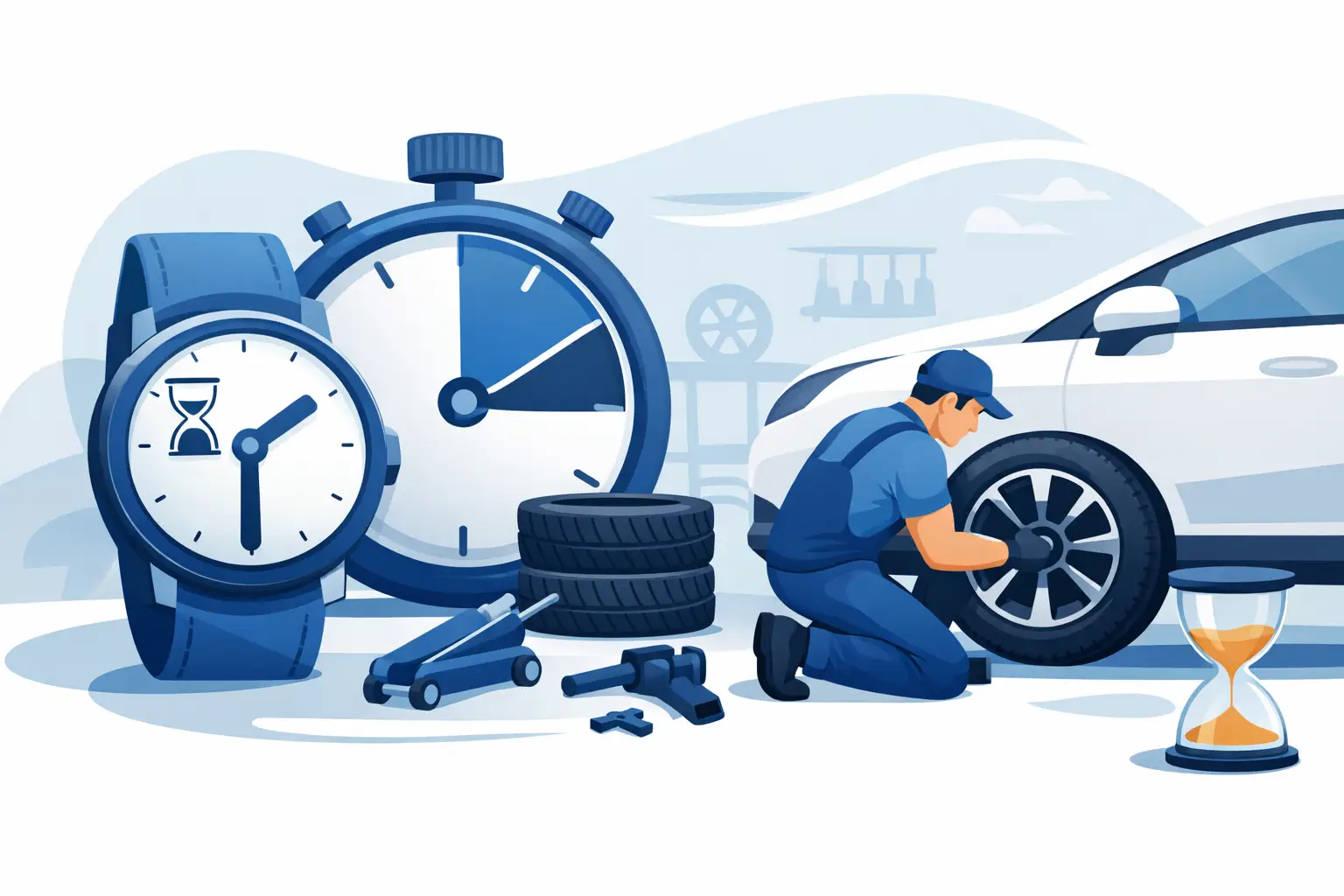
For a straightforward tire replacement, allow around 30 to 60 minutes once the technician is with your vehicle. A mobile appointment also saves the time normally spent driving to a garage, checking in, waiting around, and arranging a ride if the car cannot be driven safely.
How long does tire fitting usually take?
A standard replacement of one or two tires often takes about 30 to 45 minutes. This includes removing the wheel, taking off the old tire, fitting the replacement, inflating it correctly, balancing the wheel where needed, and refitting it to the vehicle.
Replacing all four tires usually takes closer to 45 to 60 minutes. The exact time depends on the wheel type, tire size, the condition of the existing tires, and whether there are any seized bolts, damaged valves, or other issues to deal with.
That is the actual fitting time. It is separate from the callout or arrival time. If you need emergency help roadside, the time before a technician reaches you will depend on traffic, your location, current bookings, and the availability of the right tire size. Giving clear details when you call helps get the right equipment and replacement tire to you first time.
What affects tyre fitting duration?
Most tire jobs are quick, but no two vehicles are exactly the same. A few practical details can add time without meaning there is a problem.
How many tires need replacing
One damaged tire is naturally faster than a full set. If a puncture is repairable, the job may also take less time than fitting a replacement. However, a repair is only suitable when the damage is in the safe repair area of the tread and the tire has not been driven flat for too long.
Tire size and wheel type
Low-profile tires, run-flat tires, and larger SUV or van tires can take longer to remove and refit than standard passenger-car tires. They need careful handling and the correct equipment. Alloy wheels also deserve extra care to avoid cosmetic damage.
Wheel condition and stuck parts
Wheel nuts that have corroded or been overtightened can slow a job down. So can wheels that have bonded to the hub, damaged locking wheel nuts, or a missing locking wheel nut key. These issues are common enough that a good fitter plans for them, but they do make a quick replacement less predictable.
Balancing and valve work
A replacement tire should be balanced before the wheel goes back on the car. Balancing helps prevent steering vibration and uneven tire wear. If a valve, sensor, or wheel rim needs attention, that will add a little more time, but it is worth sorting properly rather than sending you away with a new problem.
Tire availability
The fastest fitting in the world will not help if the right tire is not available. When booking, share your tire size from the sidewall or send a clear photo of it. The size will look similar to 225/45 R17. Also mention whether you need a budget, mid-range, premium, or tested part-worn option, and whether the vehicle uses run-flat tires.
Mobile tire fitting saves more than fitting time
The real benefit of mobile fitting is not just the time spent changing the tire. It is the time you do not have to lose around it.
At a traditional garage, you may need to take time off work, drive on a temporary spare, wait in a reception area, or leave the vehicle for the day. If the tire is flat on your driveway, you may not be able to get to the garage at all. A mobile technician can complete the work at your home, workplace, or roadside location, provided there is enough safe space to work.
For busy drivers around Reading, Basingstoke, Bracknell, and nearby areas, that often turns a half-day disruption into a job handled during a lunch break, while you are at home, or before you set off. Lee’s Mobile Tyres brings the necessary equipment to the vehicle, so you are not left trying to make an unsafe tire work long enough to reach a shop.
How to help your tire fitting go faster
You do not need to know anything technical to arrange a smooth appointment. A few simple details make a real difference.
First, give the vehicle make, model, year, and registration if requested. Then provide the tire size, your location, and a clear description of the issue. Say whether the tire is completely flat, whether there is visible sidewall damage, and whether you have a spare.
If you are at home or work, park where the technician can safely access the affected wheel. Avoid tight spaces, steep slopes, soft ground, or busy traffic areas where possible. Make sure the locking wheel nut key is in the car if your wheels use one. It is often kept in the glove box, trunk, or alongside the spare wheel tools.
Do not keep driving on a flat tire to save time. Driving even a short distance with little or no air can damage the tire sidewall beyond repair and may harm the wheel rim. Stopping safely and calling for help is usually the quicker, cheaper choice in the long run.
When a quick tire fitting may not be the right answer
Sometimes the tire is only part of the issue. If a replacement tire wears out unusually quickly, pulls to one side, or shows heavy wear on one edge, the vehicle may need alignment support or a suspension check. Fitting a new tire without addressing the cause can mean the same problem returns sooner than it should.
Likewise, a puncture cannot always be repaired. Damage to the sidewall, a large cut, multiple punctures close together, or a tire driven while flat normally means replacement is the safer option. A reliable technician should explain the reason plainly rather than promising a repair that cannot be done safely.
Part-worn tires can be a practical option when budget matters, provided they have been properly inspected and tested. They are not the right choice for every driver or every axle, but they can help get a vehicle safely mobile when a brand-new tire is not the best fit for the situation.
Common questions about tyre fitting duration
Can a tire be fitted at my workplace?
Yes, in many cases. The vehicle needs to be in a safe, accessible parking space with enough room to work around it. A mobile fitting appointment can be particularly useful if you discover a flat tire before leaving work or do not have time to visit a garage.
Does replacing one tire take longer than repairing a puncture?
Not always by much. A simple tread puncture repair can be quick, but the tire must be removed and inspected internally first. If the damage is not safely repairable, fitting a replacement may be the better route and can often be completed in the same visit when the correct tire is available.
Should I replace two tires at the same time?
It depends on the remaining tread depth, tire condition, and your vehicle. On many vehicles, matching tires on the same axle gives more consistent grip and handling. If one tire is badly damaged and its partner is already worn, replacing the pair may make better sense than replacing one now and another a few weeks later.
What if I need help outside normal hours?
A tire problem does not wait for a convenient time. For urgent situations, tell the fitter exactly where you are, whether you are in a safe place, and what tire you need. Clear information helps them assess the job quickly and get you moving with less delay.
A tire issue is stressful enough without spending hours in a garage waiting room. Keep your tire size and locking wheel nut key easy to find, and when trouble happens, arrange a safe mobile fitting so your day can get back on track.