
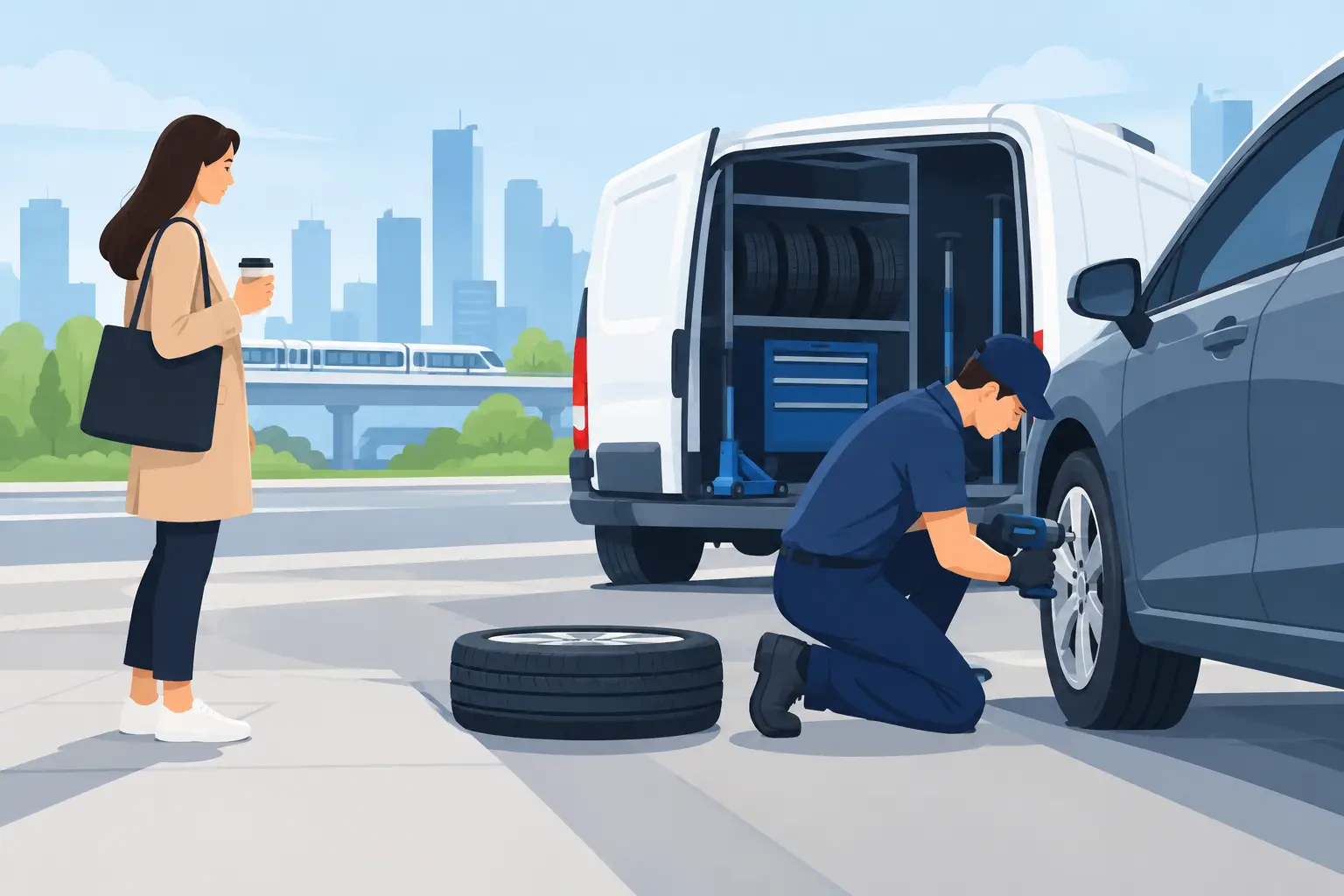
Mobile Tyre Fitting for Commuters Who Can’t Wait
A flat tire at 7:10 a.m. can turn a normal commute into a missed meeting, a late school drop-off, and a day spent waiting around a garage. Mobile tyre fitting for commuters is built for exactly that problem: the tyre service comes to your driveway, workplace, or roadside location, so you can get moving without rearranging your whole day.
For drivers around Reading, Basingstoke, Bracknell, and nearby areas, the value is simple. You need a safe tyre fitted by someone who can respond quickly, explain what is needed clearly, and get the job done where your car already is.
Why commuters lose so much time to tyre trouble
A puncture does not have to be dramatic to cause disruption. A slow leak can leave a tyre visibly low after the car has sat overnight. A screw picked up on a busy route can turn into a full flat by the time you reach work. A damaged sidewall can mean the tyre is unsafe to drive on, even if it still appears to hold some air.
The traditional answer is to fit the spare, drive carefully to a garage, and wait for an available slot. That works if you have a spare in good condition, know how to change a wheel safely, and have time to spare. Many modern cars do not have a full-size spare at all. Some have a repair kit that is not suitable for every puncture, while others have locking wheel nuts that make a roadside wheel change more difficult.
For a commuter, the biggest cost is often not the tyre itself. It is the lost time, the uncertainty, and the hassle of getting to work while the car is off the road.
Mobile tyre fitting for commuters at home or work
Mobile tyre fitting removes the unnecessary journey to a garage. A fully equipped mobile workshop can come to your home before you leave, meet you in a workplace parking lot, or attend a safe roadside location when you are stuck. The aim is not to make tyre trouble pleasant. It is to keep it from taking over the day.
At home, the service is useful when you discover a problem before your commute starts. Instead of risking a drive on a damaged tyre or spending the morning in a waiting room, you can arrange fitting where the vehicle is parked. If the timing works, you can carry on with work from home, handle the school run in another vehicle, or simply avoid sitting at a garage for hours.
At work, mobile fitting is often even more practical. Your car can be inspected, repaired, or fitted with a replacement while you are in the office. By the time your shift ends, the job may be complete and your usual journey home can continue. It depends on access and parking arrangements, but most open, level parking areas are suitable.
Roadside service is different. Safety comes first. If you are on a live lane, a narrow road, or somewhere unsafe to work, move to a safe location if possible and follow roadside safety guidance. Once the vehicle is in a suitable place, a mobile technician can assess whether a repair or replacement is the right answer.
Repair or replacement? The right call depends on the damage
Not every flat tyre needs replacing. A straightforward puncture in the central tread area may be repairable if the tyre has enough legal and safe tread remaining, has not been driven flat, and has no internal or structural damage. A proper inspection matters because damage is not always visible from the outside.
A replacement is usually needed when the puncture is close to the sidewall, the sidewall is cut or bulging, the tread is too worn, or the tyre has been run with little or no air pressure. Driving on an underinflated tyre can damage its internal structure. Adding air and carrying on may feel like a quick fix, but it can leave you with an unsafe tyre later.
The practical benefit of a mobile service is that you get an honest assessment at the vehicle. If a safe repair is possible, there is no need to pay for a tyre you do not need. If replacement is necessary, you can choose an option that suits your car and budget.
New tyres are often the right choice for drivers who cover regular mileage, travel at higher speeds, or want to match an existing tyre specification. Fully tested part-worn tyres can also be a sensible lower-cost option in certain situations. The key is condition, correct sizing, and making sure the tyre is suitable for the vehicle. Cheap should never mean unsafe.
What happens during a mobile fitting appointment
The process should be straightforward. You explain where the car is, the vehicle details, and what has happened. If you know the tyre size, that is helpful, but it is not always essential. It can usually be read from the sidewall, and vehicle registration details can help confirm suitable options.
On arrival, the technician checks the tyre and wheel, identifies the cause of the issue, and talks you through the practical choices. If a fitting is needed, the damaged wheel is removed, the new or approved part-worn tyre is fitted, and the wheel is balanced where required. The wheel is then refitted securely and the tyre pressure is set correctly.
Wheel balancing is easy to overlook, but it matters. An unbalanced wheel can cause steering vibration, uneven tyre wear, and a less comfortable drive, particularly at commuter-road speeds. If the old tyre shows unusual wear on one edge or across the tread, it may also point to an alignment issue. A mobile technician can flag that problem so you can arrange alignment support before a new tyre wears out early.
A few checks that can prevent a weekday emergency
Tyres will still pick up punctures, but a quick routine reduces surprises. Check pressures at least once a month and before longer trips, using the vehicle manufacturer’s recommended settings rather than the maximum pressure shown on the tyre sidewall. Do the same for your spare if you have one.
Look over the tread and sidewalls when you wash the car or fill up. Nails, screws, cracking, cuts, bulges, and repeated pressure loss are all reasons to get the tyre checked promptly. If your steering wheel shakes at speed, the vehicle pulls to one side, or you notice uneven wear, do not put it off until the next service.
It also helps to keep the locking wheel nut key in the car, ideally somewhere easy to find. A missing key can delay a tyre replacement, especially when the vehicle is stranded. If your car uses a tyre pressure monitoring system, pay attention to its warning light. It is not always a puncture, but it is always worth checking.
When speed matters, clear communication matters too
A mobile tyre service is most useful when it is responsive without making promises it cannot keep. Traffic, tyre availability, weather, and the safety of the location can all affect arrival and completion times. A good local operator will give you a realistic time window, keep you updated, and tell you what options are available before work begins.
That is especially important for commuters. You may need to tell your manager whether you will be late, decide whether to leave the car at work, or make plans for children and appointments. Straight answers help you make those decisions quickly.
Lee’s Mobile Tyres provides practical, on-site help for drivers who need a repair, replacement, balancing, or urgent tyre support without the garage runaround. The focus is simple: get to you, assess the problem properly, and get your vehicle safely back on the road.
The next time a warning light comes on or a tyre looks low before a busy morning, do not gamble on getting to the garage. Get the tyre checked where you are, protect your commute, and leave the rest of the day where it belongs – in your plans.