
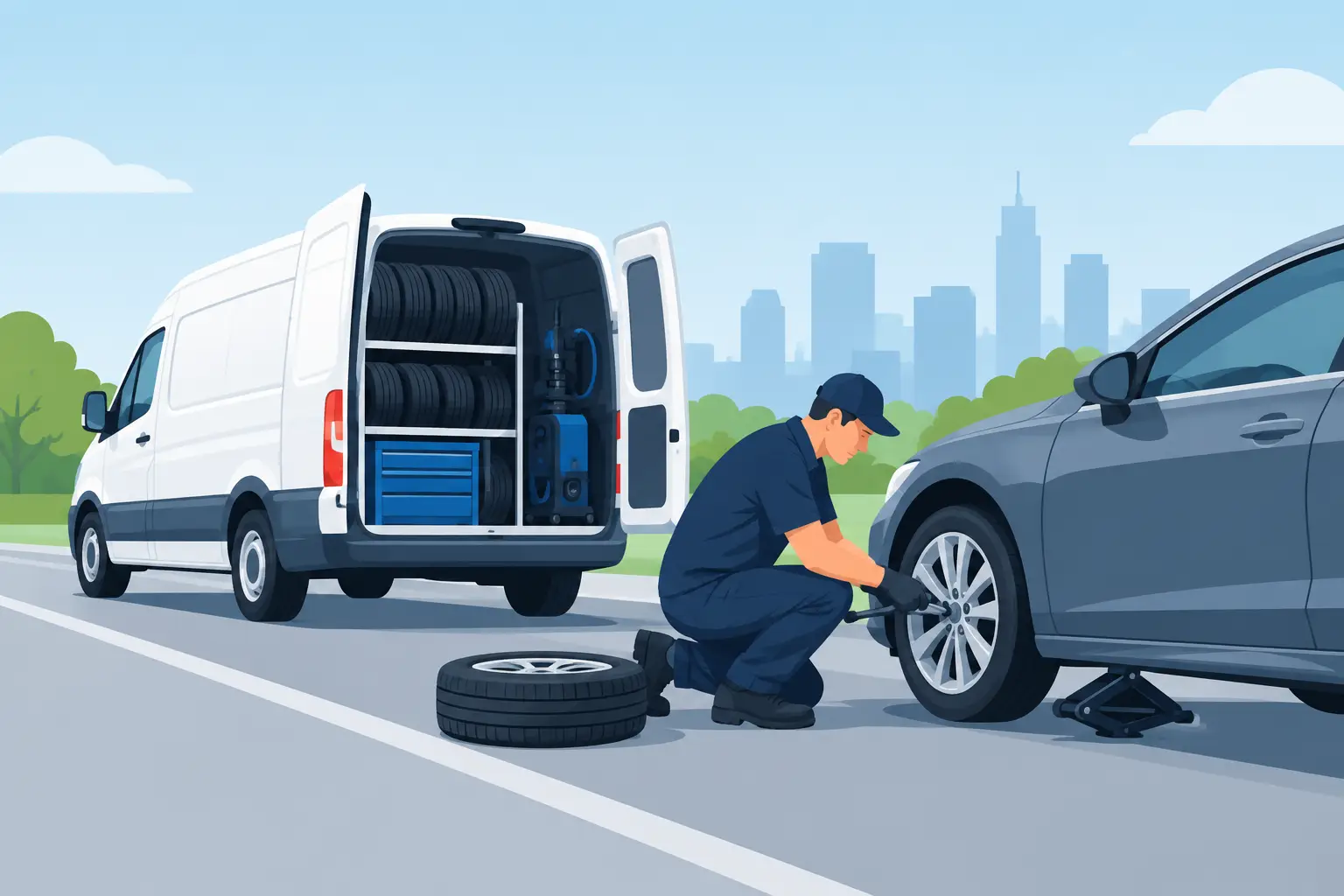
Mobile Tyres That Come to You When You Need Help
A flat tire has a way of arriving at the worst possible moment: outside the house before the school run, in a work parking lot, or on the roadside when you still have miles to go. Mobile tyres take the garage visit out of the equation. Instead of finding a ride, rearranging your day, and waiting at a tire shop, a trained fitter comes to your location and gets you moving again.
For drivers around Reading, Basingstoke, Bracknell, and nearby areas, that can mean the difference between losing a full day and getting a practical problem sorted where the vehicle is parked. Whether you need a puncture repair, a replacement tire, or help after a sudden blowout, the aim is simple: safe tires, fitted properly, with as little disruption as possible.
What Mobile Tyres Actually Cover
Mobile tire fitting is more than dropping off a tire. A properly equipped mobile service arrives with the tools to remove the wheel, fit and seal the tire, balance the wheel, check the valve, and refit everything correctly. The work is done at your home, workplace, or a suitable roadside location.
The exact job depends on what has happened. A slow puncture may be repairable if the damage is in the central tread area and the tire has not been driven flat. A sidewall split, severe tread damage, or a tire that has been run while deflated normally calls for replacement instead. This is not a place to cut corners. A tire can look fine from the outside while its internal structure has been weakened.
A mobile fitter can also help when you have noticed uneven wear, vibration through the steering wheel, or a tire that keeps losing pressure. Wheel balancing is often part of a tire replacement, and it helps prevent vibration at speed. Alignment support may be recommended where wear suggests the wheels are not tracking correctly. Alignment itself sometimes needs specialist equipment and a level workshop setup, so the right answer may be a mobile inspection first, followed by a garage appointment if required.
When a Mobile Tire Service Makes Sense
Convenience is the obvious reason, but it is not the only one. A car with a flat tire may not be safe or legal to drive to a garage. Even if the vehicle has a spare, changing it yourself on a busy road, in bad weather, or with children in the car is not always realistic.
Mobile service is especially useful when your car is stuck on a driveway, parked at work, or fitted with tires you cannot safely inflate. It also suits drivers whose schedule leaves little room for a traditional appointment. A fitter can work while you are at home or at your workplace, rather than asking you to spend an hour or two in a waiting room.
Emergency callouts are another clear use case. If a tire fails late in the evening, early in the morning, or on a weekend, finding help can be difficult. A 24/7 mobile service gives you a practical option when a standard tire shop is closed. Availability and response time will depend on location, traffic, tire size, and current demand, but quick communication matters just as much as quick arrival.
What to Do When You Have a Flat Tire
Your first job is to get yourself somewhere safe. Do not keep driving on a flat tire just to reach a better parking spot unless there is no safe alternative. Driving even a short distance while the tire is flat can destroy the sidewall and turn a repairable puncture into a replacement.
If you are on the road, pull over as far from traffic as safely possible. Put on your hazard lights and keep passengers away from moving vehicles. Avoid standing on the traffic side of the car. If the vehicle is in a dangerous position, contact emergency services or roadside recovery before arranging tire work.
When calling for mobile help, having a few details ready saves time. Your location, vehicle make and model, tire size, and a brief description of the issue allow the fitter to prepare. Tire sizes are printed on the sidewall, such as 225/45 R17. A photo can help where it is safe to take one, especially if you have hit a pothole, curb, or road debris.
Do not remove a nail or screw from the tread. It may be slowing the air loss, and removing it can leave you with a fully flat tire before help arrives. If the tire is losing pressure slowly and you can safely use an air pump, add enough air to keep the vehicle stable while you wait. Do not exceed the pressure stated on the vehicle placard.
Repair, New Tire, or Part-Worn Tire?
There is no single right choice for every driver. The best option depends on the condition of the damaged tire, the vehicle, your budget, and how soon you need to be back on the road.
A puncture repair is usually the most affordable solution when the tire is otherwise in good condition and the damage meets repair standards. The fitter should inspect the tire inside and out before confirming it can be repaired. Not every puncture qualifies, and anyone promising a repair without checking the tire properly is taking a risk with your safety.
A new tire makes sense when the old one is worn, damaged, mismatched, or no longer suitable for the way you drive. It is often the better long-term value if you cover high mileage, regularly drive on faster roads, or want the confidence of full tread depth and manufacturer backing.
Fully tested part-worn tires can be a sensible lower-cost option in the right situation. They should have legal tread depth, no unsafe repairs or structural damage, and be checked carefully before fitting. A part-worn tire is not simply a used tire pulled from another car. Condition matters more than appearance, and a reputable mobile fitter should be clear about what is being fitted and why.
If only one tire needs replacing, matching the existing tire as closely as practical can help preserve handling and braking balance. On some vehicles, especially all-wheel-drive models, differences in tread depth between tires can matter. Ask for advice rather than assuming the cheapest single replacement is always the best route.
Why Correct Fitting Matters
Tires are the only part of your vehicle that touch the road. Their grip affects braking, steering, cornering, and how the car behaves in wet conditions. That is why the job is not finished when the new tire is on the rim.
The wheel needs to be balanced so it rotates smoothly. Wheel nuts must be tightened correctly. Tire pressure should be set to the vehicle manufacturer’s recommendation, not guessed by looking at the sidewall. The fitter should also check for obvious issues such as a damaged valve, bent wheel, or uneven tire wear that could cause trouble again soon.
After the work is complete, take a moment to confirm what was done. If a repair was carried out, ask where the puncture was and whether you should monitor pressure over the next few days. If a tire was replaced, check that the size and speed rating are suitable for your vehicle. Clear answers are part of good service.
A Local Service That Keeps Things Simple
When your tire lets you down, you do not need a lecture or a complicated booking process. You need someone who listens, turns up prepared, and gives you an honest answer about the safest fix. That is the practical approach behind Lee’s Mobile Tyres: bring the workshop to the customer, explain the options plainly, and get the vehicle road-ready without unnecessary delay.
Mobile fitting will not solve every vehicle issue. A badly damaged wheel, repeated pressure loss caused by corrosion, or serious alignment problems may need additional work. But a good mobile inspection tells you what can be handled on the spot and what should be dealt with next.
The useful habit is to act early. If you spot a nail, feel a vibration, or keep topping up one tire, arrange a check before it becomes a roadside emergency. A little attention now can save you from a much bigger interruption later.