
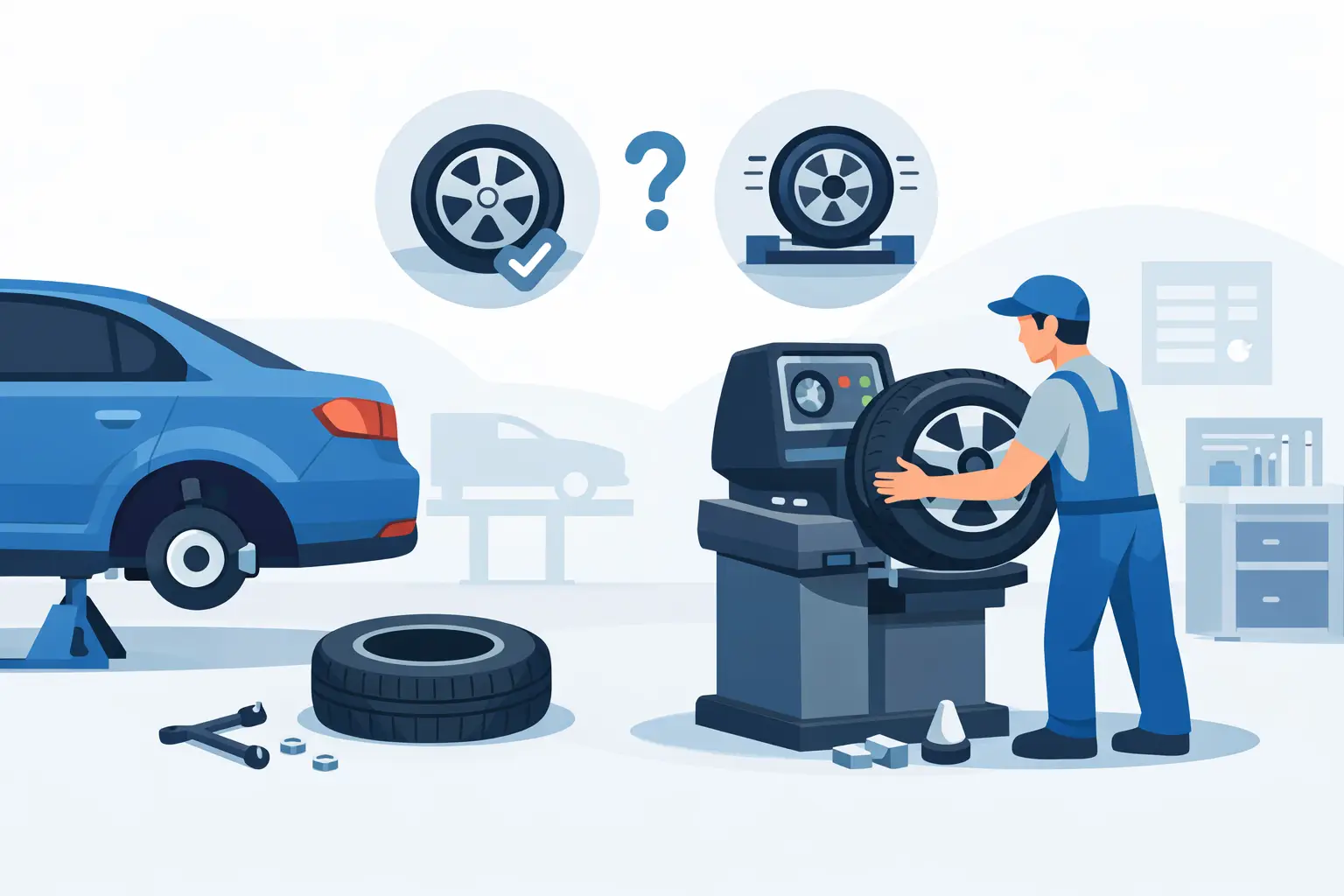
Is Wheel Balancing Needed After Tire Change?
A new tire can solve one problem and quietly create another if the wheel is not balanced properly. So if you’re asking is wheel balancing needed after tire change, the short answer is yes – in most cases, it should be done at the same time. It helps the tire roll evenly, keeps the steering smooth, and reduces uneven wear that can cost you more money later.
For most drivers, this is not about chasing perfect performance. It is about avoiding that annoying vibration through the steering wheel, protecting the life of your new tire, and making sure the car feels right when you pull away. If you’ve already gone to the trouble of replacing a tire, balancing is usually part of doing the job properly.
Is wheel balancing needed after tire change every time?
In real-world terms, almost always. When a tire is fitted onto a wheel, the weight around that full assembly is rarely distributed perfectly. Even a brand-new tire and a wheel in good condition can have small weight differences. Balancing corrects that by adding small weights in the right places so the wheel spins smoothly.
Without that adjustment, the wheel can wobble slightly as it rotates. At lower speeds you might not notice much. Once you get up to highway speed, the vibration often becomes much more obvious. Some drivers feel it in the steering wheel, others through the seat or floor.
There are a few situations where people assume balancing is optional, such as a quick emergency tire replacement or a single tire swap. But even then, the need does not really go away. If the tire has been removed and another one fitted, balancing is still the right next step.
Why balancing matters more than people think
A lot of drivers hear the word balancing and think it is a small extra. It is not. It has a direct effect on how the vehicle drives and how long the tires last.
The first issue is comfort. An unbalanced wheel can cause vibrations that make everyday driving less pleasant. On a short trip that may sound minor, but on a commute or longer drive it gets old fast.
The second issue is tire wear. A wheel that does not spin evenly can create patchy contact with the road. Over time, that can lead to uneven tread wear, which means the tire may need replacing sooner than expected.
Then there is the added strain on suspension and steering components. One slightly unbalanced wheel will not instantly wreck your car, but repeated vibration is not doing the rest of the vehicle any favors. Bearings, shocks, and steering parts all prefer a smooth-running wheel over one that is constantly shaking at speed.
What wheel balancing actually does
Wheel balancing is a straightforward process. Once the tire is mounted on the wheel, the full assembly is placed on a balancing machine. That machine checks where the heavier and lighter spots are as the wheel spins.
The technician then adds small balancing weights to correct the uneven distribution. The goal is simple – the wheel should rotate evenly without creating vibration.
This is different from wheel alignment, which is another service drivers often confuse with balancing. Alignment deals with the angles of the wheels and how they sit against the road. Balancing deals with weight distribution in the wheel and tire assembly itself. They are both important, but they solve different problems.
Signs your wheels may not be balanced after a tire change
Sometimes the issue shows up right away. Other times, it only becomes obvious once you get onto a faster road. If balancing has been missed or is not quite right, the car usually gives you a few clues.
A steering wheel that shakes at certain speeds is one of the most common signs, especially if the problem is on the front wheels. If the vibration is felt more through the seat, the rear wheels may be the source. You might also notice the ride feels less settled than before, or the tire starts wearing unevenly much sooner than it should.
Not every vibration means balancing is the problem. A bent wheel, damaged tire, suspension issue, or alignment problem can feel similar. But if the symptoms start straight after a tire change, balancing is one of the first things worth checking.
Is wheel balancing needed after tire change if only one tire was replaced?
Yes, usually. This is one of the most common situations, especially after a puncture, sidewall damage, or a single worn tire. People often assume balancing only matters when all four tires are changed together, but that is not the case.
If one new tire is mounted onto one wheel, that wheel still needs to be balanced. The machine is not balancing the whole car at once. It is balancing each wheel and tire assembly individually.
That said, replacing only one tire can sometimes raise a separate issue. If the remaining tire on the same axle is much more worn than the new one, there may be a tread depth difference that affects handling. That is not a balancing problem, but it is still worth discussing with a tire professional.
When balancing might not solve the problem
Balancing is important, but it is not a magic fix for every shake or wobble. If a wheel is bent from a pothole, or the tire itself has a defect, the vibration may still be there even after balancing. The same goes for suspension wear or alignment problems.
This is where experience matters. A proper inspection should not stop at fitting the tire and spinning the wheel once. If something still feels off, the cause needs to be identified rather than brushed aside.
For everyday drivers, the key point is simple. If your car still vibrates after a fresh tire change and balancing, do not just live with it. It usually means something else needs attention.
The cost question drivers really mean
Most people asking about balancing are also asking whether it is worth paying for. Fair question. The honest answer is that balancing is usually cheap compared with the cost of replacing a prematurely worn tire or putting up with a rough ride for months.
It also makes little sense to fit a new tire and skip the step that helps it wear properly. Saving a small amount upfront can lead to more expense later. In practical terms, balancing is part of finishing the tire change properly rather than an optional add-on.
Convenience matters when you’re already dealing with a tire problem
If your tire has failed at home, at work, or on the roadside, your main concern is usually getting moving again. That is exactly why balancing should be handled as part of the same visit where possible. You do not want to sort the tire today and then book another job tomorrow because the car starts shaking at 60 mph.
For busy drivers, the best service is the one that gets the full job done in one go – replacement, fitting, and balancing, without dragging you into a garage waiting room for half a day. That is the practical side people appreciate most.
At Lee’s Mobile Tyres, that hands-on approach makes a real difference because the goal is not just to fit a tire quickly. It is to leave you with a car that feels safe, smooth, and ready to use straight away.
A simple rule to follow after any tire change
If a tire has been removed from the wheel and another one fitted, have that wheel balanced. That applies whether it is one tire or a full set, whether it is an emergency callout or a planned replacement. There are not many grey areas here.
The bigger point is this: a tire change should fix the problem, not create a new one you notice on the next drive. Balancing is one of those small jobs that prevents bigger irritation later, and that is usually reason enough to get it done right the first time.
When your car needs attention, the best outcome is simple – it should drive away feeling normal again.