
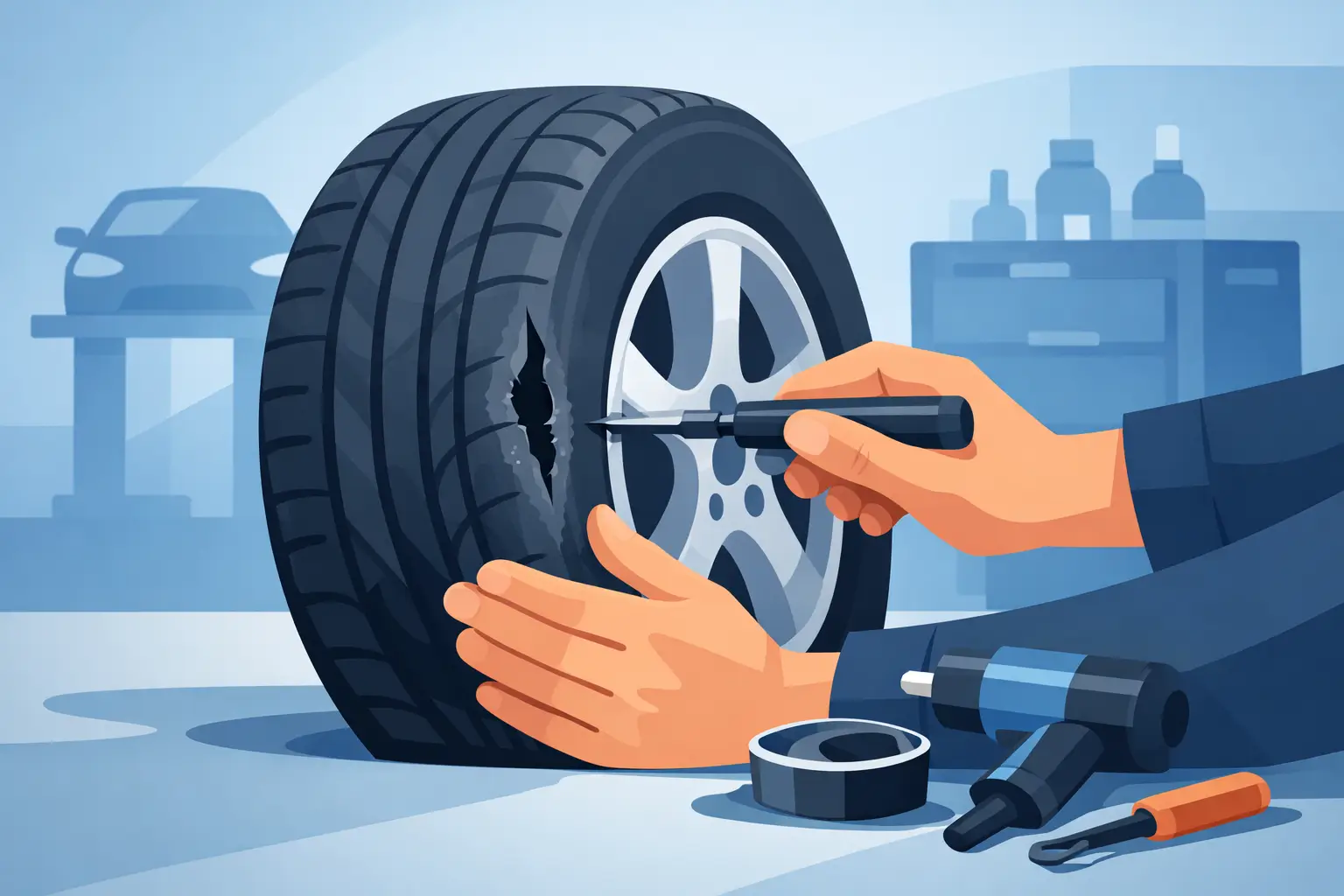
Can You Repair Sidewall Damage on a Tire?
You notice a bulge, a split, or a chunk missing from the side of the tire, and the first question is usually the same – can you repair sidewall damage and keep driving safely? In most cases, the answer is no. Sidewall damage is one of the few tire problems that usually means replacement, not repair, because the weak spot is in the part of the tire that flexes constantly and carries a huge amount of load.
That can be frustrating, especially when the damage looks small. A tiny nail in the tread often can be repaired. A mark on the sidewall that seems minor can still make the tire unsafe. The difference comes down to where the damage is and what that part of the tire actually does every time the wheel turns.
Why sidewall damage is treated differently
The sidewall is not just the smooth rubber you can see from the outside. It protects the internal structure of the tire and flexes every time you accelerate, brake, corner, or drive over uneven roads. Unlike the center tread area, the sidewall is under constant movement.
That matters because a repair has to stay sealed and stable under pressure. In the tread area, a proper puncture repair can work because that section is thicker and more stable. In the sidewall, the motion is much greater. Even if a patch appears to hold at first, it may not remain reliable once the tire heats up, flexes under load, and deals with real road conditions.
This is why most professional tire shops will not repair punctures, cuts, bulges, or cracks in the sidewall. It is not about being cautious for the sake of it. It is about preventing a blowout or sudden failure later.
Can you repair sidewall damage in any situation?
If you are asking can you repair sidewall damage, the practical answer for everyday drivers is still no. There are cosmetic marks that do not need a repair, but actual sidewall damage is generally not considered safely repairable.
A superficial scuff from rubbing a curb is different from a cut deep enough to expose cords. A light scrape may leave the tire looking rough while still being structurally sound. A bubble, split, or gouge is a different story. Once the internal layers are compromised, the tire is no longer something you want to trust at highway speed or with your family in the car.
Some drivers look for temporary fixes, sealants, or DIY patches because they need to get moving again. That is understandable when you are stuck at home, at work, or on the roadside. The problem is that these products do not restore the tire’s structure. At best, they may delay the obvious. At worst, they give false confidence.
Signs your sidewall damage means replacement
There are a few warning signs that should push the decision firmly toward replacement.
A bulge or bubble in the sidewall usually means the internal cords have been damaged. This often happens after hitting a pothole or curb. The outer rubber may still be holding air, but the strength of the tire has already been reduced.
A cut, slice, or crack that is more than surface deep is another clear problem. If you can see fabric, cords, or any separation in the material, the tire is not safe to repair.
Chunks missing from the sidewall also matter, especially if the damage is uneven or close to the bead area near the wheel rim. That section handles a lot of stress, and damage there can lead to rapid air loss.
Even without obvious tearing, repeated low-pressure driving can damage the sidewall from the inside. If a tire has been driven while flat or nearly flat, the sidewall may have been crushed and overheated. Sometimes that damage is not visible right away, but it is still serious.
What usually causes sidewall damage
Most sidewall damage is not from nails. It is usually impact-related.
Potholes are one of the biggest causes, especially when hit at speed. The tire gets pinched between the road and the wheel, which can break internal cords. Curbs are another common culprit. Parking a bit too close or brushing a curb in traffic can cut or weaken the sidewall more than people realize.
Overloading the vehicle can also play a part. When a tire is carrying more weight than it should, the sidewall works harder and runs hotter. Low tire pressure makes this worse. Underinflated tires flex more, build more heat, and are more vulnerable to damage from everyday road hazards.
Age matters too. Older tires can develop cracks in the sidewall as the rubber degrades. If those cracks are more than light weathering, replacement is usually the safer call.
Why a sidewall repair is usually refused
Drivers sometimes feel frustrated when a technician says no to a repair. It can sound like an upsell when you were hoping for a cheaper fix. In reality, it is usually the opposite. A reputable tire professional would rather give you an answer you may not like than send you away on an unsafe tire.
A proper puncture repair is normally limited to the repairable tread area. That is the section designed to handle this kind of fix when the damage meets size and location guidelines. The sidewall falls outside that category because the structure and movement are different.
There is also a liability issue. If someone repairs a sidewall and that tire fails later, the consequences can be serious. For a mobile tire service or a shop, safety has to come first.
What to do if you spot sidewall damage
First, do not assume the tire is fine just because it is still holding air. A damaged sidewall can fail later, not necessarily right away.
If the damage is clearly a bulge, deep cut, or exposed cords, avoid driving on it if possible. If you must move the vehicle, keep it to the shortest distance necessary and avoid high speeds. If the tire is losing air, driving on it can make things worse within minutes.
If you are unsure whether it is cosmetic or structural, get it inspected by a tire professional. A quick look can often tell the difference between a curb scuff and damage that puts the tire at risk. That is especially useful when you are trying to avoid the hassle of towing or a garage visit.
For drivers who need help quickly, a mobile service can make a big difference. Instead of trying to limp to a shop on a damaged tire, you can have the tire checked and replaced where the car is parked. For people juggling work, kids, or a roadside breakdown, that is usually the safer and easier option.
Can you repair sidewall damage or is replacement the only real fix?
When the damage affects the structure of the tire, replacement is the only real fix. That may feel expensive in the moment, but it is cheaper than risking a blowout, wheel damage, or an accident.
It is also worth checking the rest of the setup. If one tire has sidewall damage from an impact, the wheel itself may also have taken a hit. Tire pressure on the other tires should be checked as well, because underinflation often contributes to these problems.
If the damaged tire is otherwise nearly new, replacing just one may be fine depending on the vehicle and tread difference. On some vehicles, especially those sensitive to uneven tire sizes or tread depths, matching matters more. A good tire fitter will tell you the practical option rather than pushing what you do not need.
At Lee’s Mobile Tyres, this is exactly the kind of problem we deal with every day – helping drivers get safely back on the road without the added stress of arranging a garage visit.
The main thing is not to gamble with sidewall damage. If it is truly just a surface scuff, you may be fine. If it is a bulge, cut, crack, or anything that suggests internal damage, treat it seriously and get it sorted before your next trip becomes a bigger problem.