Run Flat Tyre Replacement: What to Do Next
A run-flat tire can get you out of a dangerous spot, but it is not a tire you can ignore once the warning light comes on. If you need run flat tyre replacement, the first job is to protect the wheel, the tire pressure monitoring system, and everyone in the vehicle. Pull over safely, check the tire, and avoid treating its limited run-on ability as permission to carry on with your day.
Run-flat tires are designed to support the vehicle for a short distance after a loss of pressure. That can mean you do not have to stop on a busy road to fit a spare. It does not mean the tire is automatically safe to keep using, or that every puncture can be repaired. The right next step depends on how far it has been driven flat, how fast it was driven, and what caused the pressure loss.
What makes a run-flat tire different?
A conventional tire relies on air pressure to hold its shape. When it loses pressure, the sidewall can collapse under the weight of the vehicle. A run-flat tire has reinforced sidewalls, or a support ring system, that helps it carry the vehicle temporarily after a puncture.
That extra strength gives you time to get away from traffic and arrange help. Most run-flat systems are intended for a limited distance and at a reduced speed, often around 50 miles at up to 50 mph. The exact limit is set by the tire maker and vehicle manufacturer, so check your handbook or the markings on the tire rather than relying on a general rule.
Because a run-flat tire may not look obviously flat, a working tire pressure monitoring system is especially important. If the TPMS warning appears, take it seriously. Do not assume the tire is fine simply because the vehicle still feels fairly normal.
When run flat tyre replacement is the safe call
A puncture does not always mean an immediate replacement on a standard tire. With a run-flat, however, the decision is more cautious. Driving with little or no air can damage the tire internally, even if the outside looks acceptable when it is removed.
Replacement is usually the sensible option when the tire has been driven while flat, the sidewall is cut, there is a bulge, the tread is badly worn, or the puncture is outside the central repairable area. A nail or screw in the main tread area may be repairable in some cases, but only after a proper inspection from the inside of the tire. No responsible fitter should promise a repair before checking for hidden damage.
It also matters how the tire lost pressure. A simple tread puncture is very different from a pothole impact that has damaged the sidewall or bent the wheel rim. If the vehicle has been pulling to one side, vibrating through the steering wheel, or losing pressure repeatedly, the issue may involve more than the tire itself.
What to do when the warning light comes on
Keep your movements calm and deliberate. Sudden steering, hard braking, and high speeds put more stress on a damaged tire and can make the situation worse. Find a safe place to stop as soon as practical, away from live traffic if possible.
Once stopped, look for obvious signs such as a screw in the tread, a split sidewall, or a tire sitting unusually low. Do not remove an object from the tire. It may be slowing down the air loss, and removing it can leave you stranded more quickly.
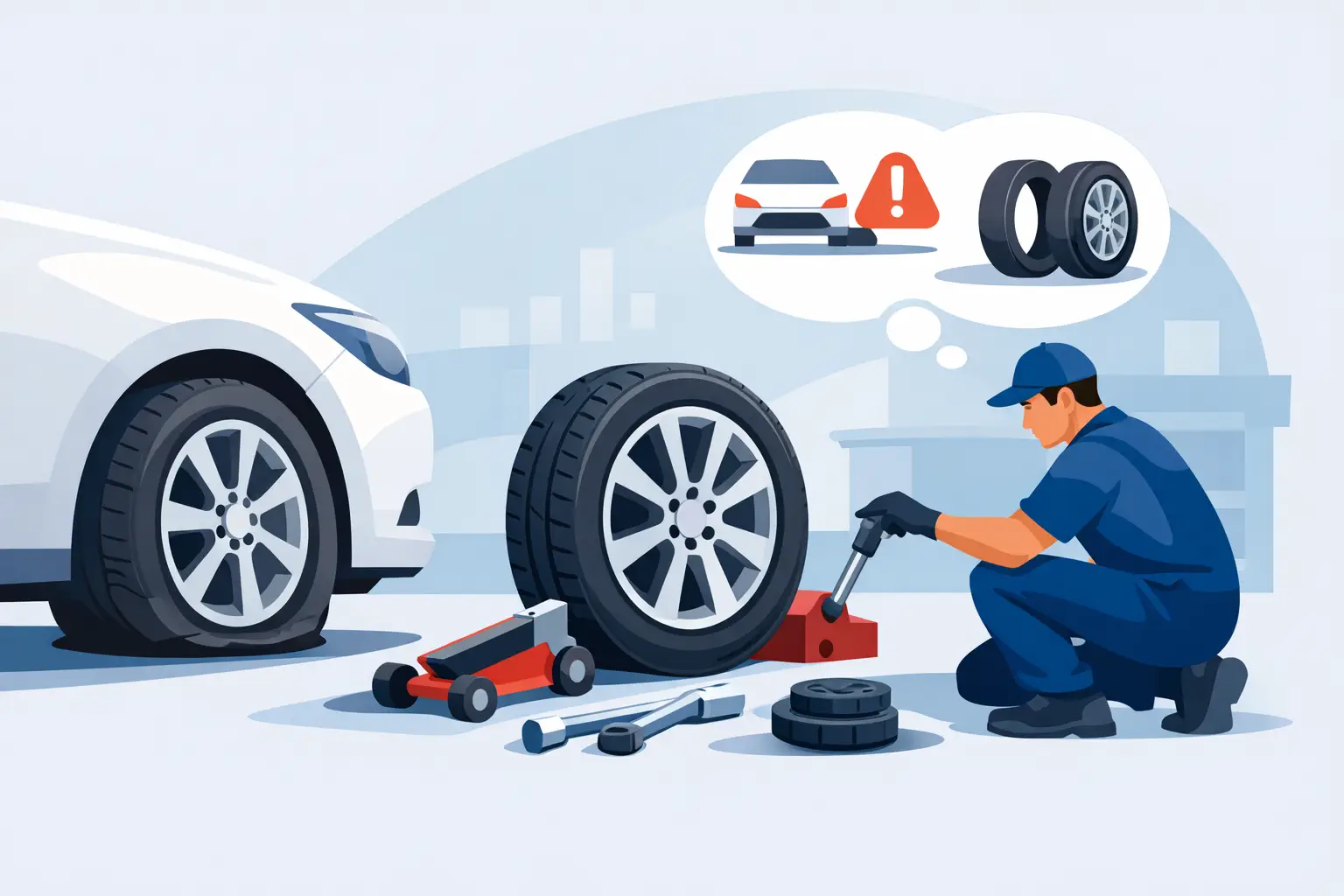
If you know the tire has lost pressure, avoid a long drive to a tire shop. This is where mobile service makes a real difference. A fitted mobile tire van can come to your home, workplace, or roadside location, inspect the tire, and fit a suitable replacement without asking you to risk the wheel on a questionable journey.
If you must move the vehicle, follow the vehicle manufacturer’s run-flat guidance exactly. Stay within the stated speed and distance limit, take the most direct safe route, and do not load the vehicle heavily. If the tire is visibly damaged, the wheel is contacting the road, or the vehicle feels unstable, do not drive it.
Getting the right replacement tire
The replacement needs to match the vehicle’s approved specification. Check the numbers on the tire sidewall for width, profile, construction, rim diameter, load index, and speed rating. For example, two tires may both fit the same wheel diameter while having different load capacities. Choosing by size alone is not enough.
Many vehicles supplied with run-flat tires are set up to use them, often because they do not have a spare wheel. Switching to conventional tires can be possible on some vehicles, but it is not a decision to make in a hurry at the roadside. You need to consider the vehicle manufacturer’s guidance, whether you will carry a spare or repair kit, insurance requirements, and how the tires should be matched across the axle.
Replacing one tire is often fine when the other tire on the same axle has plenty of matching tread depth and is the same make, model, and specification. If the opposite tire is significantly worn, fitting a pair may give more predictable grip and braking performance. On all-wheel-drive vehicles, differences in rolling circumference can matter even more. Your fitter should check this before recommending the cheapest-looking option.
A quality part-worn tire can be a practical budget choice in the right situation, provided it has been properly inspected, pressure-tested, and has safe remaining tread. It should still match the correct size and rating. For drivers covering high mileage, carrying family passengers, or regularly using faster roads, a new tire may offer better long-term value and reassurance.
Do not forget balancing and the TPMS
A replacement tire should be fitted and balanced properly. Wheel balancing helps prevent vibration at speed and reduces uneven wear. If you have noticed a shake through the steering wheel before or after the puncture, mention it when booking the job.
The TPMS also needs attention. Some vehicles will recognize the new tire after a reset procedure, while others may require sensor checking or relearning. A warning light that stays on after fitting is not something to ignore. It could be a reset issue, a damaged sensor, or a separate pressure problem in another tire.
It is worth checking the wheel rim too. A run-flat driven without pressure can put extra force through the rim. Small cosmetic scuffs are one thing; a cracked, distorted, or leaking rim needs proper assessment before a new tire is fitted.
Mobile help without the garage disruption
A flat tire has a habit of appearing when the day is already full: on the school run, outside work, before a customer visit, or late at night when local garages are closed. You should not have to arrange a tow, borrow another vehicle, and lose half a day just to make the car safe again.
Lee’s Mobile Tyres brings the fitting service to drivers across Reading, Basingstoke, Bracknell, and nearby areas. That means the tire can be inspected where the vehicle is, with a clear explanation of whether a repair is genuinely possible or a replacement is the safer route. Mobile fitting is especially useful when a run-flat has already reached its limited driving distance or you are not confident taking the car any farther.
When calling for help, have your location, vehicle registration, tire size if available, and a brief description of the issue ready. Mention that the vehicle has run-flat tires and whether the TPMS light is on. That helps the fitter prepare the right options and avoids wasted time.
A run-flat tire gives you a short window to make a safe decision. Use that window to get off the road, get the tire checked properly, and get back to your plans without turning a small puncture into wheel damage or a bigger roadside problem.