Wheel Balancing Versus Wheel Alignment Explained
Your car starts to shake at 60 mph, the steering wheel sits slightly off-center, or one front tire looks more worn than the other. These can all point to a wheel issue, but wheel balancing versus wheel alignment are two different jobs with different causes. Getting the right one matters because it affects how safely, smoothly, and economically your vehicle drives.
For most drivers, the main question is simple: why is the car not feeling right, and can it be fixed without losing half a day at a garage? The answer depends on the symptoms. A quick check from an experienced tire technician can stop you paying for work that does not solve the problem.
What Is Wheel Balancing?
Wheel balancing corrects an uneven weight distribution in the wheel and tire assembly. Even a brand-new tire can have tiny weight variations around its circumference. When the wheel spins, especially at higher speeds, that imbalance can cause vibration.
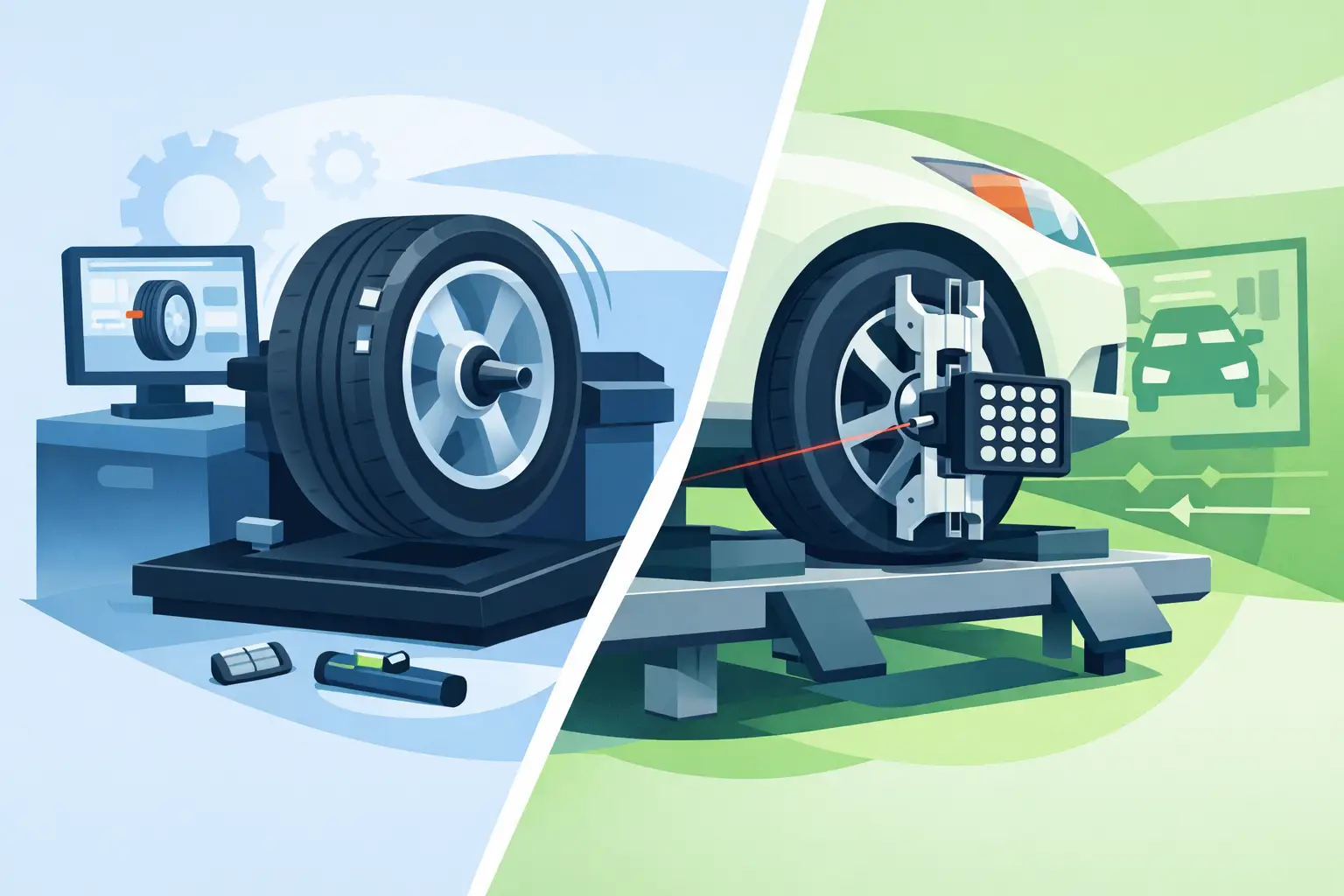
A technician mounts the wheel on a balancing machine, which identifies where it is heavy or light. Small balancing weights are then fitted to the rim so the wheel rotates evenly. It is a precise but straightforward service, and it is normally carried out when new tires are fitted, when a tire is repaired, or if vibration develops after hitting a pothole.
The most common sign of an unbalanced wheel is a vibration that gets more noticeable as speed increases. You may feel it mainly through the steering wheel if the front wheels are affected. If the issue is at the rear, you may feel a shake through the seat or floor instead.
Signs Your Wheels May Need Balancing
A car with a balancing issue can still drive normally around town, which is why it is easy to put off. On faster roads, though, the problem becomes harder to ignore. Watch for a steering wheel that shudders at certain speeds, a vibration through the cabin, uneven tire wear that appears as patchy or cupped sections, or a recently fitted tire that does not feel smooth on the road.
Not every vibration is a balancing problem. A damaged tire, bent wheel, worn suspension component, or brake issue can create a similar feeling. That is why a proper inspection is better than simply assuming the wheels need weights.
What Is Wheel Alignment?
Wheel alignment is about the direction and angle of the wheels, not their weight. Your vehicle manufacturer sets specific alignment angles so the tires meet the road correctly and the vehicle tracks straight. These settings include toe, camber, and caster.
You do not need to memorize those terms. In practical terms, alignment ensures the wheels are pointing where they should and sitting at the right angle. When alignment is off, the tires can scrub against the road instead of rolling cleanly along it.
Potholes, curb strikes, rough roads, and worn steering or suspension parts can all knock alignment out of specification. Sometimes it happens after a single hard impact. Other times, it slowly changes as components wear.
Signs Your Car May Need an Alignment
A vehicle that pulls to one side on a level road is a common alignment warning. So is a steering wheel that is no longer centered when you are driving straight. You may also notice that the tires wear more heavily on the inner or outer edge rather than evenly across the tread.
Uneven edge wear is worth dealing with quickly. Tires are not cheap, and poor alignment can reduce their usable life long before the tread should be worn out. It can also make the car feel less settled, particularly in wet conditions or during braking.
A pull is not always caused by alignment. Low tire pressure, a damaged tire, road camber, or a sticking brake can also make a vehicle drift. A technician should check the basics before recommending alignment work.
Wheel Balancing Versus Wheel Alignment: The Key Difference
The easiest way to remember wheel balancing versus wheel alignment is this: balancing stops a wheel from wobbling as it spins, while alignment makes sure all the wheels point and sit correctly as the vehicle travels.
Balancing is performed on each individual wheel and tire assembly. Alignment involves measuring and adjusting the vehicle’s steering and suspension geometry. One does not replace the other. Your wheels can be perfectly balanced but poorly aligned, or well aligned but badly out of balance.
The symptoms can overlap because both problems affect ride quality and tire wear. Still, there are useful clues. A shake that is strongest at a particular speed usually suggests balancing. Pulling, off-center steering, or wear concentrated on one tire edge is more likely to suggest alignment.
In some cases, you may need both. For example, if you have fitted new tires after the old set wore unevenly from poor alignment, the new wheels should be balanced during fitting and the alignment should be checked before those new tires suffer the same damage.
Why Ignoring Either Problem Costs More
A mild vibration may seem like an annoyance, but it can put extra stress on tires, suspension parts, and steering components. It also makes longer drives tiring. Leaving it unresolved can turn a small correction into a more expensive repair if a damaged tire or wheel is the real cause.
Poor alignment is often more costly over time because it can wear through a tire shoulder surprisingly fast. Once the tread is unevenly worn, correcting the alignment will prevent further damage, but it cannot restore the lost rubber. You may need replacement tires sooner than expected.
There is also the safety side. Tires with uneven wear can have less grip, particularly on wet roads. A car that pulls or vibrates is also harder to control smoothly in an emergency maneuver. The vehicle may still be drivable, but that does not mean the issue should wait for the next service.
When Should You Have These Checked?
Have wheel balancing checked whenever tires are installed or repaired, and whenever a new vibration appears. It is also sensible after a hard pothole strike, especially if the impact was strong enough to make you stop and inspect the tire.
Have the alignment checked after hitting a curb or pothole, replacing steering or suspension parts, noticing uneven tire wear, or feeling the car pull. Many drivers also choose an alignment check when fitting a new set of tires. That is a practical way to protect the investment from day one.
If you have a flat tire, do not assume the problem ends once the puncture is repaired. A puncture repair may require the tire to be removed and refitted, so balancing may be appropriate. If the tire was damaged by a pothole or curb at the same time, ask for the wheel and alignment to be assessed as well.
A Quick Check Before You Call
Before booking help, check your tire pressures against the vehicle placard and look for obvious sidewall damage, bulges, nails, or uneven tread. Do this only when it is safe. A low tire can make a car pull and can create a misleading diagnosis.
Then think about when the symptom occurs. Does the steering wheel shake only at highway speed? Did the vehicle begin pulling after a curb strike? Is one tire wearing down faster than the others? Those details help a technician narrow down whether balancing, alignment support, tire replacement, or a broader mechanical inspection is needed.
For drivers with busy schedules, mobile service can make the first step much easier. Lee’s Mobile Tyres can come to your home, workplace, or roadside location for practical tire help, including fitting, puncture repairs, and wheel balancing. If the signs point to an alignment issue, you can get clear advice on the next step rather than guessing.
A car should feel calm and predictable on the road. If yours shakes, pulls, or eats through tires unevenly, deal with it while it is still a manageable job – and get back to driving without the worry.