Top Causes of Sudden Tyre Deflation and What to Do
A tire that goes flat while you are heading to work, collecting the kids, or parked outside your home can stop the whole day in its tracks. Knowing the top causes of sudden tyre deflation helps you make the right call: whether the tire can be repaired, needs replacing, or simply needs its pressure checked before a small problem becomes a roadside one.
Top Causes of Sudden Tyre Deflation
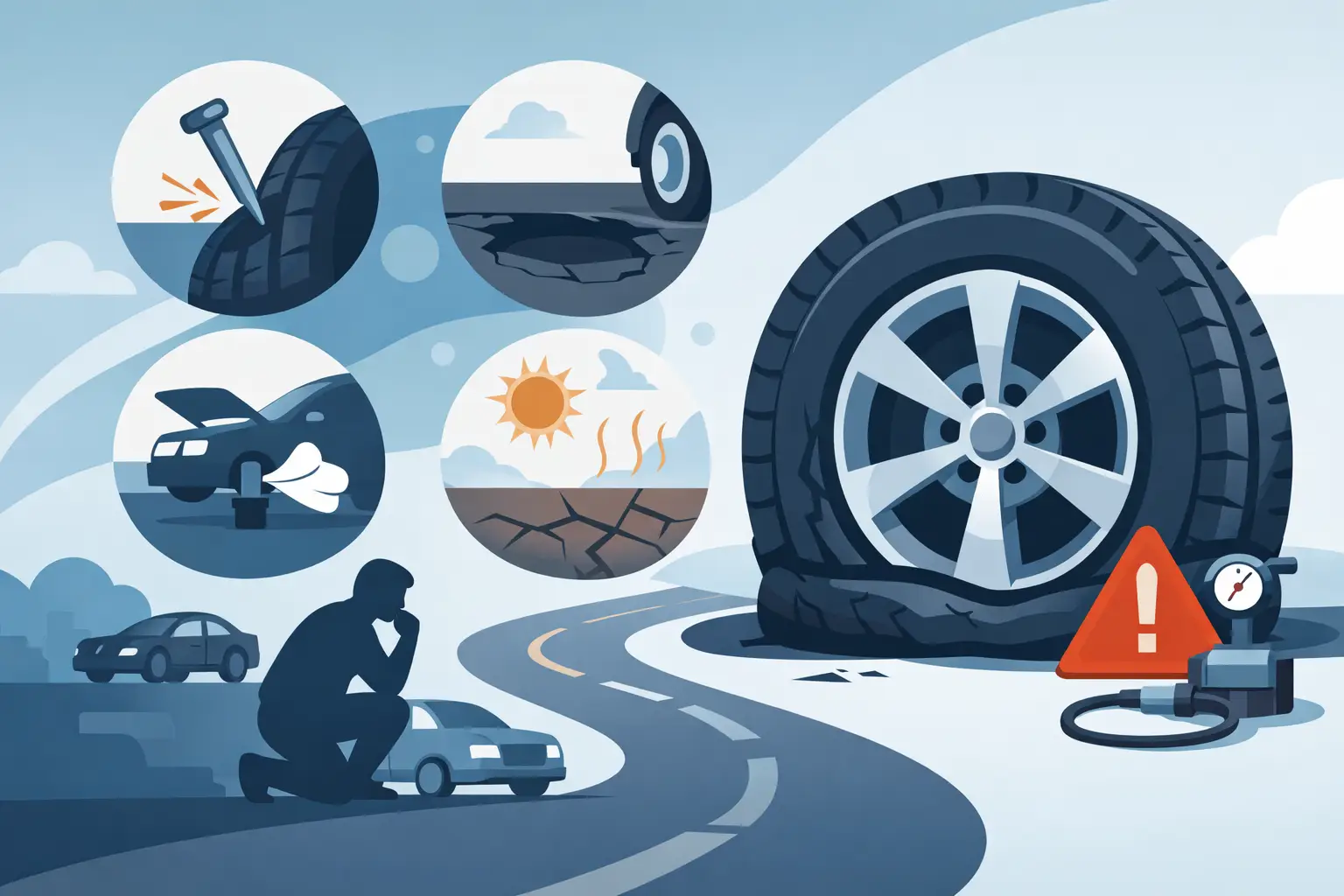
Not every flat tire is a dramatic blowout. Some tires lose air over hours or days, while others deflate within minutes after damage. The difference matters because a slow leak may be repairable if caught early, but driving on a fully deflated tire can destroy the tire’s inner structure and damage the wheel.
A nail, screw, or other road debris
This is one of the most common reasons for sudden air loss. A screw can work its way into the tread during an ordinary drive, often without making any noise or changing how the car feels at first. Once the object shifts, or once you pull it out, air can escape quickly.
If you spot a nail or screw in the tread, leave it where it is. It may be slowing the leak temporarily. Check the tire pressure if you can, avoid driving any farther than necessary, and arrange an inspection. A puncture through the central tread area can sometimes be repaired safely. Damage close to the sidewall usually means the tire needs to be replaced.
A damaged valve stem or loose valve core
The small valve stem where you attach an air hose is easy to overlook, but it is a regular source of leaks. Rubber valve stems can crack with age, while a bent, corroded, or loose valve core can let air out gradually or all at once.
This type of problem can be confusing because the tire may look completely normal. There may be no nail in the tread and no obvious split in the rubber. A tire technician can test the valve quickly and replace the faulty part if that is the cause. Always keep valve caps fitted too. They do not hold the air in by themselves, but they help keep dirt and moisture away from the valve.
A split, cut, or impact-damaged sidewall
The sidewall is the vulnerable outer edge of the tire between the tread and the wheel rim. Hitting a pothole, curb, raised drain cover, or sharp piece of debris can cut it or damage the internal cords. A hard impact may also pinch the tire against the wheel, causing a sudden loss of pressure.
Sidewall damage is not a safe repair job. Even a small-looking cut or bulge can mean the tire’s structure has been weakened. If you notice a bubble in the sidewall, a deep scrape, exposed cords, or a split, do not try to inflate it and carry on. The practical answer is a replacement tire.
A bent, cracked, or corroded wheel rim
Your tire relies on an airtight seal where it meets the wheel rim. A pothole impact can bend an alloy or steel wheel just enough to break that seal. Corrosion around the rim can do the same thing, especially on older wheels where moisture and road grime have built up beneath the tire bead.
A rim leak often shows up as a recurring low-pressure warning. You inflate the tire, it seems fine, then it is low again a few days later. The tire itself may not be at fault. A proper inspection should include the wheel, bead area, and valve rather than assuming every pressure loss is a puncture.
Worn-out tires and age-related cracking
Tires do not need to be bald to fail. Rubber hardens and dries as it ages, particularly when a vehicle spends long periods parked outside or is driven infrequently. Fine cracks can develop in the tread grooves, sidewalls, or around the valve area. Eventually, one of those weak points can start leaking.
Low tread also leaves less protection between the road and the tire’s inner layers. A worn tire is more likely to pick up debris and less able to cope with standing water, rough surfaces, and sudden braking. Regular visual checks are worthwhile, but do not rely on appearance alone if a tire repeatedly loses pressure.
Incorrect tire pressure
Underinflation does not usually make a tire deflate instantly, but it creates the conditions for a failure. A soft tire flexes too much as it rolls, generating heat that can weaken the casing. At higher speeds or under a heavy load, that heat can lead to a rapid deflation or blowout.
Overinflation has its own downside. The tire becomes less able to absorb pothole impacts and is more exposed to cuts and impact damage. Use the pressure figure listed by the vehicle manufacturer, usually found inside the driver’s door frame or in the owner’s manual. Check pressures when the tires are cold, not immediately after a drive.
Overloading and heavy impacts
A vehicle loaded with tools, stock, luggage, passengers, or towing equipment puts more strain on every tire. If the pressures have not been adjusted for the load, the risk of overheating and sidewall damage increases. This matters for family trips, work vans, and any vehicle carrying more than usual.
One sharp pothole can be enough to cause trouble, especially when the tire is already underinflated. You may feel a thud, hear a bang, or notice the steering pulling afterward. Pull over safely as soon as possible and inspect the tire. Continuing to drive can turn a minor issue into a ruined tire and damaged wheel.
What to Do When a Tire Deflates While Driving
The first priority is staying in control. Hold the steering wheel firmly, ease off the accelerator, and avoid slamming on the brakes. Let the vehicle slow gradually, use your hazard lights, and pull into a safe place away from moving traffic when you can.
Do not drive on a flat tire to get home or reach the next gas station unless there is no safer immediate option. Even a short distance can shred the sidewall and make a repair impossible. It can also score, crack, or bend the wheel.
Once stopped, look for obvious damage but do not put yourself at risk near traffic. If the tire is flat, the sidewall is damaged, or you do not have a safe spare, get help rather than guessing. For drivers around Reading, Basingstoke, Bracknell, and nearby areas, Lee’s Mobile Tyres can inspect the problem where you are and fit or repair the tire where appropriate.
How to Catch a Leak Before It Becomes a Flat
A two-minute tire check can prevent a lot of disruption. Look at each tire every couple of weeks and before longer trips. Check for low sidewalls, nails or screws, cuts, cracking, uneven wear, and bulges. If one tire looks lower than the others, do not assume it is normal just because the car still drives well.
Use a pressure gauge at least once a month. Dashboard tire-pressure alerts are useful, but they are a warning system, not a replacement for checking the actual pressures. Also pay attention to changes in how the vehicle drives. A pull to one side, vibration through the wheel, repeated pressure loss, or a thumping sound deserves an inspection.
A flat tire is inconvenient, but it does not have to become a bigger repair or a stressful wait by the roadside. Stop safely, protect the wheel by avoiding unnecessary driving, and have the cause checked properly before trusting that tire with your next journey.