
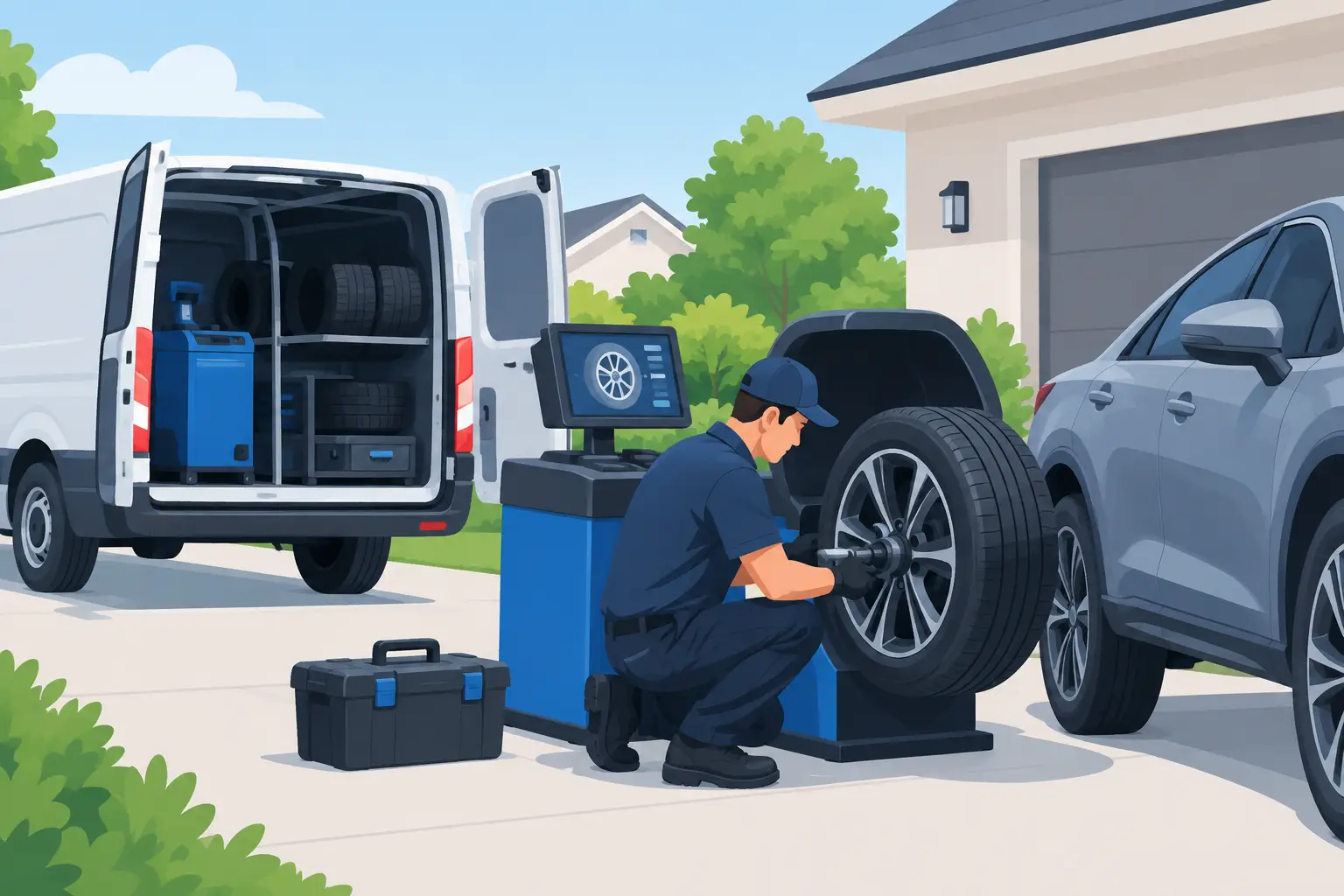
Can Mobile Fitters Balance Wheels at Your Home?
A steering wheel that shakes at 60 mph can turn an ordinary commute into something you dread. The good news is that the answer to “can mobile fitters balance wheels” is usually yes. With the right equipment in the van, a trained mobile tire fitter can balance your wheels at home, at work, or wherever your vehicle is safely parked.
That means you do not necessarily need to lose half a day sitting at a tire shop. If your tires have just been replaced, a wheel weight has fallen off, or your car has developed a speed-related vibration, mobile wheel balancing can get the problem checked and corrected where you are.
Can Mobile Fitters Balance Wheels Properly?
Yes, provided the mobile service carries a proper wheel-balancing machine and the vehicle, wheels, and location are suitable for the job. Balancing is not guesswork. The wheel is removed, mounted on a calibrated balancing machine, and spun to identify where its weight is uneven. The fitter then applies small counterweights in the correct positions and checks the result.
A properly equipped mobile workshop can carry out this process to the same practical standard you would expect from a fixed tire shop. The important part is the equipment, the condition of the wheel, and the fitter taking the time to inspect what is causing the vibration instead of simply adding weights and hoping for the best.
Mobile balancing is especially useful after a new tire fitting. A tire and wheel may look perfectly round, but tiny differences in weight around the assembly can cause a noticeable vibration once you are traveling at speed. Balancing corrects that imbalance before it starts to affect your drive.
What Does Wheel Balancing Fix?
Wheel balancing addresses a specific problem: uneven weight distribution in the tire and wheel assembly. As the wheel spins faster, even a small imbalance creates a force that can be felt through the steering wheel, floor, or seat.
The most common sign is a vibration that appears within a certain speed range, often around highway speeds. If the front wheels are affected, you may feel the shake mainly through the steering wheel. An issue at the rear can feel more like a shudder through the seat or the whole vehicle.
You may also notice uneven tire wear, particularly cupping or scalloped patches across the tread. Left alone, an imbalance can make the ride less comfortable and shorten the usable life of the tires. It can also put extra stress on steering and suspension components over time.
Balancing is not the answer to every vibration, though. A bent wheel, damaged tire, loose wheel hardware, worn suspension part, or braking problem can produce similar symptoms. A good fitter will check for obvious signs of those issues and tell you if balancing alone is unlikely to solve the problem.
When Mobile Wheel Balancing Makes Sense
A mobile appointment is a practical option when you are short on time or the vehicle is not pleasant to drive. You can have the work carried out on your driveway while you get on with your day, outside your workplace before heading home, or alongside a tire replacement appointment.
It is often worth arranging balancing when you have:
- had one or more new tires fitted
- noticed a vibration that increases with speed
- hit a pothole or curb and the ride feels different afterward
- lost a visible wheel weight
- seen uneven or cupped wear on the tires
If you have a flat tire or need an emergency replacement, balancing can often be handled as part of fitting the replacement tire. That saves arranging a second visit and helps make sure the vehicle is ready for normal driving once the work is complete.
For drivers around Reading, Basingstoke, Bracknell, and nearby areas, this is where a service such as Lee’s Mobile Tyres can make a real difference. Rather than arranging transport to a garage, you can have the tire work and balancing assessed at your location.
How a Mobile Fitter Balances Your Wheels
The process starts with a quick assessment. The fitter will ask what you have felt while driving, inspect the tires for damage and unusual wear, and check the wheels for missing weights or visible bends. They will also make sure wheel bolts or lug nuts are secure before any work begins.
Each wheel being balanced is then removed and mounted on the balancing machine. The machine measures where the assembly is heavy or light and indicates the amount and placement of weight needed. Depending on the wheel style, the fitter may use clip-on weights or adhesive weights fitted inside the rim for a cleaner appearance.
After weights are applied, the wheel is spun again to confirm the imbalance has been corrected. It is then refitted and tightened to the correct specification. The vehicle should be on stable, level ground with enough room for the fitter to work safely around it.
The job itself is usually straightforward, but the diagnosis matters. For example, if the tire has a bulge from pothole damage, no amount of balancing will make it safe. If a wheel is badly bent, the balance may not hold or the vibration may remain. In those cases, the right answer may be repair or replacement rather than adding more wheel weights.
Wheel Balancing vs. Wheel Alignment
These services are often mentioned together, but they correct different things. Wheel balancing concerns the weight distribution of the spinning wheel and tire. Wheel alignment concerns the angles at which the wheels sit and point in relation to the vehicle and road.
If your steering wheel vibrates at speed, balancing is a likely place to start. If the car pulls to one side, the steering wheel sits off-center when driving straight, or the inside or outside edge of a tire is wearing quickly, alignment may be the bigger concern.
Sometimes a vehicle needs both. A pothole strike can knock out a wheel weight and affect alignment at the same time. A mobile fitter can identify likely warning signs and advise on the next step. Alignment work may require specialist equipment or a workshop setting, depending on the service available and how extensive the issue is.
What to Do Before a Mobile Balancing Visit
You do not need to prepare much, but a few simple things help the appointment run smoothly. Park on solid, reasonably level ground and leave enough space around the vehicle for the doors and wheels to be accessed. Avoid soft grass, steep slopes, or a busy roadside where working safely is difficult.
If you can, make a note of when the vibration happens. Does it start at a particular speed? Is it felt in the steering wheel or through the seat? Did it begin after a tire change, pothole impact, or curb strike? Those details can help the fitter narrow down the cause quickly.
It also helps to mention any warning lights, pulling, knocking noises, or recent repair work when booking. The more clearly the symptoms are described, the easier it is to send the right equipment and allow the right amount of time.
A Smoother Drive Should Not Require a Garage Wait
A vibration is easy to put off when the car still drives, but it rarely gets more convenient to deal with. If your wheels need balancing, a mobile fitter can bring the equipment to you, check the cause, and get your ride feeling settled again without adding another garage trip to your week.