How to Repair a Slow Tyre Leak Before It Strands You
A tire that needs air every few days is not just an annoyance before the school run or commute. It is a warning that something is letting air out, and the problem can turn into a flat at the worst possible moment. To repair a slow tyre leak properly, the cause needs to be found first – not simply covered up with more air.
A slow leak can often be repaired quickly and affordably, especially when it is caught early. But the location of the damage, the condition of the tire, and how long it has been driven underinflated all matter. Here is what to look for and when it is time to get someone out to you.
Signs You Have a Slow Tire Leak
A completely flat tire gets attention straight away. A slow leak is easier to ignore because the vehicle may still drive normally for a while. You might only notice that one tire looks slightly lower than the others, the tire-pressure warning light comes on, or you are visiting the air pump more often than usual.
Watch for these common signs:
- One tire loses pressure faster than the rest.
- The steering feels heavier or the vehicle pulls slightly to one side.
- The tire-pressure monitoring light returns soon after you inflate the tire.
- You can hear a faint hiss or spot a screw, nail, or sharp object in the tread.
Do not assume the warning light is a faulty sensor. Check the pressure with a reliable gauge when the tires are cold, then compare it with the pressure shown on the driver’s door sticker. If one tire is consistently low, there is a leak until proven otherwise.
What Causes a Slow Tyre Leak?
The most common cause is a small puncture in the tread. A screw can sit in the rubber and seal the hole enough that air escapes gradually rather than all at once. Pulling the object out at home is usually a bad idea. It can turn a manageable slow leak into a flat tire in seconds.
The valve is another common culprit. Valve cores can loosen, valve stems can crack with age, and a missing or damaged valve cap allows dirt and moisture to get into the valve. These faults are often straightforward to fix, but they still need checking properly.
Leaks can also happen around the tire bead, where the tire seals against the wheel rim. Corrosion, dirt, or a slightly bent wheel can create a tiny gap that allows air to escape. This is more common on older alloy wheels and after a hard impact with a pothole or curb.
Less often, the tire itself may be damaged by a split, a previous poor-quality repair, or a puncture close to the sidewall. Sidewall damage is a different matter from a simple tread puncture. It carries far more risk and usually means replacement is the safe option.
Can You Repair a Slow Tyre Leak?
It depends on where the leak is and what has happened to the tire since it lost pressure. A small, clean puncture in the central tread area can often be repaired safely. A technician will remove the tire from the wheel, inspect it inside and out, and confirm that there is no hidden damage before carrying out a proper repair.
A tire normally cannot be safely repaired if the puncture is in the sidewall or shoulder, if there are multiple close-together holes, or if the tire has been driven while very low on air. Running underinflated can damage the internal structure even when the outside of the tire looks fine. In that case, repairing the hole would not restore the tire’s strength.
The same applies if the tread is worn close to the legal limit, there are visible cracks or bulges, or the tire has already had a repair in the same area. A fair repair is one that keeps you safe, not one that gets you moving for a few more days before another problem appears.
How to Check for the Leak Safely
You can do a few basic checks before arranging help. Start by inflating the tire to the recommended pressure. Look closely across the tread for nails, screws, shards of metal, or fresh cuts. Check the sidewall for bulges, deep scuffs, and cracks.
A little soapy water can help identify escaping air. Spray or brush it around the tread, valve stem, and wheel rim. Steady bubbles can point to the source of the leak. Do not place your hands near moving parts, and do not crawl underneath a vehicle that is only supported by a jack.
If you find a nail or screw, leave it in place and avoid driving farther than necessary. It may be slowing the leak down. If the tire is visibly flat, the sidewall is damaged, or you have no safe way to get to a shop, a mobile tire service can come to your driveway, workplace, or roadside location instead.
Why Repeatedly Adding Air Is Not the Fix
Adding air can get you through the next journey, but it does not repair the fault. Every time the pressure drops, the tire flexes more than it should. That creates extra heat, reduces handling and braking performance, and can wear the edges of the tread faster.
Low pressure also affects fuel use. The vehicle has to work harder to roll on a soft tire, which is not ideal when a small puncture may be repairable for far less than the cost of a replacement.
There is also the practical risk. A tire that loses two or three pounds of pressure a day may seem manageable, but temperature changes and a longer drive can make the loss worse. What starts as a quick stop at an air machine can leave you stranded in a parking lot or on the shoulder.
What a Proper Slow Leak Repair Involves
A professional repair is more than pushing a plug into the outside of the tire. The wheel is removed, the tire is inspected internally, and the exact leak is identified. If the tire meets the safety criteria for repair, the damaged area is prepared and sealed from the inside using the correct repair method.
The technician then refits the tire, checks the valve and bead seal, inflates it to the correct pressure, and tests for any remaining air loss. If the wheel has been disturbed or a replacement tire is fitted, balancing may also be needed to keep the ride smooth and prevent uneven wear.
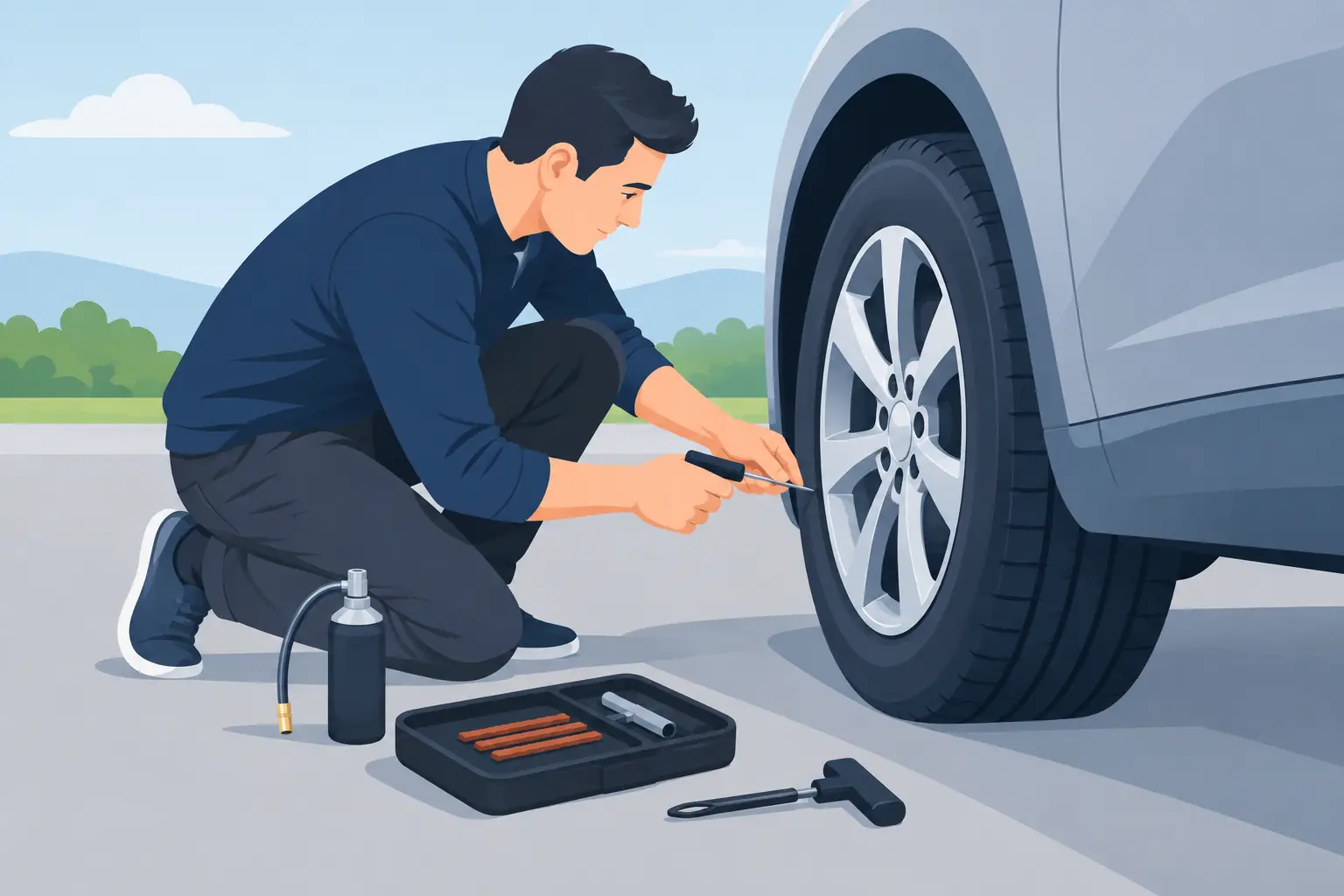
External plug kits sold for emergency use can be tempting, particularly if you are stuck away from home. They may provide a temporary way to move the vehicle to safety, but they do not allow anyone to inspect the inside of the tire. Treat them as a short-term measure, not a permanent repair.
When Replacement Is the Better Call
Sometimes replacing one tire is the only sensible option. That is usually the case with sidewall punctures, structural damage, severe wear, or a tire that has been run flat. If you need a replacement, it is worth considering the condition and tread depth of the tire on the other side of the same axle.
On many vehicles, tires on the same axle should be closely matched for size, type, and wear. All-wheel-drive vehicles can be even more sensitive to significant tread-depth differences. A technician can advise whether one replacement is suitable or whether a matched pair is the safer choice.
For drivers working to a budget, fully tested part-worn tires can sometimes be an option, provided they are the right size, have safe tread depth, and have been inspected carefully. The cheapest option is not always the best one, but neither is replacing a repairable tire unnecessarily.
Get the Problem Checked Where You Are
A slow leak should be dealt with before it becomes an emergency. If you are at home, at work, or stuck roadside around Reading, Basingstoke, Bracknell, or nearby areas, Lee’s Mobile Tyres can inspect the tire where the vehicle is and advise whether it needs a repair or replacement.
That saves arranging a garage appointment, driving on a soft tire, or trying to fit a spare in bad weather. A proper check gives you a clear answer and gets you back on the road with the correct pressure and a tire you can rely on.
If that same tire keeps losing air, do not keep feeding it coins at the air pump. Get the leak found while the tire still has the best chance of a safe, straightforward repair.