
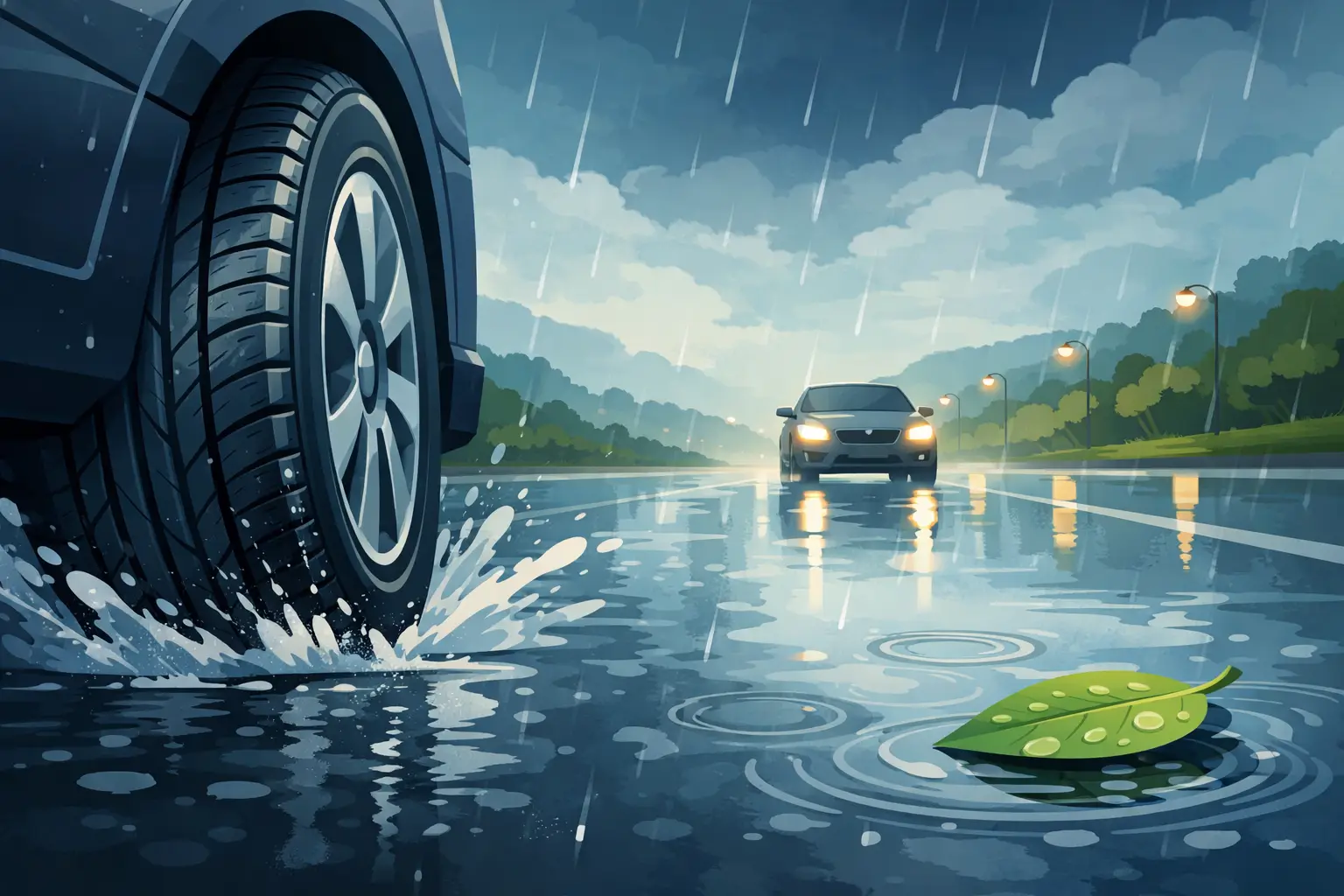
Best Tyres for Wet Roads: What Really Matters
A wet road can turn a routine school run or commute into a white-knuckle drive fast. The best tyres for wet roads are not simply the most expensive set on the shelf. They are the tires with enough healthy tread, the right pattern to clear water, and the correct fit for your vehicle and everyday driving.
When rain is coming down, your tires are doing the hard work. They have to push water away from the road surface so the rubber can keep gripping it. If they cannot do that, stopping distances grow, steering feels vague, and aquaplaning can happen with very little warning.
What makes a tire good in the rain?
Wet-weather performance comes down to three things: tread depth, tread design, and rubber compound. All three matter, but a great design cannot make up for a tire that is worn out or incorrectly inflated.
The grooves in a tire are there to channel water away. Deeper main channels and smaller cuts across the tread, often called sipes, help the tire maintain contact with a wet surface. A quality all-season tire with strong wet-grip ratings is usually the sensible choice for most everyday cars, vans, and family SUVs.
Sport-focused summer tires can offer excellent grip in warm, dry conditions, but their performance varies in standing water. Budget tires can also be perfectly usable when they meet the required standards and have good tread, but the difference in wet braking and water clearing can be noticeable between models. The right choice depends on how you use the vehicle, how many miles you cover, and the roads you normally drive.
Tread depth is not just a legal issue
A tire may still be legal and yet be far less reassuring in heavy rain than it was when new. As tread gets lower, there is less room for water to escape. That means the tire is more likely to ride on top of water instead of cutting through it.
Check the grooves across the whole tire, not only the outer edge. Uneven wear can point to incorrect tire pressure, wheel alignment problems, worn suspension parts, or a previous impact with a pothole or curb. If the inside edge is worn down, you might not spot it with a quick glance around the car.
If your vehicle pulls to one side, the steering wheel sits off-center, or a tire is wearing much faster on one shoulder, get it checked. Replacing one worn tire without dealing with the cause can leave you back in the same position sooner than expected.
How to choose the best tyres for wet roads
Start with the tire size and load rating recommended for your vehicle. These are shown in the handbook and on the tire sidewall. Fitting the wrong size, speed rating, or load rating is not a shortcut worth taking, especially if you regularly carry passengers, tools, or heavy loads.
Then look at independent wet-grip information and the tire label where available. A better wet-grip grade generally means shorter braking performance on wet pavement under test conditions. It is useful guidance, although it does not tell the whole story. Tire pressure, road temperature, vehicle weight, and how much water is on the road will still affect the result.
For most drivers, a reputable all-season tire is a practical middle ground. It is designed to cope with rain, changing temperatures, and normal daily driving without the cost or complication of changing sets seasonally. If you drive a performance car, cover high mileage on highways, or spend a lot of time on rural roads where puddles and poor surfaces are common, paying more for a premium wet-weather-focused tire can make good sense.
Part-worn tires can be a more affordable option when they have been properly inspected, tested, and have safe, even tread remaining. They are not all equal. Avoid any tire with damage, repairs you cannot verify, cracking, bulges, or very low tread. A cheap tire is not a saving if it leaves you with less grip when the road is at its worst.
Do not mix tires without thinking
Ideally, match tires across the same axle in size, tread pattern, and condition. A pair with very different wet performance can make the vehicle less predictable under braking or through bends. If you can only replace two tires, the new or deeper-tread pair is commonly fitted to the rear axle to help reduce the risk of the rear of the vehicle losing grip first. Your vehicle manufacturer’s guidance should always be considered.
Mixing brands is not automatically dangerous, but mixing worn tires with new ones, different tread types, or unsuitable sizes can affect how the car behaves in the wet. This is one area where straightforward advice from an experienced tire fitter is worth having.
Tire pressure matters more than people think
Even the right tires will not work as intended if they are underinflated. Low pressure lets the tire flex more, changes the shape of the contact patch, and can make water clearing less effective. It also causes faster wear and can increase fuel use.
Check pressures at least once a month and before a long trip, using the manufacturer’s recommended cold pressure. Do not use the maximum pressure printed on the tire sidewall as your target. That number is the tire’s limit, not necessarily the correct setting for your car.
Remember to include the spare if your vehicle has one. A flat spare is no help when you are parked at the roadside in the rain with a damaged tire.
Driving still makes the biggest difference
There is no tire that makes standing water harmless. Good wet-weather tires give you more grip and more margin, but they cannot overcome excessive speed or sudden inputs.
Leave more space behind the vehicle in front, particularly on highways. Brake earlier and more gently, avoid sharp steering movements, and slow down before bends rather than during them. Cruise control is best avoided in heavy rain because you need immediate control of your speed if the vehicle starts to lose grip.
If you feel the steering go light or the car begin to aquaplane, ease off the accelerator smoothly. Keep the wheel straight where possible and do not slam on the brakes. The aim is to let the tires regain contact with the road. It can feel alarming, but sudden corrections usually make matters worse.
Also watch for the first rain after a dry spell. Oil, dust, and rubber residue can sit on the road surface and become extremely slippery when mixed with the first shower. Painted road markings, metal drain covers, and fallen leaves deserve extra care too.
When a wet-road tire problem cannot wait
A puncture, sidewall damage, or a tire showing cords should never be ignored just because you have somewhere to be. Driving on a compromised tire in the rain is particularly risky, and continued driving can damage the wheel as well.
If you are stranded at home, work, or roadside around Reading, Basingstoke, Bracknell, or nearby areas, Lee’s Mobile Tyres can come to you for practical help with replacement tires, puncture repairs where safe, balancing, and urgent fitting. It saves the job of arranging a tow or trying to drive a vehicle that should not be driven.
Before setting off in wet weather, take a minute to look at your tires. Check for low pressure, visible damage, and tread that is approaching the wear bars. That small check can be the difference between getting home safely and dealing with an avoidable roadside problem in the rain.