How to Identify a Repairable Puncture Safely
A screw in the middle of your tire can look like a simple fix. A cut near the sidewall can look small but leave the tire unsafe to use. The difference matters, especially when you need to get to work, collect the kids, or get home from the roadside. Knowing how to identify a repairable puncture helps you make the right call quickly, but the final decision should always come after a proper inspection.
A tire repair is not just about stopping an air leak. It must restore the tire without compromising its strength, handling, or ability to carry the vehicle safely. Some punctures can be repaired and give you plenty more safe miles. Others mean replacement is the only sensible option.
Where the puncture is makes the biggest difference
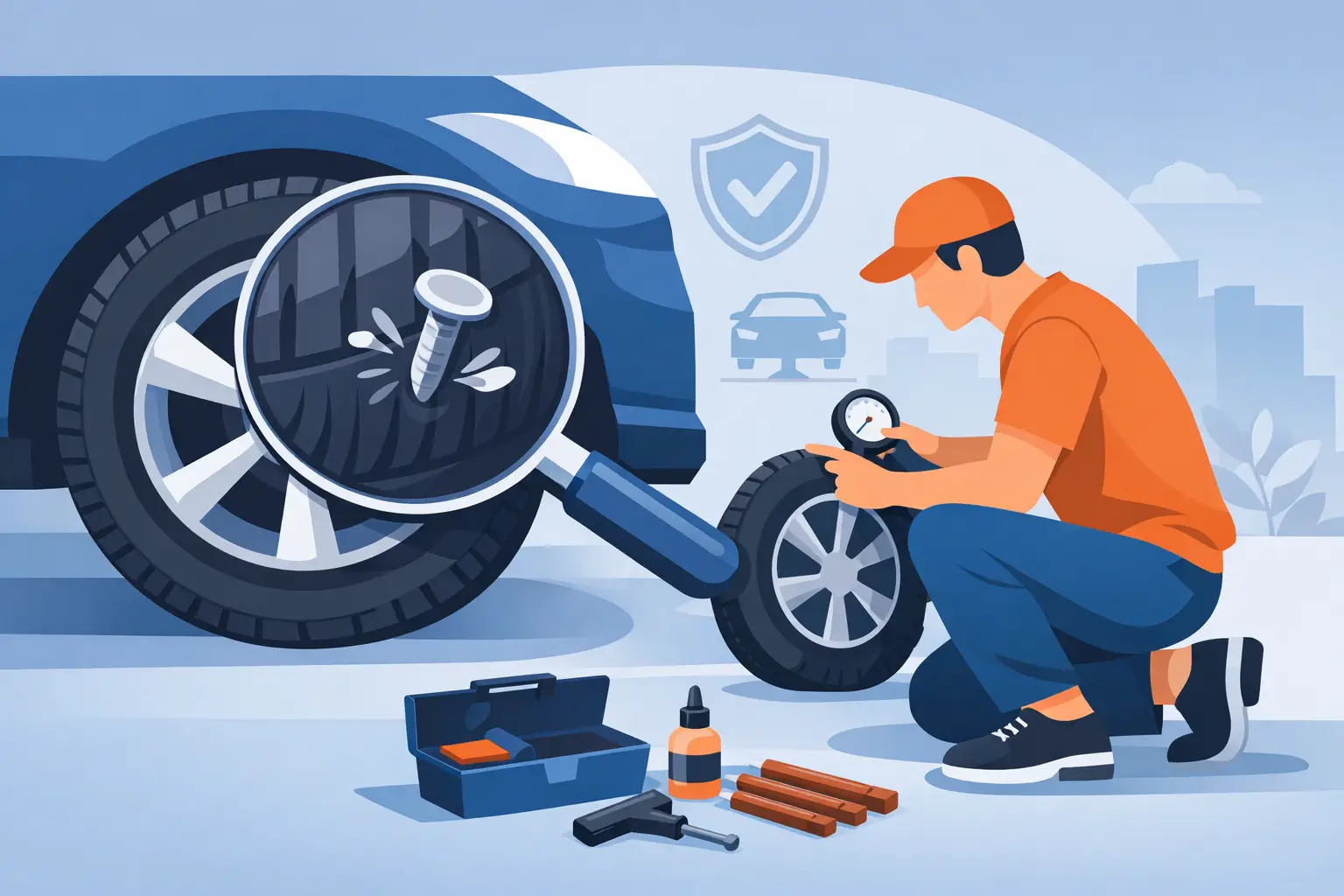
The most repairable punctures are usually found in the central tread area – the flatter part of the tire that meets the road. This is often where a nail, screw, or similar sharp object ends up. If the damage is small and confined to this area, a repair may be possible.
The shoulder and sidewall are different. The shoulder is the rounded transition between the tread and sidewall, while the sidewall flexes constantly as you drive. Damage in either area is generally not repairable. Even when a hole appears tiny, the tire’s internal structure may have been weakened. A repair in a flexing area is not a shortcut worth taking.
As a quick guide, a puncture in the center of the tread gives you the best chance of repair. A puncture near the edge of the tread, on the shoulder, or in the sidewall calls for a professional assessment and often a replacement tire.
How to identify a repairable puncture before you drive
Start by looking for the cause of the leak. A screw or nail embedded in the central tread is a better sign than a split, tear, or visible bulge. Do not pull the object out. It may be slowing the air loss, and removing it can turn a manageable leak into a flat tire in minutes.
Check the tire’s overall condition too. A repair might not make sense if the tread is already worn down, the rubber is badly cracked, or there are signs the tire has been driven while flat. A tire that has been run underinflated can suffer internal damage that cannot be seen from the outside.
You can listen for hissing, look for a visibly low tire, or use soapy water around the suspected area if it is safe to do so. Bubbles can help confirm an air leak. This only tells you where air is escaping, though. It does not prove the tire is safe to repair.
Do not rely on a temporary aerosol sealant or an exterior plug as a permanent answer. These can sometimes get you out of an immediate situation, but they do not allow a technician to check the inside of the tire. They can also make a later repair more difficult. If you have used sealant, tell the technician before work begins.
Size matters, but it is not the only test
Small, clean punctures from narrow objects are more likely to be repairable than larger holes or tears. Many professional repair guidelines limit repairs to punctures no larger than 1/4 inch in diameter, but the exact decision also depends on the tire manufacturer’s recommendations and what is found inside the tire.
A larger screw may have made a bigger hole than it first appears. A piece of metal can also enter at an angle, damaging more material beneath the tread. That is why the tire needs to be removed from the wheel for a proper inspection. Looking from the outside is useful, but it is not the full story.
Damage that usually means tire replacement
There are a few warning signs where it is safer to stop thinking about repair and arrange a replacement. These include sidewall punctures, cuts, exposed cords, cracks deep enough to show the tire structure, or a bulge in the sidewall or tread. A bulge often means the internal cords have broken, which can lead to a sudden failure.
Replacement is also usually needed when the tire has been driven flat or nearly flat. You may notice a damaged, scuffed ring around the sidewall, shredded rubber inside the tire, or an unexplained vibration after reinflating it. The weight of the vehicle can crush the tire’s internal structure when there is little or no air pressure supporting it.
Multiple punctures can be another issue. Two small holes in the tread may not automatically rule out repair, but their spacing, size, and position matter. Repairs too close together can weaken the same area of the tire. A technician should inspect each puncture rather than assuming two quick fixes are safe.
If you have hit a pothole, curb, or road debris, check more than the puncture itself. Bent wheels, bead damage, and alignment problems can cause continuing pressure loss or uneven tire wear. Fixing the hole without addressing the cause can leave you with the same trouble again.
Why a proper puncture repair is more than a plug
A safe professional repair involves removing the tire from the wheel, inspecting the inside, preparing the puncture channel, and fitting a repair designed to seal both the injury and the inner liner. This is often described as a plug-and-patch repair. It deals with the route the object made through the tire and closes the inner surface that holds air.
An outside-only plug may stop a leak for a while, but it does not show whether the tire’s internal liner has been damaged or whether moisture has entered around the puncture. That is the trade-off: the quickest-looking fix is not always the repair you want to trust at highway speed, in heavy rain, or with a fully loaded vehicle.
The wheel should also be checked for corrosion or damage around the sealing edge, and the tire pressure should be set correctly before you drive away. If your vehicle uses a tire-pressure monitoring system, make sure the warning light is dealt with rather than ignored.
What to do when you find a puncture
If the tire is holding pressure and the object is still in place, avoid unnecessary driving. Check the pressure against the figure on the driver’s door placard, not the maximum pressure printed on the tire sidewall. If it is very low, flat, damaged in the sidewall, or showing a bulge, do not drive on it.
Move to a safe location if you can do so without continuing to run the tire flat. Then arrange a professional inspection. Taking a clear photo of the object and the tire’s position can help explain the problem when you call.
For busy drivers around Reading, Basingstoke, Bracknell, and nearby areas, a mobile visit can save the trouble of fitting a spare, arranging a tow, or losing half a day at a tire shop. Lee’s Mobile Tyres can assess the damage where your car is parked, carry out a suitable repair when the tire meets safety standards, or fit a replacement when it does not.
A repairable puncture is good news, but safety comes first
Finding a nail in the tread does not automatically mean a new tire, and that can be welcome news for your schedule and your wallet. But a repair should be based on the puncture location, size, tire condition, and an internal inspection – not on how harmless the damage looks from the driveway.
If you are unsure, leave the object in place, keep driving to a minimum, and get the tire checked. A quick professional look can turn a stressful flat-tire moment into a safe, straightforward fix.