Need Mobile Callout or Breakdown Recovery Help?
A flat tire outside your house before work is frustrating. A tire failure on a busy road can feel far more serious. When you need mobile callout or breakdown recovery, knowing the difference helps you get the right support quickly, avoid unnecessary costs, and get back on the road with less disruption.
For many tire problems, your vehicle does not need to be taken to a garage. A properly equipped mobile tire technician can come to your home, workplace, or safe roadside location to assess the issue and carry out the work there. But there are times when recovery is the safer choice. The key is to look at the condition of the tire, the vehicle, and where you are parked.
Mobile callout or breakdown recovery: what is the difference?
A mobile callout means a technician travels to you and repairs or replaces the tire on site. This is often the most practical option when you have a puncture, a flat tire, worn tires that need replacing, or a damaged tire that can be changed safely where the vehicle is parked.
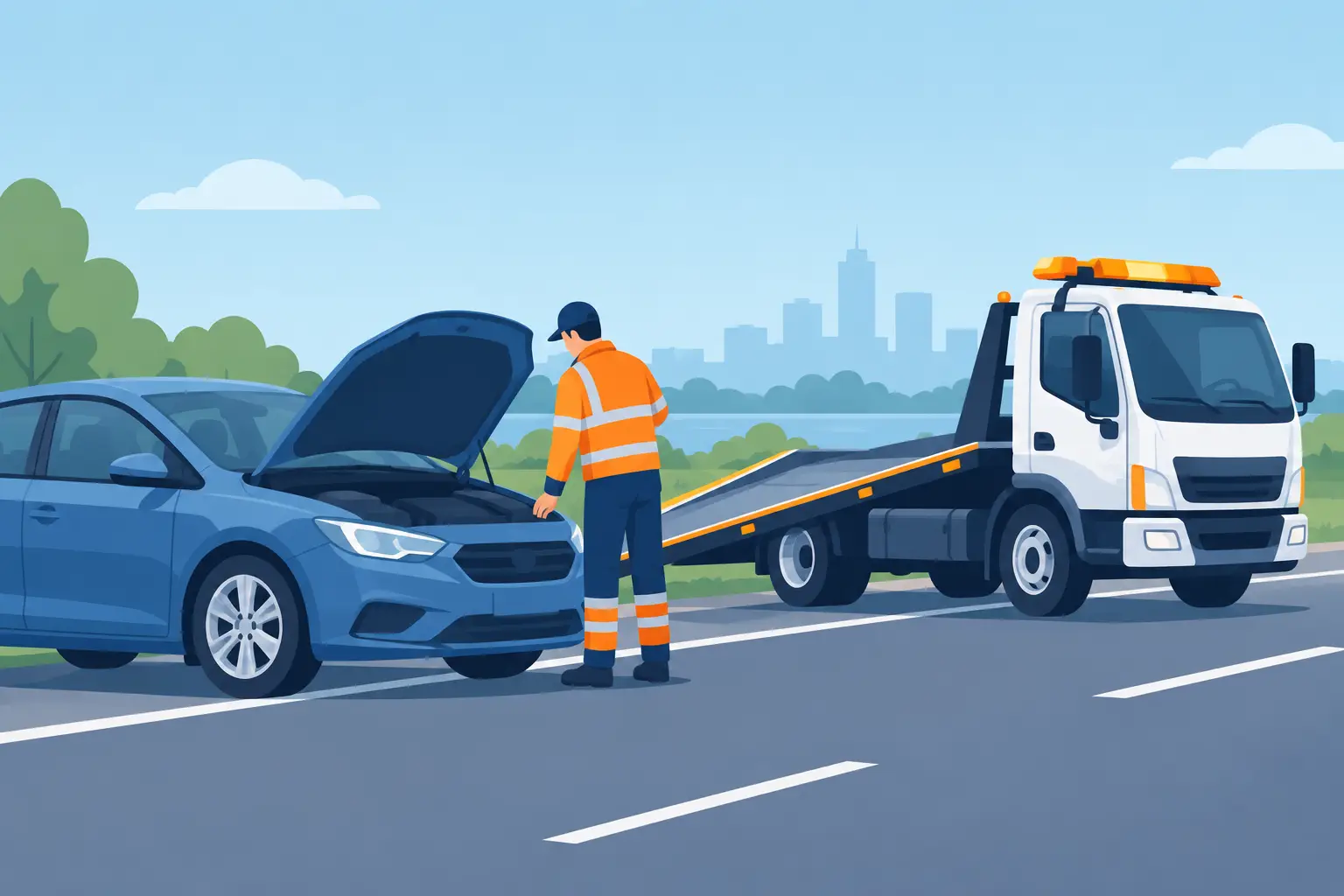
Breakdown recovery usually means a recovery vehicle transports your car to another location, such as your home, a repair shop, or a garage. It is designed for situations where the vehicle cannot be safely driven or repaired at the roadside. Recovery can be essential, but it is not automatically the best answer just because you have a flat tire.
The difference comes down to whether the tire issue can be fixed safely where you are. If it can, a mobile tire callout is usually quicker and more convenient. You do not need to arrange a tow, find transport, or lose half a day waiting around at a garage.
When a mobile tire callout is the right choice
Mobile service works especially well for everyday tire problems. You may have walked out to find one tire flat on the driveway. Perhaps a screw has gone through the tread while commuting, or you have discovered that your spare is missing, damaged, or unsuitable. These are situations where an on-site visit can save a great deal of time.
A mobile technician can inspect the tire, check whether a puncture repair is safe, fit a replacement if needed, and make sure the wheel is properly balanced where the job requires it. For drivers with a busy schedule, this can happen while you are at home, at work, or dealing with the rest of your day.
It is also useful when more than one tire needs attention. If your tires are worn close to the legal limit, cracking with age, or losing pressure repeatedly, waiting for a roadside emergency is rarely the best plan. Booking mobile replacement at a convenient time gives you more choice and less stress.
At Lee’s Mobile Tyres, the focus is simple: bring practical tire help to drivers in Reading, Basingstoke, Bracknell, and nearby areas rather than making them fit their day around a garage appointment.
Common problems that can often be handled on site
A mobile callout is often suitable for a nail or screw in the tread area, a slow puncture, a tire that has gone flat while parked, a damaged sidewall requiring replacement, or a tire that has worn out and needs changing. It can also help when you have a blowout but are in a safe, accessible location.
The final decision should always be made after the tire has been inspected. A puncture is not always repairable. Damage near the sidewall, a large cut, internal damage from driving while flat, or a badly distorted tire usually means replacement is the safer option.
When you should choose breakdown recovery instead
There are situations where getting a mobile tire specialist to the vehicle is not possible or would not be safe. If you are stopped in a live lane, on a narrow high-speed road without a safe stopping area, or somewhere your vehicle cannot be accessed safely, contact emergency services or your breakdown provider first.
Recovery is also more likely to be needed if the problem goes beyond the tires. A flat tire combined with suspension damage, a broken wheel, a seized brake, collision damage, or an engine issue needs a different level of inspection and repair. A tire replacement will not solve a vehicle that cannot be driven safely afterward.
If your locking wheel nut key is missing, that does not always mean recovery is required, but it can affect what can be done at the roadside. Tell the technician before they travel so they can advise you clearly. The same applies if you drive a specialist vehicle, have non-standard wheels, or are parked in a restricted-access location.
What to do when your tire fails
Your first job is not to diagnose the tire. It is to get yourself and your passengers somewhere safe. If the tire fails while driving, reduce speed gradually, keep a firm hold of the steering wheel, and avoid sharp braking or sudden turns. Pull over in the safest available place, away from moving traffic where possible.
Once stopped, switch on your hazard lights. If you are on a busy road, stay out of danger and follow the safety guidance for that road. Do not attempt to change a tire on a hard shoulder, beside fast traffic, or where other drivers have little room to pass.
When you call for help, give a clear location and explain what has happened. Let the service know the vehicle make and model, tire size if you can see it, whether you have a spare, and whether the tire is fully flat, damaged, or blown out. A photo can also help identify obvious damage and make sure the right replacement is brought out.
How to decide whether a repair or replacement makes sense
Not every puncture needs a new tire. A repair may be possible if the puncture is in the central tread area and the tire has not been driven on while deflated. A professional inspection matters because damage inside the tire is not always visible from the outside.
Replacement is normally the right answer for sidewall damage, deep cuts, severe bulges, exposed cords, or tires that are too worn to remain safe. If one tire has failed because it is old or heavily worn, it is worth checking the others too. Uneven wear can point to pressure problems, wheel alignment issues, or suspension wear that could shorten the life of the next set.
Budget matters, and there is no point pretending otherwise. A tested part-worn tire can be a sensible short-term option for some vehicles and situations, provided it has been carefully inspected and is the correct size, load rating, and speed rating. New tires generally offer the best long-term certainty, particularly for high-mileage drivers, family vehicles, and regular motorway use. The right choice depends on the tire condition, your driving needs, and what you need to spend today.
The convenience of getting tire help where you are
The biggest advantage of a mobile callout is that it removes extra steps at the worst possible time. Instead of fitting a spare, arranging a tow, traveling to a garage, and then waiting for the work, the service comes to the vehicle.
That matters to parents with school runs, tradespeople with tools in the van, commuters parked at work, and anyone whose car is blocking the driveway. It also makes planned tire replacement easier. If you already know a tire is losing air or wearing thin, arranging service before it becomes an emergency is usually cheaper and calmer than waiting for a roadside failure.
A good mobile service should communicate clearly about arrival times, what can be done on site, and the likely cost before work starts. Straight answers are especially valuable when you are stranded and need a decision, not a sales pitch.
If your car is safely parked and the issue is limited to the tire or wheel, a mobile callout can often get you moving without recovery. If the location is dangerous or the vehicle has wider damage, make safety the priority and arrange recovery first. A quick, honest description of the problem gives the right person the best chance of helping you without delay.