
Tyre Sealant Comparison for Real-World Flats
A flat tire on the way to work, during the school run, or outside your home rarely gives you time to research products. This tyre sealant comparison cuts through the claims so you can decide whether a bottle of sealant is a useful short-term fix or whether it is time to arrange a proper repair or replacement.
Sealant can get a vehicle moving again after a small puncture, but it is not a cure-all. The right choice depends on where the puncture is, the condition of the tire, whether the wheel has a TPMS sensor, and how far you need to drive. Using the wrong product, or relying on any sealant for too long, can turn a simple repair into a more expensive tire replacement.
What tire sealant is designed to do
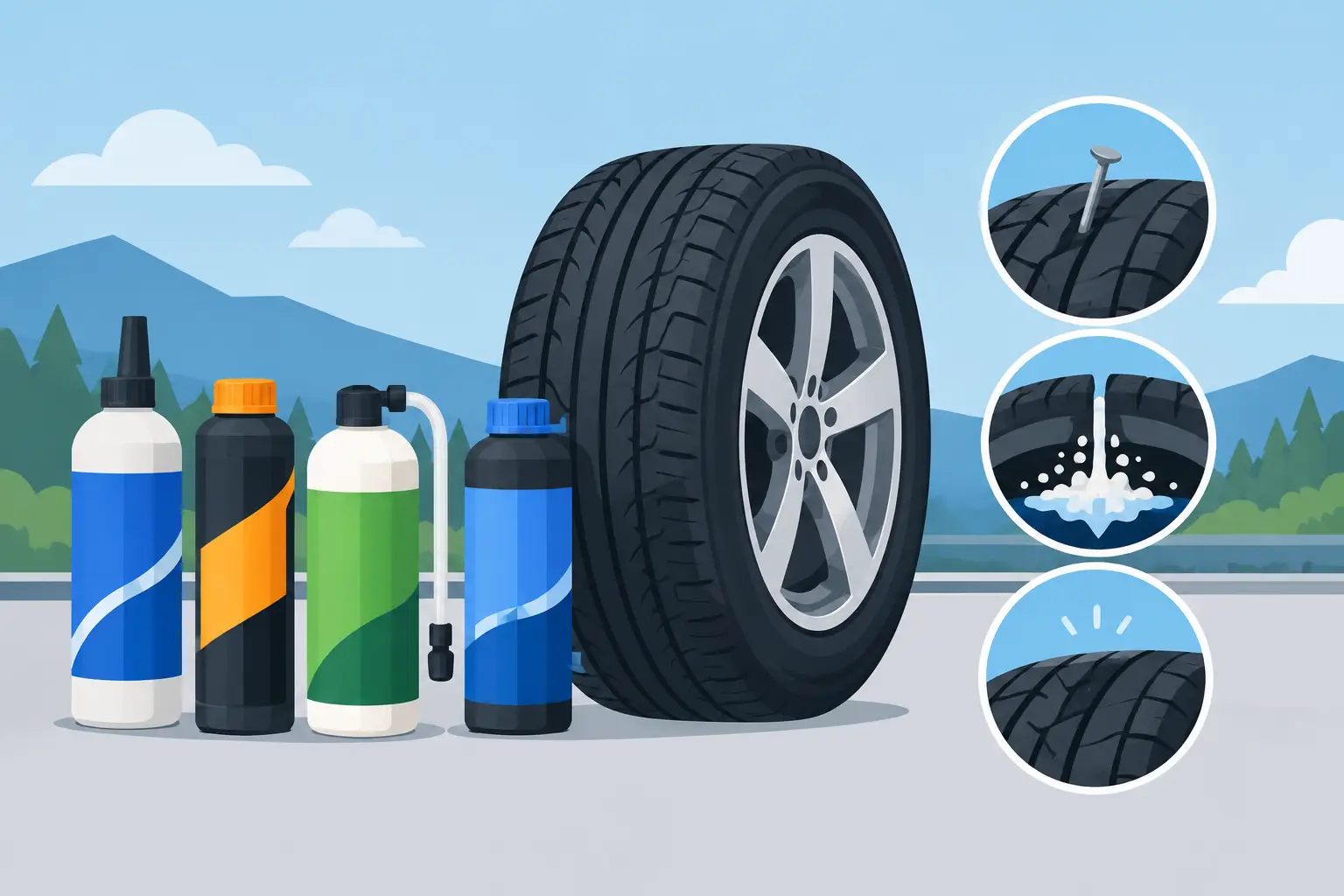
Tire sealant is a liquid or foam placed inside a tire to block small holes in the tread area. As the wheel turns, the product spreads around the inside of the tire and is pushed toward the puncture by escaping air. Many emergency products also include compressed air, allowing you to inflate the tire enough to drive to a safe location.
That description matters because it sets realistic expectations. Sealant is intended for a small nail or screw hole in the central tread, not a split sidewall, a bent wheel, a tire that has come off the rim, or a tire shredded after being driven flat. It will not make an unsafe tire safe.
There are two main ways drivers come across sealant. One is a roadside aerosol can, usually supplied in some vehicles instead of a spare tire. The other is a bottled preventative sealant installed before a puncture happens. Both have their place, but they should not be treated as the same product.
Tyre sealant comparison: the options that matter
Emergency aerosol sealant
Aerosol sealant is made for urgency. You connect the hose to the valve, empty the can into the tire, and drive a limited distance at a reduced speed. It is compact, quick to use, and useful when you are stranded without a spare.
The trade-off is that it often provides only enough pressure to get you off the roadside. In colder weather, with a larger puncture, or where the tire has lost a lot of air, the can may not inflate the tire sufficiently. Some formulas are also messier than others, which can affect whether a repair shop is willing to carry out a standard puncture repair afterward.
Choose an aerosol product when your priority is getting to a safe place and you understand that the tire needs checking straight afterward. Read the speed and distance limits on the can. They are not optional suggestions.
Bottled preventative sealant
Preventative sealant is poured into a healthy tire before a puncture occurs. It is common on lawn equipment, trailers, bicycles, off-road vehicles, and some work vehicles that regularly travel over debris. Certain products are marketed for passenger cars too.
Its main advantage is convenience. A small puncture may seal as you drive, sometimes without you noticing an immediate loss of pressure. For a vehicle used on building sites, rural lanes, or routes with regular debris, that can be worthwhile.
For everyday road cars, there are downsides. The product adds material inside the tire, may need topping up over time, and can make diagnosis more difficult if a slow leak develops. It is also not a substitute for checking tire pressures. A tire can still lose air from a valve problem, wheel corrosion, a damaged rim, or a puncture too large for the sealant to handle.
TPMS-safe sealant
Many modern cars have a tire pressure monitoring system, known as TPMS. Depending on the vehicle, it may use sensors inside each wheel or monitor wheel speed through the ABS system. Internal sensors are the concern with sealant.
A product labeled TPMS-safe is generally the better choice if your car has sensors in the wheels. These formulas are designed to be less likely to clog the sensor or coat its pressure port. That said, TPMS-safe does not mean risk-free. Any liquid inside a tire can complicate cleaning and inspection, particularly if it has been driven for a long period.
If you have used sealant, tell the tire technician before any work begins. It saves time, helps them protect their equipment, and allows them to inspect the sensor properly.
Latex-based versus fiber-based formulas
You may see products described as latex, polymer, gel, or fiber reinforced. The names vary, but the aim is similar: create a flexible plug at the point of the puncture.
Latex or polymer formulas can work quickly on small holes and are often easier to spread around the tire. Fiber-based products use small particles or fibers to help bridge the hole, which can be helpful on tougher applications such as trailers or off-road tires. Neither type should be expected to seal a sidewall cut or major tread damage.
Rather than choosing on marketing language alone, check the product label for the maximum puncture size, compatibility with TPMS, speed restriction, temperature range, and whether the maker says the tire can still receive a professional repair. Those details tell you more than a bold claim that it is “permanent.”
When sealant is a sensible temporary fix
Sealant can be a practical option when the tire has a small puncture in the middle of the tread, the tire still holds some air, and you need to move the vehicle a short distance. It is especially useful if you are in an unsafe location or have no spare tire available.
Even then, slow down and avoid long highway trips. Check the pressure as soon as possible. If the tire feels unstable, the steering pulls, or the pressure drops again, stop driving. Continuing on a soft tire can damage the inside of the tire even when the outside looks fine.
A good rule is simple: sealant gets you out of immediate trouble. A tire inspection tells you whether you can keep driving.
When not to use tire sealant
Do not use sealant if there is damage to the sidewall or shoulder of the tire, a visible bulge, a large cut, a damaged valve stem, or a cracked wheel. It is also the wrong answer if the tire has been driven flat for any distance. Internal damage can occur quickly and cannot be judged from the outside alone.
Avoid it when a screw or nail is still holding air reasonably well and you can arrange a prompt repair. Leaving the object in place and keeping the tire inflated may make the repair easier. Pulling it out at home can cause a rapid loss of pressure.
If your vehicle has a run-flat tire, follow the vehicle manufacturer guidance. Run-flats can often be driven for a limited distance after pressure loss, but whether they can be repaired depends on the tire maker, how far they were driven, and the extent of the damage. Sealant may not be recommended.
Can a sealed tire be repaired properly?
Sometimes, yes. A technician must remove the tire, inspect the inside, locate the puncture, and check for signs of heat or structural damage. If the hole is in the repairable tread area and the tire is otherwise sound, a professional repair may be possible.
The key word is “may.” A repair cannot be promised just because the tire looks normal after sealant has stopped the leak. Some tire shops will decline repairs after certain sealants due to the cleanup involved. Others will assess the tire on its condition. Being honest about what product was used is the best approach.
A plug fitted from the outside is not the same as a full internal inspection and repair. It can be useful in an emergency, but it does not reveal whether the tire was damaged while underinflated.
The practical choice for most drivers
Keep a small emergency sealant kit only if your vehicle has no spare and you understand its limits. Check its expiration date, because old cans may lose pressure or performance. It is also wise to keep a tire pressure gauge and know the correct pressure for your vehicle.
For a slow puncture at home or work, arranging a professional inspection is usually the cleaner option. You avoid filling the tire with sealant when the problem could be a simple repair, a valve issue, or wheel corrosion. For a genuine roadside emergency, use sealant to get somewhere safe, then get the tire checked without delay.
Lee’s Mobile Tyres can assess punctures and fit a replacement where needed at your home, workplace, or roadside location. The aim is not to sell a tire when a safe repair will do, but not to leave you relying on a temporary product when the tire needs replacing.
The best sealant is the one you use for the right job. Keep it as a backup, respect its limits, and let a proper inspection make the final call on your tire’s safety.