Car Tyres That Need Help Now and What to Do
A flat tire outside the school run, a warning light on the way to work, or a slow puncture discovered on your driveway can stop the whole day. Car tyres are easy to overlook when they are doing their job, but once one loses pressure or suffers damage, you need a clear answer quickly: can it be repaired, does it need replacing, and can you safely drive it at all?
For most drivers, the priority is not becoming a tire expert. It is getting back on the road safely without losing hours at a garage. That is where a prompt mobile tire service makes a real difference. The right help comes to your home, workplace, or roadside location, checks the problem properly, and gives you an honest recommendation before any work begins.
Start With Safety, Not Speed
If a tire has gone completely flat, avoid driving on it unless there is no safer option. Even a short distance on a flat tire can damage the sidewall, the wheel, and the tire beyond repair. What began as a straightforward puncture can quickly become a replacement job.
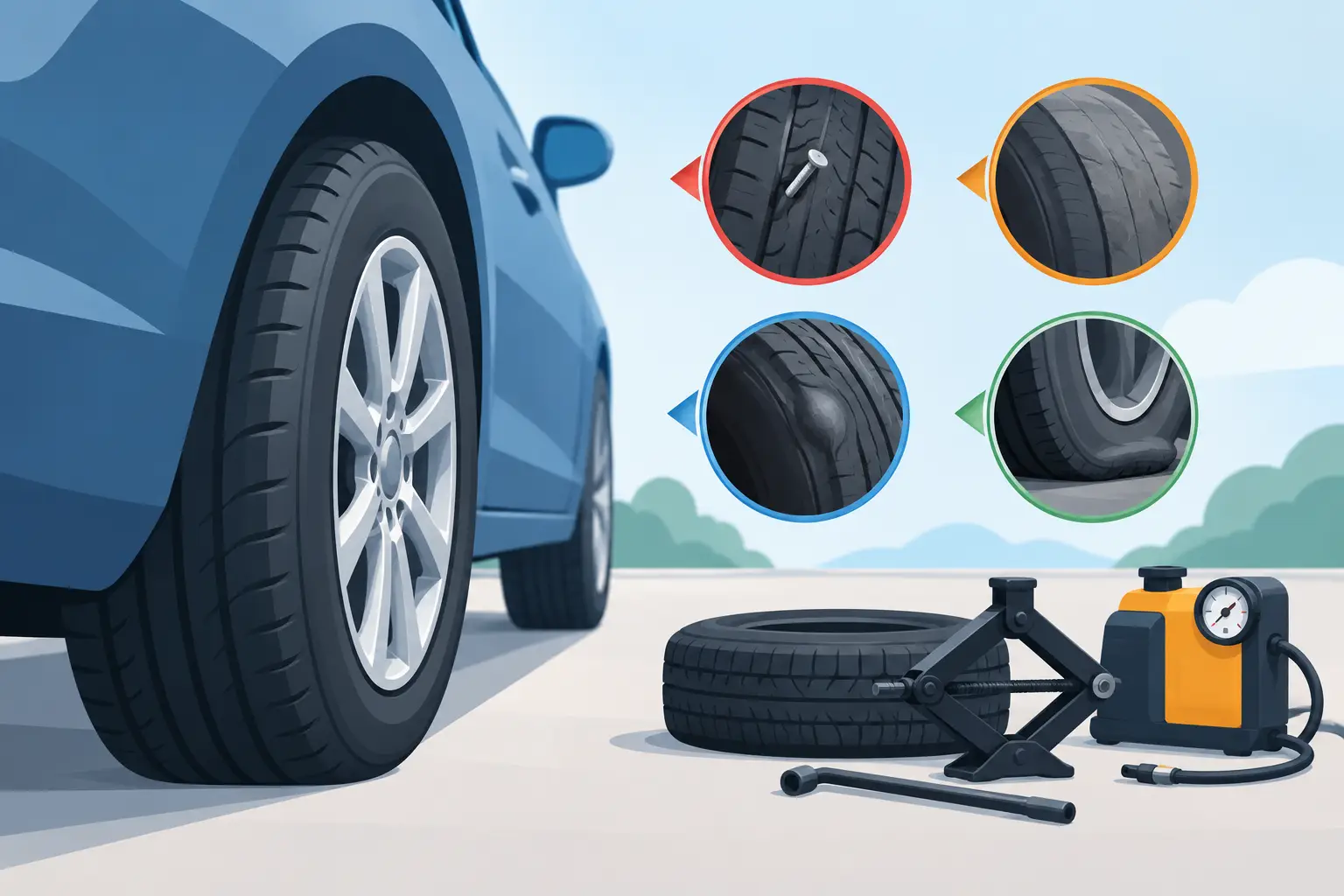
Pull over somewhere safe, switch on your hazard lights, and take a look if you can do so without putting yourself at risk. A screw or nail in the tread, a visibly damaged sidewall, a split, or a tire that has come away from the rim all call for professional attention. Do not pull an object out of the tire if it is still holding some air. It may be slowing the leak.
A low-pressure warning does not always mean the tire is ruined. Temperature changes, a leaking valve, a damaged rim, or a small tread puncture can all trigger it. But it does mean pressure should be checked as soon as possible. Driving for days with a warning light is not a money-saving move. Underinflated tires wear faster, affect handling, use more fuel, and can overheat.
When Can a Car Tire Be Repaired?
A puncture can often be repaired if it is small, located in the central tread area, and the tire has not been driven while flat. A proper repair involves removing the tire, inspecting it from the inside, and repairing it to the appropriate standard. A quick exterior plug may seem convenient, but it cannot show whether there is hidden internal damage.
The location matters as much as the size of the puncture. The sidewall flexes constantly as you drive, so damage there is usually not safely repairable. The shoulder area, where the tread curves toward the sidewall, can also be a no-repair zone depending on the exact position and the tire manufacturer’s guidance.
There are situations where replacement is the sensible call, even when the puncture looks minor. If the tire is worn close to the legal tread limit, has cracks, bulges, old repairs, or signs of internal damage, spending money on a repair may only delay the inevitable. A good technician should explain the reason plainly, not pressure you into a tire you do not need.
A Slow Leak Still Needs Checking
A tire that needs air every few days is not something to ignore. It could be a small puncture, but it could also be corrosion around the wheel rim, a leaking valve, or damage caused by a pothole. These problems can be hard to spot from the outside, and adding air repeatedly does not fix the cause.
If you notice one tire consistently losing pressure, arrange an inspection before it turns into a roadside flat. It is usually easier, safer, and less stressful to deal with it at home or work than during a rushed journey.
Signs Your Tires May Need Replacing
Tread depth is the most familiar check, but it is not the only one. Tires can look acceptable at a glance while still being too old, damaged, or unevenly worn to give dependable grip.
Look for these warning signs:
- Tread worn down to the wear bars or close to the legal minimum
- Cracks in the rubber, especially around the sidewall
- Bulges, bubbles, cuts, or exposed cords
- Vibration through the steering wheel or vehicle floor
- Uneven wear on one edge, in the center, or in patches
- A tire that repeatedly loses pressure
Uneven wear deserves attention because it often points to another issue. Wear on the inner or outer edge can suggest an alignment problem. Excessive center wear may mean the tire has been overinflated, while wear on both outer shoulders can be linked to low pressure. Cupping or patchy wear can be connected to wheel balance or worn suspension components.
Replacing the tire solves the immediate safety issue, but checking the cause helps protect the new one. This is especially relevant after hitting a pothole or curb, or if the car has started pulling to one side.
Choosing the Right Replacement Tire
The cheapest tire is not always the best value, and the most expensive one is not automatically necessary. The right choice depends on your car, how you use it, the distances you cover, and your budget.
Your tire sidewall lists the size, load rating, and speed rating required for your vehicle. Matching these correctly is essential. If you are unsure what the markings mean, a mobile tire fitter can confirm the correct specification before fitting anything.
For drivers covering regular motorway miles, commuting in all weather, or carrying family passengers, a quality new tire can be a worthwhile investment in grip, braking, and longer wear. For a vehicle that needs a cost-conscious solution, a fully inspected and tested part-worn tire may be an option in the right circumstances. It should have legal tread, no structural damage, and be checked carefully before fitting.
There is also the question of replacing one tire or a pair. If the tire on the other side of the same axle is significantly more worn, replacing both may help maintain balanced handling and braking. On some vehicles, especially those with all-wheel drive, mismatched tread depths can create additional strain. The answer depends on the vehicle and the remaining condition of the other tires, so ask for practical advice rather than assuming a one-size-fits-all rule.
Why Mobile Tire Fitting Saves Time
A tire problem rarely appears at a convenient time. You may be parked at work with a flat, have a vehicle blocked on the driveway, or be unable to make a garage appointment because the car is not safe to drive. Mobile fitting removes that extra problem.
Instead of arranging a tow, finding a ride, sitting in a waiting room, and returning later to collect the car, the work can be completed where the vehicle is parked. For busy parents, tradespeople, commuters, and anyone dealing with an unexpected flat, that convenience is more than a luxury. It keeps a small issue from taking over the day.
Lee’s Mobile Tyres provides mobile tire fitting, puncture repairs, emergency replacements, balancing, and alignment support across Reading, Basingstoke, Bracknell, and nearby areas. The aim is simple: assess the issue, fit or repair what is needed, and get you moving again without unnecessary delay.
A Few Checks That Prevent Bigger Problems
Checking tire pressure once a month and before a long trip takes only a few minutes. Use the pressure recommended by your vehicle manufacturer, usually found inside the driver’s door frame, fuel flap, or owner’s manual. Check when the tires are cold for the most accurate reading.
Give the tread and sidewalls a quick look at the same time. You are not trying to diagnose every mark. You are looking for obvious changes: a nail, a bulge, cracking, uneven wear, or a tire that looks lower than the others. Do not forget the spare if your vehicle has one. A spare that has been sitting unused for years may not be ready when you need it.
If something does not look right, trust that instinct. A fast inspection while the vehicle is safely parked is always easier than dealing with a flat tire on a busy road. One call for the right advice can turn a stressful tire problem into a short interruption instead of a ruined day.