
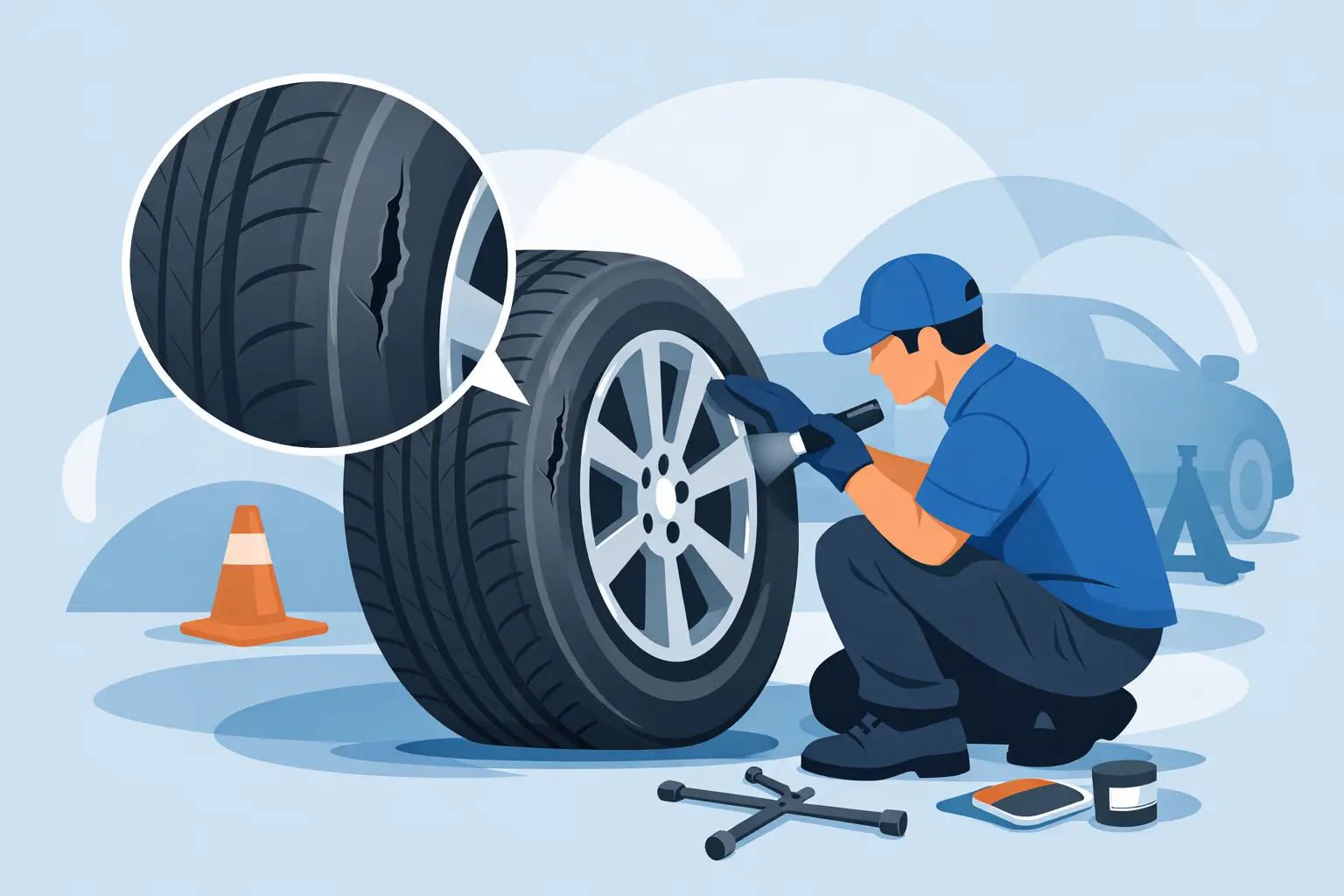
How to Handle Tyre Sidewall Damage
A scuff on the side of your tire can look minor right up until it leaves you stranded in a parking lot or on the shoulder. If you are wondering how to handle tyre sidewall damage, the first thing to know is this: sidewall damage is not something to guess your way through. The sidewall carries load, flexes constantly, and does a lot more work than most drivers realize.
That is why even small-looking damage can be a real safety issue. Sometimes it is cosmetic. Sometimes it means the tire is no longer safe to drive on at all. The trick is knowing the difference quickly, so you do not waste time, risk a blowout, or pay for the wrong fix.
How to handle tyre sidewall damage without making it worse
The worst move is to keep driving and hope for the best. If you have hit a curb, clipped a pothole, or noticed a cut or bulge while checking your tires, take a proper look before heading anywhere.
Start by parking somewhere safe and turning the wheel so you can see the damaged area clearly. If the tire is flat, going down fast, or visibly misshapen, do not drive on it. If the sidewall has a bubble, a split, cords showing, or a deep cut, the tire usually needs replacing, not repairing.
If the mark is only a light surface scrape and there is no exposed inner material, no bulge, and no air loss, it may be cosmetic. Even then, it is worth having it inspected. Sidewall damage is one of those problems where what looks fine from a standing height can be more serious up close.
What sidewall damage actually means
The sidewall is the part of the tire between the tread and the wheel rim. It flexes every time the tire rotates, especially when you corner, brake, or drive over uneven roads. Because of that constant movement, the sidewall cannot be treated the same way as the tread area.
A puncture in the center tread can sometimes be repaired if it meets the right conditions. A damaged sidewall is different. Repairs there are generally not considered safe because the structure of the tire has been compromised in a high-flex area.
That is why the type of damage matters more than the size alone. A short cut in the wrong place can be more dangerous than a bigger scrape that only affects the outer rubber.
Common causes of sidewall damage
Most drivers damage a sidewall in everyday situations, not dramatic ones. Curbing the tire while parking is a big one. Potholes are another common cause, especially if you hit one at speed or with low tire pressure. Overloading the vehicle, driving on an underinflated tire, and road debris can also weaken or split the sidewall.
Sometimes the damage does not show up straight away. You might hit something in the morning and only notice a bulge later that day. That delayed reaction is one reason it pays to check the tire after any impact.
Signs your tire needs immediate replacement
Some sidewall damage gives you very little room for debate. If you see a bubble or bulge, the internal structure has likely been damaged. That tire is living on borrowed time and should not be trusted at highway speed.
The same goes for any cut deep enough to expose cords or fabric, any section where rubber is missing in a way that reveals the inner construction, or any crack that looks more like a split than a surface mark. If the tire is leaking air from the sidewall, replacement is the safe answer.
There is also the issue of heat damage. If you have driven on a flat or very low tire, the sidewall may have been weakened internally even if the outside does not look terrible. In that case, a professional inspection matters, because hidden sidewall breakdown is not something you want to discover on the road.
Can tyre sidewall damage be repaired?
In most cases, no. That is the short and honest answer.
If you are searching how to handle tyre sidewall damage because you are hoping for a quick patch, it is better to be clear: sidewall repairs are generally not recommended for normal road use. The sidewall flexes too much, and a repair in that area is not considered reliable in the same way a proper tread repair can be.
There are rare technical situations in specialist settings, but for everyday drivers, sidewall damage normally means replacing the tire. Anyone telling you a deep sidewall cut is an easy repair is not doing you a favor.
What to do right now if you spot sidewall damage
First, do not touch up the damage with glue, sealant, or any kind of DIY filler. That can hide the problem, make inspection harder, and give you false confidence.
Second, check whether the tire is holding pressure. If it is going flat, avoid driving on it. Driving even a short distance on a damaged or deflated sidewall can ruin the tire completely and may also damage the wheel.
Third, think about where the car is and whether it is safe to move. If you are at home, at work, or parked safely, the best option is usually to have the tire inspected and replaced where the car sits. If you are roadside and the tire looks unstable, stay out of traffic and get help rather than trying to limp to a shop.
Should you drive on a damaged sidewall?
Sometimes drivers ask if they can just do a few miles to get by. The honest answer is that it depends on the type of damage, but if there is any bulge, exposed cords, deep cut, or air loss, you should treat it as unsafe to drive.
A superficial curb rash with no loss of rubber and no structural signs may not stop you immediately, but that still does not make it a good idea to ignore. If you are unsure, caution wins every time.
Why quick action usually saves money
Leaving sidewall damage alone can turn a simple tire replacement into a bigger problem. A weakened tire can fail suddenly, and if that happens at speed, you may end up with wheel damage, alignment issues, or worse. Even if the tire does not blow out, driving on it while underinflated can wear the edges fast and affect handling.
There is also the time factor. Most people notice this sort of problem when they are already busy – before school drop-off, before work, or halfway through the day. Waiting around at a garage is rarely convenient. That is why a mobile tire service makes sense when the car is not safe or practical to move.
For drivers who need a fast fix without the usual hassle, Lee’s Mobile Tyres can inspect the damage and replace the tire at home, at work, or roadside, which is often the quickest route back on the road.
How to reduce the chance of sidewall damage
You cannot avoid every pothole, but you can lower the risk. Keep your tires at the correct pressure, because underinflated tires flex more and are easier to damage. Slow down on rough roads. Take extra care when parking near curbs. If your vehicle is heavily loaded, make sure the tire pressure matches the load.
It also helps to give your tires a quick visual check now and then. You do not need to be a car expert. Just look for bulges, cuts, deep scrapes, or cracks. Catching a problem early is always better than discovering it when you are already late.
When an inspection matters even if the damage looks small
This is where a lot of drivers get caught out. A sidewall can look like it has only been scuffed, but the impact that caused the mark may have done more than you can see. That is especially true after pothole strikes, curb hits, or driving briefly on a flat.
If the steering suddenly feels off, the ride feels rougher, or the tire keeps losing pressure after an impact, get it checked. It may be the tire alone, or there may be wheel damage as well. Either way, guessing does not help.
A damaged sidewall is one of those problems where acting early is the safer and often simpler option. If you are not sure what you are looking at, treat the tire with caution, stop if it looks unstable, and get a proper assessment before you trust it with another trip.