Commercial Van Tyre Case Study That Cut Downtime
A flat tire on a commercial van is not a small inconvenience. It can mean missed deliveries, a delayed job, unhappy customers, and a driver stuck waiting for help. This commercial van tyre case study looks at a typical urgent callout and shows why getting the right support to the vehicle matters as much as fitting the tire itself.
The situation below is a representative example based on the sort of mobile van tire problems local businesses face. Every vehicle, tire size, load, and location is different, but the priorities stay much the same: make the vehicle safe, keep downtime short, and give the driver a clear answer without sending them around in circles.
The callout: a loaded van with a damaged tire
A local trades business had a van booked for a full day of customer appointments. The driver noticed the rear tire losing pressure shortly after leaving home. They stopped to inspect it and found a screw embedded near the tread, with the tire already looking visibly low.
There were two problems. First, the van was carrying tools and materials needed for the day’s work. Second, the driver was parked away from the workshop and did not have time to arrange a tow, unload the van, and sit at a garage. Continuing on a low tire was not an option. It could damage the tire beyond repair, affect handling, and put extra strain on the wheel.
Instead of taking the van out of service for most of the day, the business arranged a mobile callout. The key information was taken at the start: the van’s location, tire size, vehicle type, whether the tire was holding any air, and how urgently the vehicle was needed. This helped the technician arrive prepared rather than turning up to assess the problem and then having to leave again for parts.
Why a commercial van tire needs a proper assessment
It is tempting to see a puncture as a simple repair. Sometimes it is. But commercial vans work harder than most cars, particularly when they are regularly loaded or covering high mileage. A tire that has been driven while underinflated may have internal damage that cannot be seen from the outside.
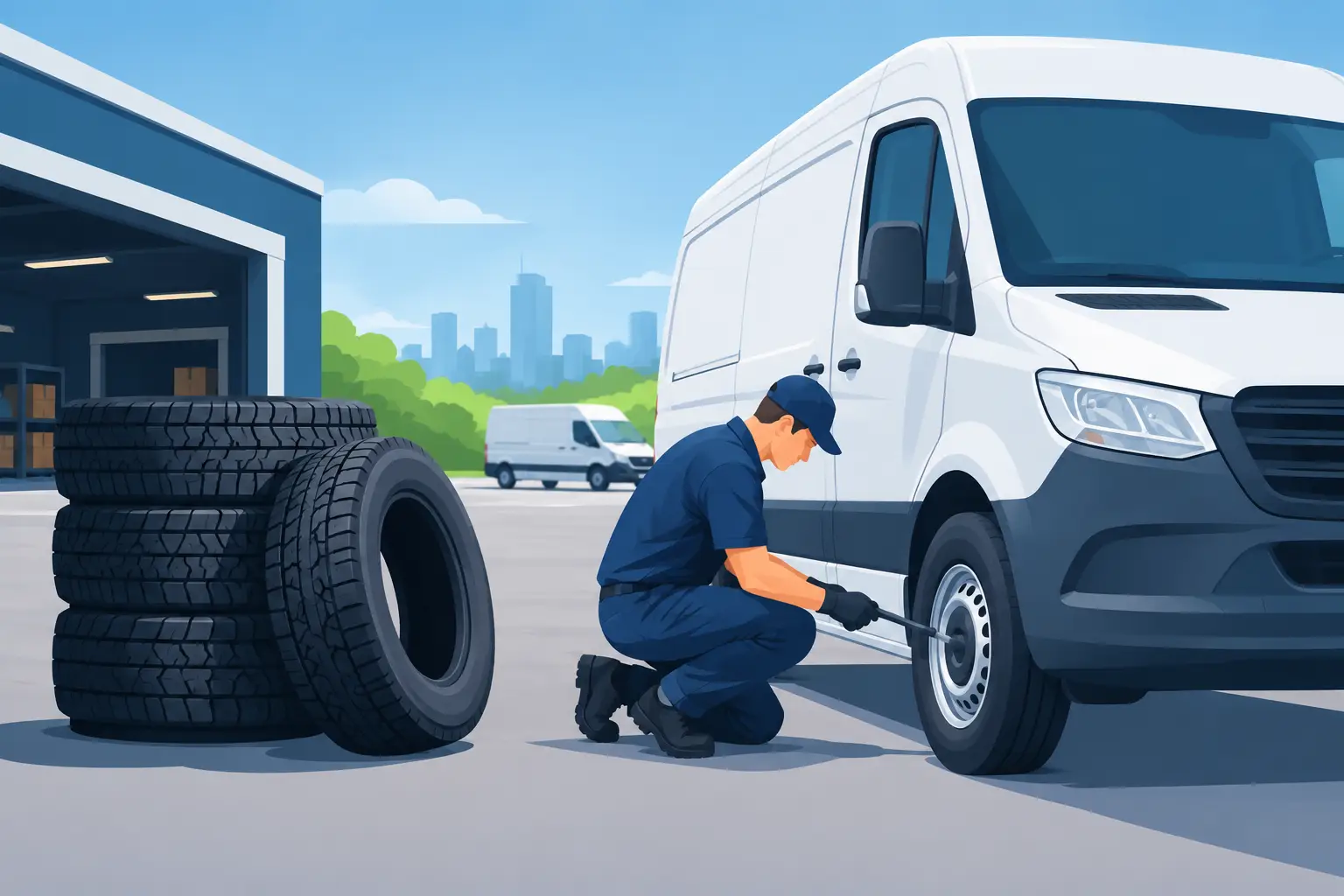
On arrival, the technician checked the tire pressure, inspected the puncture position, and looked for signs of sidewall damage, cracking, or heat damage from running low. The wheel was also checked for visible damage. The screw was in the central tread area, which is generally the best-case location for a possible repair, but the tire still had to be removed and inspected properly before any decision could be made.
That point matters. A quick plug from the outside may seem convenient, but it is not the same as a proper repair and may not be suitable for a working van. The right answer depends on the tire’s condition, the location of the puncture, remaining tread, and whether the vehicle has been driven flat or near-flat.
In this case, the tire had lost enough pressure during the journey that an internal repair was not the sensible choice. Replacing it gave the driver more confidence for a day of stop-start work with a loaded vehicle.
The commercial van tyre case study: choosing the replacement
The next decision was not simply, “What is the cheapest tire available?” The replacement needed to match the required size, load rating, and speed rating for the van. Commercial vehicles need tires that can safely carry the weight they are designed for. Fitting the wrong specification to save a few dollars can create bigger problems later.
The driver had a choice between a new tire and a tested part-worn option, depending on availability and budget. For a van used daily for customer work, a new commercial-rated tire was the better fit. It provided predictable tread depth and a stronger starting point for the mileage the business expected to cover.
There can be a place for a fully tested part-worn tire, especially when a driver needs a practical emergency solution and the vehicle is not carrying heavy loads all day. But it depends on the tire’s condition and the work the van does. For a busy business vehicle, the cheapest immediate option is not always the best value over the next several months.
The replacement was fitted at the roadside location, inflated to the appropriate pressure, and checked for a secure fit. The technician also checked the other tires for obvious issues. One front tire was low on pressure, which was corrected before the van went back on the road.
The result: a delayed start, not a lost day
The driver lost part of the morning, but the van was back in service the same day. The first appointment had to be moved, but the remaining jobs could go ahead. That is a far better outcome than losing the van for a full day while arranging recovery and a garage appointment.
The biggest benefit was not just the tire replacement. It was avoiding unnecessary steps. There was no need for the driver to find a shop, wait in line, organize a ride back to work, or leave a loaded commercial vehicle somewhere unfamiliar. The repair came to the van, where it was safe and where the driver could get back to work quickly.
For a small business, that difference adds up. One canceled day can mean lost revenue, extra calls to customers, and a schedule that stays behind for the rest of the week. A fast, well-organized tire callout protects more than the vehicle. It protects the working day.
What fleet owners and tradespeople can take from this case
The best time to think about commercial tires is before a puncture stops the van. Drivers should know the correct tire size and specification for each vehicle, and they should keep a regular eye on pressure, tread wear, and sidewall condition. A tire that looks only slightly low can become a costly problem when a loaded van keeps moving.
It also helps to pay attention to how a van is used. A plumber carrying tools, a delivery driver making dozens of stops, and a contractor towing equipment may all need different tire priorities. Load capacity, durability, wet-weather grip, and expected mileage should all be part of the choice.
Four simple habits can reduce the chance of a disruptive callout:
- Check tire pressures when the tires are cold, including the spare if the van has one.
- Inspect tread and sidewalls weekly, especially after driving through building sites or areas with debris.
- Act on a slow puncture early instead of repeatedly topping it up and hoping it holds.
- Book alignment checks when the steering pulls, the wheel sits off-center, or tires wear unevenly.
These checks do not prevent every puncture. Nails, screws, potholes, and road debris can catch anyone out. They do make it easier to spot a problem before the tire fails at the worst possible time.
Fast help works best with clear information
When calling for a mobile commercial van tire service, give the make and model of the van, your exact location, the tire size if you can see it, and a quick description of the issue. A photo of the tire can also help identify sidewall damage, a puncture location, or the tire specification before the technician sets off.
Be honest about whether the van has been driven on the flat tire. That information helps determine whether a repair is realistic or whether replacement is the safer route. It is better to have a straightforward answer at the start than to waste time chasing a repair that should not be carried out.
For businesses around Reading, Basingstoke, Bracknell, and nearby areas, Lee’s Mobile Tyres can come to a home, workplace, roadside location, or job site when a van tire problem threatens the day’s schedule. The aim is simple: get the vehicle safe and moving again without making the driver spend hours at a garage.
A van earns its keep when it is on the road, but no delivery or appointment is worth driving on a damaged tire. Stop safely, get the tire assessed properly, and let the right mobile help bring the solution to you.