Tyre Repair After Hitting a Curb: What to Do
That hard bang when a wheel catches a curb can turn a normal drive into a real concern. Tyre repair after hitting curb damage is not always as simple as checking for a flat. A tire can look acceptable at first, while the sidewall, wheel, or alignment has taken enough of a hit to make driving unsafe.
The good news is that many curb strikes can be assessed quickly. The key is not to guess, keep driving on a damaged tire, or wait for a small problem to become a roadside emergency. A careful inspection will show whether you need a repair, a replacement, wheel attention, or an alignment check.
First, decide whether it is safe to drive
Pull over somewhere safe as soon as you can, especially if you felt a strong impact or the steering wheel now feels different. Put on your hazard lights if needed and look around the tire and wheel before continuing.
Do not drive the vehicle if the tire is flat, losing air, visibly bulging, cut into the sidewall, or partly coming away from the wheel. The same applies if the wheel is badly bent, cracked, rubbing, or if the car pulls sharply to one side. Driving even a short distance on a flat can ruin a tire that might otherwise have been replaced more simply, and it can damage the wheel too.
If the tire is still holding pressure and there is no obvious damage, drive gently only as far as necessary. Avoid high speeds, heavy braking, potholes, and sharp turns until it has been checked.
What a curb can damage
A curb impact usually lands on the outer edge of the tire and wheel. That area matters because the tire sidewall does a lot of work. It flexes over bumps and supports the vehicle’s weight, but it does not have the same tough, repairable structure as the tread area.
Sidewall scuffs, cuts, and bulges
A light surface scuff on the rubber can be cosmetic. If it is only a shallow mark and there are no cords showing, no split in the rubber, and no loss of air, the tire may still be usable. It is still worth having it looked at, particularly after a hard strike.
A deep cut is different. If you can see fabric or wire cords beneath the rubber, the tire needs replacing. A bubble or bulge in the sidewall also means the internal structure has been damaged. That tire is not safe to repair, even if it has not gone flat yet. A sidewall bulge can fail without much warning at speed.
A bent or cracked wheel
Alloy wheels can bend at the rim edge after a curb strike. Sometimes the bend is easy to spot. Other times, you only notice a slow pressure loss, a vibration through the steering wheel, or an uneven gap where the tire meets the rim.
A cracked wheel needs urgent attention. Do not rely on tire sealant or repeated air top-ups to get by. The wheel needs professional assessment, and in many cases replacement is the safer option. A bent wheel may be repairable depending on its location and severity, but it must be inspected properly before being trusted on the road.
Alignment problems
A curb can knock the alignment out of position, particularly when the front wheel takes the hit. You may notice the steering wheel sits off-center, the vehicle drifts left or right on a level road, or the car feels unsettled after the impact.
Misalignment will not always make the tire go flat, but it can wear the tread surprisingly quickly. A tire that is leaning or scrubbing across the road can lose its usable life long before the rest of the tread looks worn. If the steering has changed after hitting a curb, arrange an alignment check rather than hoping it settles down.
Can a tire be repaired after hitting a curb?
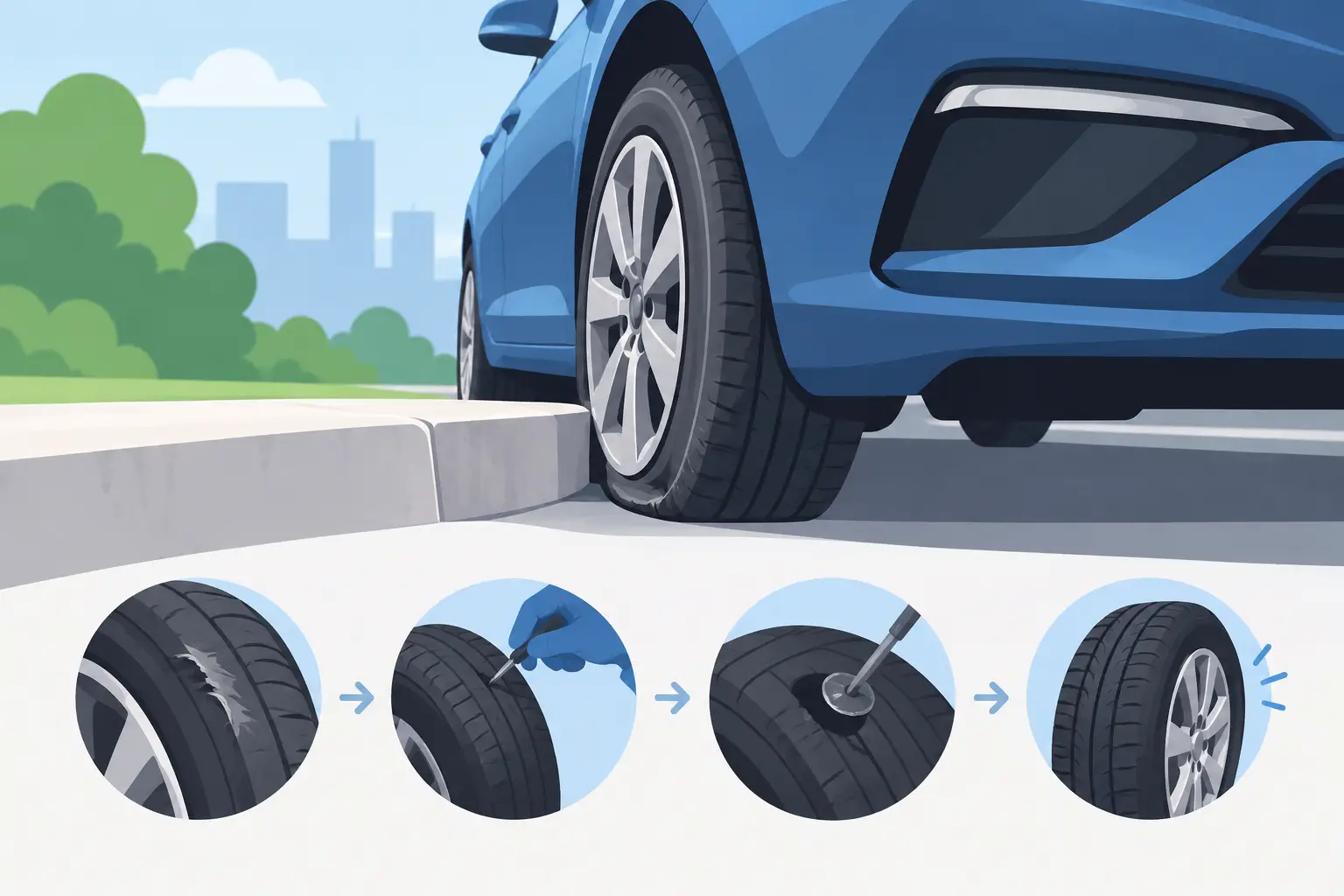
It depends on where the damage is and what caused it. A standard puncture repair is generally for a small hole in the central tread area, where the tire structure remains sound. Curb damage is more likely to affect the sidewall or rim, and neither should be treated like a routine puncture.
If the tire went flat because a nail or screw entered the tread at the same time as the curb impact, a repair may be possible after a full inspection. The tire needs to be removed from the wheel so the inside can be checked for hidden damage. A proper repair is more than plugging a hole from the outside.
If there is a sidewall cut, bulge, exposed cords, a split bead, or evidence the tire was driven flat, replacement is normally the right answer. It may feel frustrating to replace a tire that still has plenty of tread left, but sidewall damage is a safety issue, not a cosmetic one.
Signs you need help right away
Some damage is obvious. Other warning signs show up once you are back on the road. Stop driving and arrange assistance if you notice any of the following:
- The tire pressure warning light comes on or the tire is visibly low.
- The steering wheel shakes, vibrates, or sits crooked.
- The vehicle pulls strongly to one side.
- You hear a repeating thump, scraping sound, or air leaking from the wheel.
- There is a cut, bulge, crack, exposed cord, or a section of tire rubber missing.
These signs do not all mean the same repair is needed. They do mean the vehicle deserves a proper check before a longer journey, a motorway run, or carrying passengers.
What to do while you wait
If you are parked safely, take a clear photo of the tire sidewall, wheel edge, and any visible damage. It can help a mobile tire technician understand what equipment or replacement tire may be needed before arriving.
Avoid moving the vehicle to a better-looking parking spot if the tire is completely flat or the wheel looks damaged. If you must move it for immediate safety, keep the distance as short as possible and do not turn sharply. Never place your hands near the tire if the vehicle is on an unstable jack, and do not attempt a roadside wheel change if traffic conditions make it risky.
If you have a spare, remember that many modern vehicles have a temporary spare with speed and distance limits. It is a way to get out of trouble, not a replacement for inspecting the damaged tire and wheel.
Mobile tire help makes the next step easier
A curb strike is inconvenient because it rarely happens when you have time for a garage visit. You may be outside work, on the school run, at home before an appointment, or stranded at the roadside. A mobile service can inspect the issue where the vehicle is and fit a suitable replacement tire if repair is not safe.
Lee’s Mobile Tyres provides on-site tire support across Reading, Basingstoke, Bracknell, and nearby areas, helping drivers avoid the extra stress of arranging a tow or sitting in a waiting room. A technician can assess the tire condition, check for visible wheel damage, replace the tire when needed, and advise when alignment or wheel repair should be the next job.
There is a trade-off with any urgent tire decision. Fitting the cheapest available option may get you moving, but the replacement must be the correct size, load rating, and speed rating for your vehicle. If only one tire needs changing, tread depth on the tire opposite it also matters, especially on the same axle. The right choice is the one that restores safe, predictable handling without creating another problem a few weeks later.
How to reduce the chance of repeat damage
Curbs catch even careful drivers. Tight parking spaces, rain, poor visibility, unfamiliar roads, and avoiding another vehicle can all lead to a wheel clipping the edge. A few habits make a difference: approach curbs slowly, leave extra room when parallel parking, and avoid mounting a curb unless there is no safe alternative.
Keeping tires inflated to the vehicle manufacturer’s recommended pressure also helps. An underinflated tire has less protection at the rim and can be more vulnerable to impact damage. Check pressures regularly, not just when a warning light appears.
A curb strike does not always end with a ruined tire. But when the sidewall, wheel, or steering feels wrong, treating it early is the quickest way to protect your safety, your schedule, and the tires you still have left.